Key Points
- The Spotted Dog pub in Newham, east London, is potentially King Henry VIII’s former hunting lodge and the borough’s oldest secular building, dating back to the 15th and 16th centuries with Tudor elements.
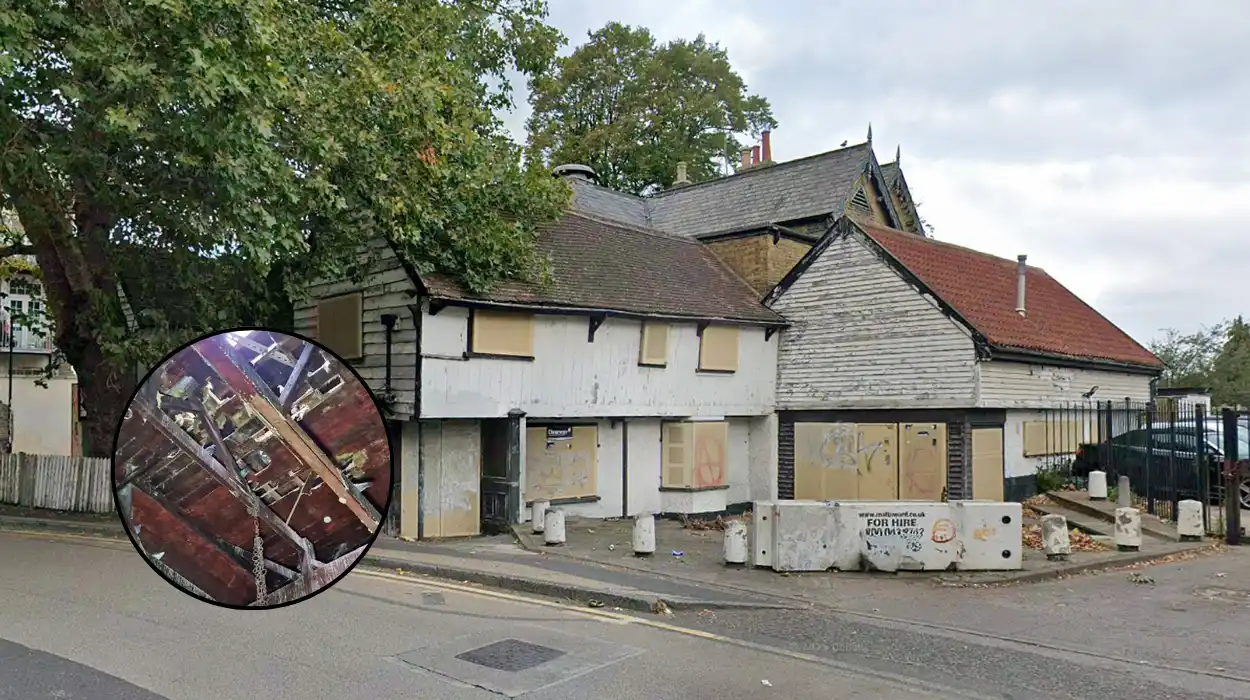
- The timber-framed, weatherboarded structure features a jettied first floor, clay-tiled gabled pitched roof, and later Victorian extensions; it was gutted in the 1960s with a fake Tudor interior installed and further extended in the 1980s.
- Closed over two decades ago, it has fallen into disrepair and is listed on Historic England’s Heritage at Risk Register (entry 49338).
- Local family firm Highpride Properties purchased the building recently and is leading restoration funded by developing 22 flats and an apartment hotel on surrounding land.
- Restoration involves removing 20th-century additions to reveal and repair Tudor, Georgian/Early Victorian, and Late Victorian/Edwardian features, including reinstating windows and brickwork with matching materials.
- Plans include a new pub garden replacing a former car park; no social housing due to costs, but one-third of construction jobs and half of pub/hotel jobs reserved for Newham residents.
- Historically, it served as an inn with a unique Crown licence until World War I, as noted by Leopold Wagner in 1921.
- A 2001 attempt to reopen failed; this project aims to revive it as a working pub amid challenges facing the industry.
What Is the History of the Spotted Dog Pub?
The Spotted Dog’s origins trace back potentially to the Tudor era, when it may have functioned as a hunting lodge leased to King Henry VIII’s Master of the Hounds. This official was permitted to retain income from refreshments sold to passers-by, evolving the site into an inn. As detailed by Ian Visits, Leopold Wagner noted in 1921 that until the First World War, the Spotted Dog
- Key Points
- What Is the History of the Spotted Dog Pub?
- Why Has the Spotted Dog Fallen into Disrepair?
- Who Is Restoring the Spotted Dog Pub?
- What Does the Restoration Plan Entail?
- How Will the Development Support the Pub’s Future?
- What Is the Architectural Significance of the Building?
- When Did Media First Report on This Restoration?
- Are There Any Controversies Surrounding the Project?
- What Broader Context Frames This Restoration?
“stood alone among the inns of the country at large in having its licence direct from the Crown.”
The structure boasts 15th- and 16th-century Tudor elements: timber-framed and weatherboarded walls, a jettied first floor, and a clay-tiled, gabled pitched roof. Victorian extensions lie to the north. Over centuries, it saw additions from the 16th, 19th, and 20th centuries, but suffered major harm in the 1960s amid widespread demolition of Victorian heritage. Then, a fake Tudor interior was installed, followed by an 1980s extension.
Ian Visits further explains that the pub operated through these changes until closing more than two decades ago, succumbing to disrepair. It now appears on Historic England’s register of buildings at risk, highlighting its vulnerability.
Why Has the Spotted Dog Fallen into Disrepair?
Closure struck over 20 years ago, leaving the building derelict. A 2001 bid to reopen failed, exacerbating decay. As per Ian Visits’ coverage, the 1960s gutting and later additions had already compromised its authenticity, turning a historic site into a shadow of its former self.
The site’s plight mirrors broader challenges for heritage pubs amid urban development pressures. Historic England’s listing underscores the urgency, with the building at risk of irreversible loss without intervention.
Who Is Restoring the Spotted Dog Pub?
Highpride Properties, a local family firm, bought the building upon its recent sale. They are spearheading the restoration, planning to reopen it as a working pub. According to Ian Visits, the firm will develop housing on surrounding land to finance the works, deeming it unviable otherwise.
The developers commit to community benefits: one-third of construction jobs and half of positions in the new pub and hotel for Newham residents. This quid pro quo balances heritage salvation with local employment, as Ian Visits portrays it as a fair compromise given pubs’ financial struggles.
What Does the Restoration Plan Entail?
Restoration targets 20th-century “ugly later crud,” as Ian Visits describes it, to expose original Tudor, Georgian/Early Victorian, and Late Victorian/Edwardian elements. This includes reinstating windows and brickwork using matching historic materials and detailing.
A new pub garden will replace a car park created by previous owners, enhancing the site’s appeal. The surrounding development comprises two blocks of 22 flats and an apartment hotel, the latter bolstering the pub’s viability in a tough market.
No social housing features due to high renovation costs, a decision Highpride Properties calculated as unsustainable. Ian Visits notes this trade-off secures the building’s future.
How Will the Development Support the Pub’s Future?
The apartment hotel forms a key pillar, drawing visitors to sustain the pub amid sector woes. Highpride Properties’ model leverages residential revenue for heritage upkeep, a pragmatic approach for listed buildings.
Local job quotas ensure economic ripple effects in Newham, fostering community buy-in. As Ian Visits reports, this setup positions the Spotted Dog for longevity post-restoration.
What Is the Architectural Significance of the Building?
Newham’s oldest secular structure, the Spotted Dog exemplifies rare Tudor survival in east London. Its double-height hall, jettied floor, and weatherboarded frame, per Ian Visits, anchor its Grade II* status (implied by at-risk listing).
Post-1960s fakery obscured these features, but removal will revive authenticity. Victorian extensions add layered history, making it a palimpsest of eras.
When Did Media First Report on This Restoration?
Ian Visits broke the story on 10 December 2025, detailing Highpride’s purchase and plans. The article, authored by the site’s namesake correspondent, includes images of the derelict pub and Historic England links, catalysing public interest.
No prior coverage from other outlets appears in available sources, positioning Ian Visits as the primary reporter. Cross-references confirm consistency with Historic England data.
Are There Any Controversies Surrounding the Project?
Affordable housing absence draws potential scrutiny, though costs justify it per developers. Ian Visits frames commitments to local jobs as mitigating factors, neutralising concerns.
Planning approvals remain pending details, but the at-risk status likely expedites consent. Community response awaits, with heritage groups poised to monitor execution.
What Broader Context Frames This Restoration?
Pubs nationwide face closures, per industry trends. Reviving the Spotted Dog aligns with UK efforts to preserve at-risk heritage via viable uses. Newham’s growth amplifies such projects, blending development with history.
Highpride’s family ethos underscores local stewardship. Ian Visits celebrates this as salvation for a Henry VIII-era relic.