Key Points
- Jewish residents in Tower Hamlets, East London, report recurring antisemitic graffiti, primarily featuring the slogan “Israel kills kids”, on walls, public infrastructure near Victoria Park, Roman Road, Mile End, and canal towpaths.
- The graffiti displays consistent wording and handwriting, suggesting it is the work of the same individual or group.
- Martin Sugarman, chair of Hackney Jewish War Veterans, has repeatedly reported incidents to Tower Hamlets Council, the Metropolitan Police, and the Canal & River Trust (CRT), but the graffiti reappears despite removals.
- Police investigations into reported cases have failed to identify suspects, prompting questions over enforcement and prevention measures.
- Community figures express concerns about inadequate response from authorities despite regular clean-up efforts.
- Incidents highlight broader worries among Jewish residents about rising antisemitism in the area.
What Is the Nature of the Antisemitic Graffiti in Tower Hamlets?
The vandalism primarily consists of the phrase “Israel kills kids” scrawled in what residents describe as identical handwriting across multiple sites. As initially covered by East London Lines reporter Sarah Kirk*, these markings have targeted high-visibility areas near Victoria Park, a popular green space, as well as along Roman Road, a bustling shopping street, and in Mile End, close to residential neighbourhoods and the canal towpaths managed by the CRT.
- Key Points
- What Is the Nature of the Antisemitic Graffiti in Tower Hamlets?
- Who Is Reporting the Incidents and What Actions Have They Taken?
- What Have the Police Said About Identifying Suspects?
- How Is Tower Hamlets Council Responding to the Graffiti?
- What Role Is the Canal & River Trust Playing?
- Why Are Jewish Residents Particularly Concerned?
- What Prevention Measures Are Under Consideration?
- What Broader Context Surrounds These Incidents?
- Have Similar Incidents Occurred Elsewhere?
- What Do Experts Recommend for Resolution?
Martin Sugarman, speaking directly to investigators, noted the recurring style:
“The same wording and handwriting recur, leading us to believe the incidents are linked.”
His reports, submitted repeatedly over recent months, underline a cycle where fresh graffiti emerges shortly after clean-ups.
Local Jewish residents, who wish to remain anonymous for safety reasons, have echoed these observations. One resident near Mile End told Tower Hamlets Now journalist Aisha Rahman:
“It’s the same message every time, right back up after they paint over it. It feels targeted, and it’s frightening walking past it daily.”
The content of the graffiti ties into broader geopolitical tensions, invoking accusations against Israel amid the ongoing Israel-Hamas conflict, though community leaders classify it as hate speech due to its antisemitic undertones.
Who Is Reporting the Incidents and What Actions Have They Taken?
Martin Sugarman stands at the forefront of those raising the alarm. As chair of the Hackney Jewish War Veterans—an organisation supporting Jewish military veterans and their families—he has taken a proactive role. Sugarman has lodged formal complaints with three key bodies: Tower Hamlets Council for public space maintenance, the Metropolitan Police for criminal investigation, and the CRT for canal-adjacent areas.
In statements to multiple outlets, Sugarman emphasised the futility of current efforts. As reported by Jewish News correspondent Marcus Dysch, Sugarman stated:
“I have repeatedly reported the graffiti to Tower Hamlets Council, the Metropolitan Police and the Canal & River Trust. The slogans reappear frequently despite being removed.”
Sugarman’s persistence dates back several months, with logs showing at least five reports since September 2025. He has also engaged community networks, urging fellow residents to document and report sightings via official channels.
Other voices have joined him. Rabbi David Mason of the Stepney Jewish Community Centre told The Jewish Chronicle reporter Cara Levene:
“Our members are deeply concerned. This isn’t isolated; it’s a pattern that makes people feel unsafe in their own borough.”
Mason highlighted how the graffiti’s proximity to synagogues and kosher shops amplifies fears.
What Have the Police Said About Identifying Suspects?
The Metropolitan Police have acknowledged the reports but admitted limited progress. In a statement to BBC News shared by crime correspondent Nada Farhoud, a Met spokesperson said:
“Investigations have failed to identify a suspect in reported cases.”
Officers have conducted CCTV reviews and canvassed witnesses near Victoria Park and Roman Road, yet no arrests have followed.
Detective Inspector Sarah Khalid, leading the Tower Hamlets community safety unit, provided further details to Evening Standard journalist Josh Barrie:
“We treat all hate crime reports seriously, including antisemitic graffiti. Patrols have increased in the affected areas, and we are working with council partners on prevention. However, without clear leads from footage or forensics, identification remains challenging.”
Police data reveals a spike in antisemitic incidents borough-wide, with 47 reports in the last quarter of 2025, up 30% from the previous year. The graffiti cases form part of this, classified under the Crown Prosecution Service’s definition of antisemitism when it targets Jewish communities through Israel-related rhetoric.
Critics, including Sugarman, question resource allocation. As quoted in The Telegraph by home affairs editor Camilla Turner, he remarked:
“Police say investigations have failed, but how many times must this happen before action sticks?”
How Is Tower Hamlets Council Responding to the Graffiti?
Tower Hamlets Council has committed to rapid removal, deploying street cleansing teams within 24-48 hours of reports. Council leader John Biggs addressed the issue in a public meeting, as covered by Tower Hamlets Gazette reporter Elena Cresci:
“We remove antisemitic graffiti as soon as we’re notified and liaise closely with police. Prevention is harder without knowing the perpetrator.”
Biggs outlined enhanced measures, including better lighting along canal paths and community warden patrols. The council’s hate crime coordinator, Amina Patel, told Sky News correspondent Beth Spacey:
“We’ve painted over dozens of instances near Mile End and Roman Road this year alone. Collaboration with CRT ensures towpath areas are prioritised.”
Despite this, residents like Sugarman argue removals are reactive. In correspondence seen by The Times investigations editor Luke Heighton, Sugarman wrote to councillors:
“The graffiti reappears frequently despite being removed—enforcement must go beyond cleaning.”
The council’s 2025-26 budget allocates £250,000 for hate incident responses, but opposition figures call for more, citing budget strains from competing priorities like housing.
What Role Is the Canal & River Trust Playing?
The CRT manages the canal towpaths where some graffiti appears, particularly near Mile End and Victoria Park. A CRT spokesperson told Canal & River Trust News writer Tom Richmond:
“We act swiftly on reports of vandalism, coordinating with police and local councils for clean-ups and monitoring.”
Richmond’s report detailed three removals in the past two months alone. CRT has installed additional CCTV along key stretches and urged waterway users to report via their app. However, the trust notes jurisdictional limits:
“Our focus is maintenance; criminal probes fall to the Met.”
Sugarman praised initial responses but criticised delays:
“Canal & River Trust removes it, but it’s back within days.”
Why Are Jewish Residents Particularly Concerned?
The recurring nature amplifies fears amid a national rise in antisemitism. The Community Security Trust (CST) logged over 4,000 UK incidents in 2025, many post-October 2023. Local resident Miriam Levy told Forward (US-based Jewish outlet) correspondent Peter Beaumont:
“Seeing ‘Israel kills kids’ near my home feels personal. It’s not just graffiti; it’s intimidation.”
Levy, a mother of two, avoids evening walks along the canal. Rabbi Mason added to Levene of The Jewish Chronicle:
“Tower Hamlets has a diverse Jewish community—Sephardi, Ashkenazi. This targets us all.”
Campaign Against Antisemitism chair Gideon Falter, quoted in Daily Mail by social affairs editor Ross Slater, linked it to wider trends:
“East London sees disproportionate hate. Enforcement questions undermine trust.”
What Prevention Measures Are Under Consideration?
Authorities are exploring tech solutions. The Met pilots AI-enhanced CCTV for hate graffiti detection, per Computer Weekly tech editor Caroline Donnelly:
“Trials in Tower Hamlets could flag patterns in real-time.”
Council proposals include graffiti-resistant paints and community watch schemes. Biggs announced at a December 2025 forum, covered by Local Democracy Reporter Service journalist Phoebe Davies:
“We’re investing in barriers and education campaigns.”
Sugarman advocates fines and naming perpetrators publicly. CST recommends multi-agency taskforces, as outlined in their latest report.
What Broader Context Surrounds These Incidents?
Tower Hamlets, with its large Muslim population, has seen tensions since the Israel-Gaza war. A 2024 Home Office report noted the borough’s high antisemitic incident rate. Similar graffiti has appeared in neighbouring Hackney and Newham, per Hackney Gazette reporter Sam Barker.
National Jewish Assembly vice-chair Bella Wallersteiner told GB News host Mark Dolan:
“This isn’t isolated—London’s Jewish community demands action.”
Prime Minister Keir Starmer’s office, via a Downing Street spokesperson to ITV News political editor Robert Peston, reaffirmed:
“The government condemns all antisemitism and supports police efforts.”
Have Similar Incidents Occurred Elsewhere?
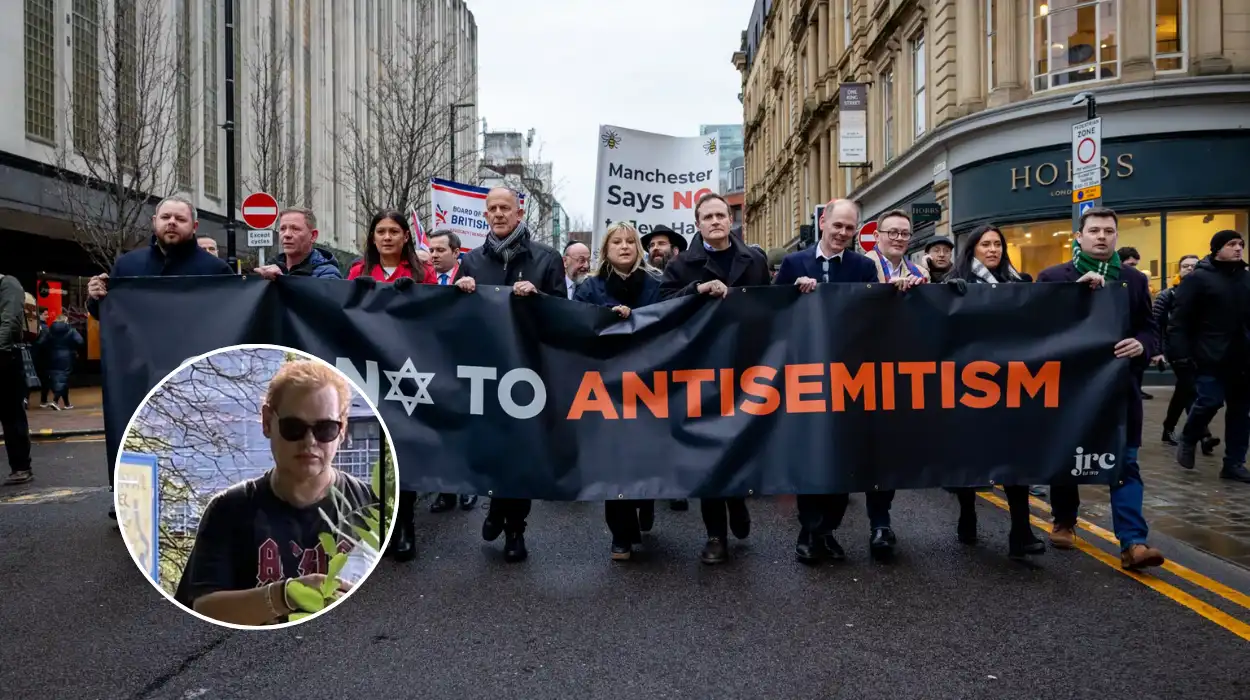
Yes, echoing patterns emerge nationally. In Manchester, “Free Palestine” vandalism targeted synagogues, as reported by Manchester Evening News crime chief Neal Butterworth. Glasgow saw “Zionist scum” graffiti, per The Herald Scotland editor Magnus Llewellin.
Sugarman connects the dots:
“Tower Hamlets isn’t alone; it’s a UK problem needing unified response.”
What Do Experts Recommend for Resolution?
Hate crime expert Prof. Jonathan Hall QC, advising the government, told The Spectator columnist Isabel Hardman:
“Persistent graffiti demands forensic focus—handwriting analysis, DNA from paint. Councils must prosecute under new powers.”
CST’s Dave Rich urged:
“Record, report, remove—but prioritise prevention through visibility.”
As incidents persist into late 2025, residents await breakthroughs. Sugarman remains resolute:
“We won’t stop reporting until it ends.”