Key Points
- Logma Cafe Bistro officially launches in Hackney after the success of its London supper club.
- Founded by Farsin Rabiee and Ziad Halub, the concept spotlights Iranian and Iraqi culinary traditions often underrepresented in London.
- The soft opening was held on 21 December 2025, coinciding with the celebration of Yalda, the longest night of the year.
- The restaurant’s design and philosophy are inspired by early 20th-century French bistros found across the Middle East.
- Logma focuses on warmth, community, and generosity, echoing the founders’ heritage and hospitality values.
- The evolving menu features both nostalgic and contemporary Middle Eastern dishes, highlighting local, seasonal, and organic produce.
- Signature offerings include fesenjan, aubergine sandwiches, kofta pita, and tahini buns, complemented by traditional tea and coffee.
- A weekly late-night dining experience replicates the original supper club’s spirit with a curated set menu.
- The founders credit their community and supporters for the project’s growth and success.
Why did Logma transition from a supper club to a full restaurant?
As reported by Sahar Mirza of Time Out London, co-founders Farsin Rabiee and Ziad Halub decided to create a permanent venue after witnessing the overwhelming response to their supper club events, which began in 2024. Rabiee explained that the move was a natural progression born from both passion and necessity:
- Key Points
- Why did Logma transition from a supper club to a full restaurant?
- How does Logma honour Middle Eastern traditions?
- What’s on Logma Cafe Bistro’s menu?
- Will the supper club experience continue?
- How has the community responded?
- What makes Logma stand out in London’s dining landscape?
- What’s next for Logma Cafe Bistro?
“We were overwhelmed by people’s enthusiasm to experience the kind of food we grew up with — the warmth, the textures, the generosity. Hosting these events at home eventually became unsustainable, so opening Logma Cafe Bistro was the next step.”
According to Rosa Larkin of Eater London, the duo were inspired by a shared frustration with the lack of high-quality Iranian and Iraqi food available in mainstream London dining culture. Their supper club began as an intimate experiment — a space to reconnect with heritage while sharing nostalgia through flavour — which soon evolved into a sell-out community event.
How does Logma honour Middle Eastern traditions?
The opening on 21 December 2025 was timed to coincide with Yalda Night, the Persian celebration marking the winter solstice. As noted by Layla Fawzi of The Guardian Food Section, Logma held a special Yalda dinner, symbolising the endurance of warmth and community during the year’s longest night. The founders wanted the opening to “honour the joy of long nights shared around tables, surrounded by food that tells stories”.
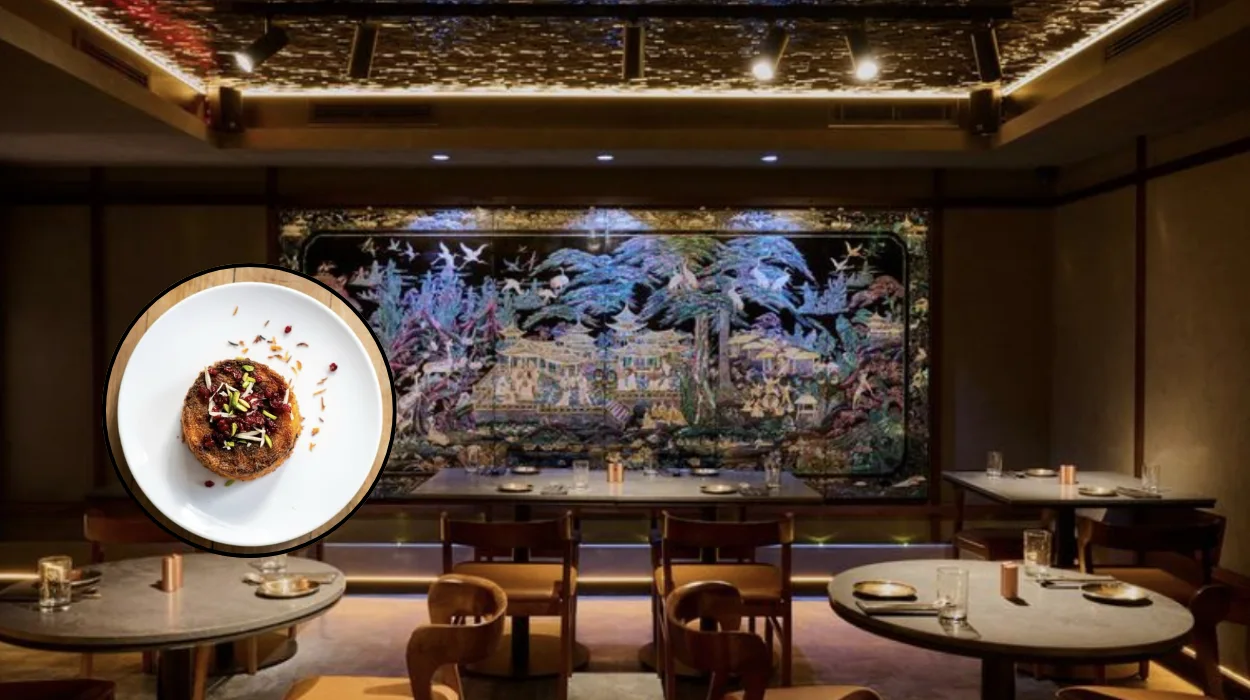
The restaurant’s interiors celebrate a bygone era. Drawing aesthetic inspiration from French bistros scattered across Baghdad, Tehran, and Beirut in the early 20th century, Logma juxtaposes rustic charm with cosmopolitan flair. Karen Dhanjal of Evening Standard Lifestyle described the setting as “a nostalgic embrace — enamel lamps, wooden chairs, vintage Persian prints, and that unmistakable scent of saffron-infused stew filling the air”.
Logma’s identity is woven around cultural storytelling. As Halub told Bethany Dawson from BBC London Foodie Files,
“Each dish carries memory — the kofte sandwiches, the pomegranate molasses, the saffron rice… all nods to a childhood table that many of our guests might never have experienced. It’s about rediscovering those links through the language of food.”
What’s on Logma Cafe Bistro’s menu?
The menu speaks to both authenticity and innovation. As detailed in Grace Dent’s coverage for The Guardian, the kitchen highlights seasonal British produce while staying faithful to traditional Iranian and Iraqi flavour profiles. Regulars from the supper club will recognise beloved staples like aubergine and kofte sandwiches, fesenjan (a walnut and pomegranate stew), kofta pita, and tahini buns that recall sweet bazaar treats.
Harriet Cluley of London Eater notes that morning pastries and a strong coffee programme have also become central to the bistro’s identity. “In the mornings, expect crumbly cardamom shortbreads and flaky tahini croissants, perfect alongside a robust Turkish-style coffee or black tea steeped with cinnamon,” Cluley wrote.
Rabiee described the approach to ingredients in an interview with Hot Dinners UK:
“We source organic and local produce wherever possible. It’s about merging comfort with conscience — replicating the flavours of home while supporting our immediate community of growers and bakers here in East London.”
The founders revealed that the menu will “evolve with the seasons” and is designed to reflect the spontaneity of family dining where, as Rabiee said, “no two meals were ever exactly the same”.
Will the supper club experience continue?
For those who fell in love with the intimate, communal format of the original supper club, Logma has ensured that its spirit remains intact. According to Secret London’s Imogen West, the restaurant reserves one evening each week — typically Fridays — for a curated set menu inspired by the supper club’s earliest menus.
As Halub told the outlet,
“We didn’t want to lose that intimacy or the feeling of people gathering as strangers and leaving as friends. The supper club evenings allow us to bring that energy into this new setting.”
These evenings showcase themed dishes drawn from regional traditions — from Kurdish-inspired stews to Iraqi dolma — paired with poetry readings and live oud performances, bridging food, art, and memory.
How has the community responded?
The reaction from London’s food scene has been overwhelmingly positive. In a review for The Independent, critic Hannah Giorgi praised Logma for offering “a seamless blend of home-style cooking and contemporary presentation” that “feels sincere rather than stylised”. Social media also buzzed with appreciation following the Yalda opening, with locals describing the event as “a feast of warmth” and “Hackney’s newest culinary heartbeat”.
Standing outside the restaurant on the evening of the launch, the founders addressed their guests with visible emotion. As quoted by Eater London’s Rosa Larkin, Rabiee and Halub said jointly:
“It’s been a wild ride. We never expected that our small idea a year ago would grow into this incredible journey, where we have been able to host this wonderful community of people for some delicious Iranian and Iraqi food. None of this would have been possible without your support, and the support of beloved friends who rolled their sleeves up to help and promote.”
What makes Logma stand out in London’s dining landscape?
As observed by Nick Laird-Clowes of Evening Standard Food, what distinguishes Logma is not just its menu but its ambience — a harmonious balance between everyday dining and cultural immersion. The cafe’s open kitchen, handwritten menu boards, and communal tables encourage connection and conversation — echoing a regional tradition where meals are as much about companionship as sustenance.
Furthermore, the timing of Logma’s debut feels symbolic. With London now home to a rising wave of diasporic chefs redefining authenticity — from Palestinian street vendors to modern Lebanese kitchens — Logma stands as both participant and pioneer in this cultural exchange.
As food critic Anisa Shadid of BBC London remarked,
“Logma isn’t just a restaurant. It’s a memory made public — a bridge between East London and the East itself.”
What’s next for Logma Cafe Bistro?
Looking ahead, Rabiee and Halub hint at plans for seasonal pop-ups and collaborations with other chefs who share their ethos of community-driven cooking. According to Hot Dinners UK, they are also exploring the idea of publishing a small cookbook chronicling their journey from a home kitchen to a Hackney restaurant — complete with recipes, stories, and images from their early supper clubs.
In keeping with their core philosophy, they intend to keep the project small and personal. As Rabiee summarised in Eater London:
“We’re not chasing expansion; we’re chasing connection. Every time someone sits at our table, we want them to feel like they’ve found home.”