Key Points
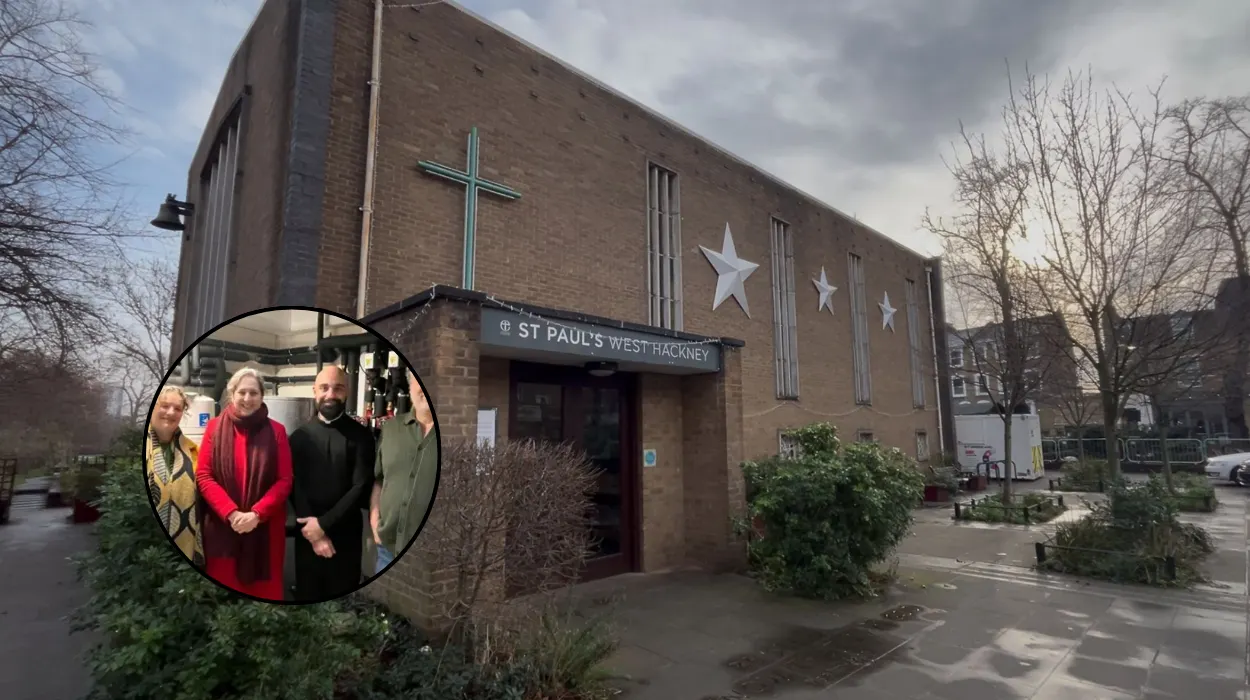
- St Paul’s West Hackney church in East London installs more than 100 solar panels and four heat pumps in a £170,000 sustainability project.
- The upgrade allows the church to generate about 70% of its energy needs on-site.
- The project was jointly funded by Stokey Energy, Hackney Council’s Community Energy Fund, and the London Olympics Legacy Fund.
- Father Brandon Fletcher-James said the initiative sets “a practical example” for other churches seeking to reduce emissions.
- Stokey Energy reports the system generates 46MWh of electricity annually and has significantly reduced the church’s energy costs.
- Hackney Council plans to replicate this model across other religious buildings as part of its wider decarbonisation strategy.
- The council is also funding a £2m solar installation programme across 27 housing blocks.
- Parliamentary Under-Secretary Martin McCluskey from the Department for Energy Security and Net Zero visited the church, praising it as a national example of community-led climate action.
- The church aims to continue its green transition in administration, governance, and daily operations.
How did St Paul’s West Hackney achieve its green transformation?
According to BBC News’ coverage of the story, St Paul’s West Hackney installed 104 solar panels on the church’s roof alongside four air source heat pumps. The combined renewable energy system is expected to generate around 46 megawatt-hours (MWh) of electricity each year.
- Key Points
- How did St Paul’s West Hackney achieve its green transformation?
- Who funded the £170,000 energy upgrade project?
- What are the benefits for the church and community?
- How does this project align with Hackney Council’s wider climate goals?
- How did the government respond to the church’s green transformation?
- What are the next steps for the church in its environmental journey?
- Why is this project significant for the wider faith and energy community?
- What does this mean for London’s approach to local decarbonisation?
Co-founder Tom Campbell of Stokey Energy, the community organisation that led the installation, told the LDRS that the project effectively turned “an ageing Anglican church into a solar powerhouse.”
As Campbell explained,
“Most churches have phenomenal thermal leaking, which is why they face such high heating bills and cold conditions for congregations. These buildings are often poorly insulated. Our work shows that heritage sites like this can harness solar technology to overcome those structural challenges.”
Who funded the £170,000 energy upgrade project?
The total £170,000 investment was made through a combination of local public and community funding streams. As detailed in Hackney Gazette’s report on the initiative, Stokey Energy partnered with Hackney Council’s Community Energy Fund and the London Olympics Legacy Fund to deliver the project.
Hackney Council confirmed that while the church contributed around £40,000 of the total cost, the parish’s leadership expects this investment to be recouped within approximately four years, depending on market energy rates.
Father Brandon Fletcher-James, priest at St Paul’s West Hackney since mid-2025, told the LDRS:
“All churches aspire to be environmentally friendly, but we are trying to do it practically. Even in my five months here, several other churches have reached out asking how we made this possible, both in terms of financing and environmental impact.”
What are the benefits for the church and community?
As reported by The Guardian’s local energy correspondent, the church’s new solar and heat-pump system is now providing a majority of its operational energy, significantly cutting dependency on the National Grid.
Tom Campbell confirmed that the system produces roughly 46MWh of clean energy annually. This output, according to Stokey Energy, corresponds to the average annual consumption of around 15 UK homes.
The church’s energy costs have been “slashed,” Campbell noted, with the installation allowing the parish to redirect savings towards local community services and maintenance. Beyond cost efficiency, the upgrade positions St Paul’s as a pioneer in faith-based climate action.
How does this project align with Hackney Council’s wider climate goals?
Hackney Council said the church initiative fits into its broader borough-wide decarbonisation efforts. As shared with Hackney Citizen, Councillor Sarah Young, Cabinet Member for Climate, Environment, and Transport, revealed that the local authority is expanding solar capacity across housing estates.
“We are installing solar panels on 27 blocks across three estates,”
Cllr Young told the Citizen.
“This £2m scheme, funded through our climate budget and City Hall’s Carbon Offset Fund, will help tenants and leaseholders see their bills reduced significantly.”
Hackney’s long-term goal is to produce and distribute sustainable energy locally while creating models for community-based generation. The council expects income from selling discounted solar power to residents to repay the upfront costs within 10 to 20 years.
How did the government respond to the church’s green transformation?
On 18 December, representatives from the Department for Energy Security and Net Zero visited St Paul’s West Hackney to assess the results of the installation. As reported by ITV London News, Parliamentary Under-Secretary Martin McCluskey praised the church as a flagship for what community energy projects can achieve.
“It really stands as an example for what other buildings across the country can take advantage of with this new green technology that’s readily available right now,”
McCluskey said during his visit.
“The great thing about it is that it’s been driven by the council and community energy groups working together.”
His remarks echo the government’s broader ambition to promote grassroots-led renewable initiatives, particularly within local authorities and non-residential public buildings.
What are the next steps for the church in its environmental journey?
Father Fletcher-James indicated that the sustainability push will continue beyond solar energy. Speaking to the LDRS, he outlined plans to further “green” the church’s operations.
“There is so much more we can do to be environmentally friendly in terms of our day-to-day running, our administrative systems, and our governance,”
he said.
“Those are some of the things I hope to look at in the new year.”
The priest suggested that St Paul’s may explore opportunities for waste reduction, air quality monitoring, and sustainable procurement—initiatives that would align with the Church of England’s national target to achieve net-zero carbon emissions by 2030.
Why is this project significant for the wider faith and energy community?
Environmental analysts cited by The Independent described the St Paul’s West Hackney achievement as a model for collaboration between faith institutions, councils, and community energy groups.
Churches, particularly historic ones, face unique obstacles when adopting energy-efficient systems due to planning constraints and preservation requirements. Projects like St Paul’s demonstrate that heritage preservation and sustainability can go hand-in-hand.
Stokey Energy’s approach may now form the blueprint for similar installations across other religious buildings, including mosques, temples, and synagogues throughout the Hackney borough. These projects aim not only to reduce local carbon footprints but also to strengthen community ownership of clean energy generation.
What does this mean for London’s approach to local decarbonisation?
London has seen a growing number of neighbourhood-scale renewable energy developments, many involving partnerships between councils and non-profit organisations. As London Evening Standard notes, these community-led initiatives complement City Hall’s citywide target to become a net-zero carbon city by 2030.
St Paul’s West Hackney’s solar transformation, supported by Hackney Council and powered by Stokey Energy’s expertise, highlights how faith institutions—often at the heart of their communities—can lead by example and inspire broader action.
As Hackney Council continues expanding solar power across housing estates and other community sites, initiatives like this church project reflect a template for London’s inclusive green energy future—one that merges social value, community pride, and practical sustainability.