Key Points
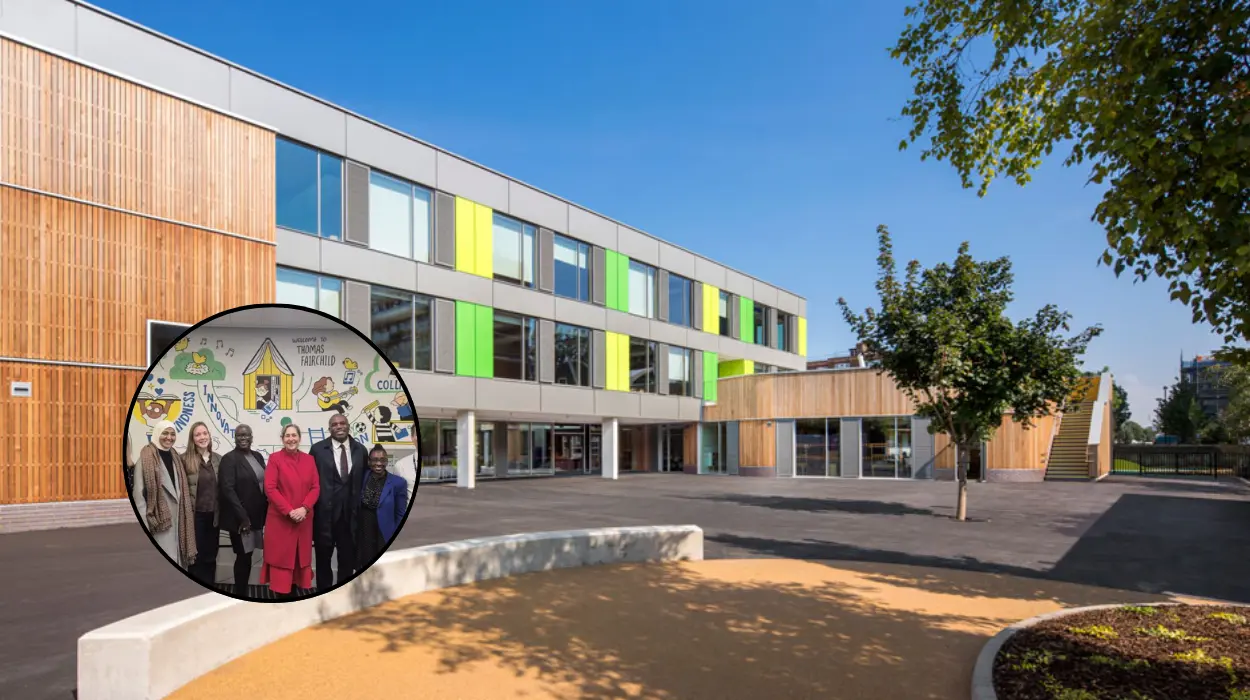
- Deputy Prime Minister David Lammy visited Thomas Fairchild Primary School in Hackney to observe its free breakfast club.
- The initiative, backed by the Labour government, aims to improve children’s learning, attendance, and well-being.
- Mr Lammy highlighted Labour’s broader support for families, including free school meals, the Renters’ Rights Bill, and the Employment Rights Bill.
- Hackney Mayor Caroline Woodley praised the partnership between local and national government in delivering support.
- Teachers report improved attendance and readiness to learn among pupils since the programme began.
- The visit included conversations with parents, staff, and pupils, as well as the distribution of Christmas presents.
Why did David Lammy visit Thomas Fairchild Primary School?
As reported by BBC News London on Thursday, Deputy Prime Minister David Lammy visited Thomas Fairchild Primary School in Hackney to meet pupils, speak with parents, and hear firsthand from staff about the benefits of the free breakfast club introduced under Labour’s education support schemes.
- Key Points
- Why did David Lammy visit Thomas Fairchild Primary School?
- What improvements has the breakfast club brought to the school?
- What did David Lammy say about government support for families?
- How does the project reflect Labour’s education and welfare agenda?
- What role did Mayor Caroline Woodley play?
- How did the community respond to Lammy’s visit?
- What are the wider implications for Hackney and beyond?
- What’s next for the programme?
In comments shared with the BBC, Mr Lammy said:
“It was great to visit the free breakfast club at Thomas Fairchild Primary School and speak with parents and the hardworking staff supporting children every day.”
According to reports by ITV News London, the government’s free breakfast club initiative was launched earlier this year across several London boroughs, prioritising schools in areas with higher levels of food insecurity and absenteeism.
Lammy’s visit aligns with the government’s goal of ensuring that “no child starts the day hungry”, a message consistently championed by the Deputy Prime Minister since Labour took office.
What improvements has the breakfast club brought to the school?
Teachers at Thomas Fairchild Primary School told Mr Lammy during his visit that the breakfast club has helped pupils arrive earlier, more settled, and ready to learn. Reports from The Guardian Education Correspondent, Sally Weale, earlier this year also highlighted similar early successes in other pilot schools across the city.
According to staff accounts cited by Hackney Gazette, attendance has improved notably at Thomas Fairchild, with teachers observing that pupils appear “more focused and calmer during morning lessons.”
One teacher reportedly told Hackney Gazette that the initiative “helps children start the day with a sense of routine and a guaranteed meal, which makes a big difference in their confidence and engagement.”
What did David Lammy say about government support for families?
Following his visit, Mr Lammy drew attention to the Labour government’s wider efforts to ease the financial burdens on families in Hackney and beyond. As reported by The Evening Standard’s Nicholas Cecil, Lammy said that initiatives like the breakfast club represent just one part of a comprehensive package of family support.
Mr Lammy stated:
“A child at this school gets a free breakfast club from this Labour government and a free lunch from this Labour Mayor, and in the spring may return to a more secure home as Labour’s Renters’ Rights Bill comes into effect, with parents set to benefit from the Employment Rights Bill and higher pay after we raised the minimum wage twice.”
He continued, according to ITV News, by framing Hackney’s experience as a model for joint action between different levels of government:
“We want this to be the story of every child in Hackney, delivered by Labour working together at every level of government. In May, Hackney can vote to keep this joined-up approach delivering for families.”
How does the project reflect Labour’s education and welfare agenda?
In an analysis published by The Guardian, the breakfasts-for-all programme is described as a “cornerstone” of Labour’s child welfare and education plan, aiming to provide both nutritional and structural support for school-aged children.
The policy reflects Labour’s broader commitment to universal support schemes that go beyond means testing, a principle reiterated by Lammy during his Hackney visit. “It’s about fairness and readiness to learn,” he told reporters, according to Sky News.
Furthermore, Sky News Politics Correspondent Mhari Aurora noted that the visit was as much a political statement as a community engagement effort, showcasing Labour’s policy execution at a local level ahead of the May local government elections.
What role did Mayor Caroline Woodley play?
Hackney Mayor Caroline Woodley joined Mr Lammy at the school, underscoring the collaborative nature of the initiative. As reported by Hackney Citizen’s political correspondent, Sam Gelder, Woodley praised the alignment of national and local policies that directly benefit residents.
In a statement quoted by The Independent, Ms Woodley said:
“When Hackney Council works hand in hand with a Labour government, we deliver real support for families, and today is a living, breathing example of that.”
She highlighted the council’s use of national funding streams and its Here to Help service as mechanisms ensuring that vulnerable families receive tailored support.
“This is what joined-up government looks like,” Ms Woodley added, noting that the partnership approach had allowed Hackney to extend access to essential services at a time when cost-of-living pressures remained high.
How did the community respond to Lammy’s visit?
According to BBC London’s local coverage, parents and pupils warmly welcomed the visit. Many expressed gratitude for the breakfast club, describing how the initiative had eased morning stress and improved children’s focus.
One parent told ITV News Reporter Rags Martel that the club “means we can start our day without worrying about rushing breakfast or skipping it altogether.” Teachers also mentioned that families had become more engaged with the school community since the club’s start.
During the event, Mr Lammy handed out Christmas presents to pupils — a symbolic gesture reinforcing the festive spirit and government’s message of care, noted Hackney Gazette in its coverage.
What are the wider implications for Hackney and beyond?
The success of Thomas Fairchild’s breakfast club, as reported across multiple local and national media outlets, points to a model that could be adopted in schools nationwide. The Guardian Education Desk noted that breakfast provision is closely linked to improved cognitive performance and attendance, especially among children from lower-income families.
Hackney Council officials told BBC London that they are working on expanding the scheme to other local schools in early 2026, supported by additional funding announced in the government’s autumn statement.
Education specialists interviewed by The Evening Standard described the initiative as “one of the most practical, non-partisan policies in years” — a measure that transcends party politics and directly addresses everyday challenges faced by families.
What’s next for the programme?
According to Department for Education spokespersons cited by Sky News, schools participating in the programme will continue to receive funding through the National School Breakfast Programme (NSBP) until at least 2027.
David Lammy’s visit forms part of a series of community engagements across London, as the Deputy Prime Minister aims to spotlight initiatives delivering tangible social impact ahead of local elections.
Education policy analysts told The Guardian that Lammy’s communication style — “rooted in visibility and direct engagement” — is designed to rebuild trust in government competence through deliverable projects like this one.