Key Points
- The Daily Mail has launched an interactive online search tool revealing detailed population data by neighbourhood across England and Wales.
- The tool, based on 2024 mid-year population estimates from the Office for National Statistics (ONS), shows percentages of babies and over-65s across 7,265 middle super output areas (MSOAs).
- Stamford Hill in Hackney tops the list for babies, with infants making up 3% of its population.
- Durham City ranks lowest, with just 0.06% babies — around 50 times fewer than Stamford Hill.
- East Preston & Rustington East in Arun has the UK’s highest concentration of over-65s (53.3%).
- Experts link “nappy valleys” with younger, diverse populations and higher fertility rates, often near urban centres.
- Fertility rates in England and Wales have fallen to their lowest levels since the 1930s, with an average of 1.44 children per woman.
- Academics warn this trend could threaten population sustainability, increasing reliance on immigration and impacting future economic stability.
- Wandsworth, Battersea, and Clapham — once traditional “nappy valleys” — no longer make the top 20 according to latest ONS data.
- Demographers cite housing, childcare, and community infrastructure as key factors shaping baby boom and retirement-heavy zones.
What Does the New ONS-Based Search Tool Reveal?
According to Daily Mail analysis of ONS data, Stamford Hill in Hackney tops the “baby density” chart, where infants under one year old account for around 3% of residents. This figure, as Daily Mail reporter Xantha Leatham noted, is 50 times higher than in Durham City, which sits at the bottom with just 0.06% — a disparity experts attribute to student concentration and housing type.
- Key Points
- What Does the New ONS-Based Search Tool Reveal?
- Why Are Some Urban Areas Becoming ‘Nappy Valleys’?
- Where Are Britain’s Elderly Enclaves Concentrated?
- How Is the Fertility Rate Affecting Britain’s Population Outlook?
- How Was the Data Compiled and What Does It Show About Local Communities?
- What Do Experts Say About Future Demographic Shifts?
- What Does This Mean for Local Authorities and Planning?
- How Can People Use the Search Tool?
- Why Is This Significant for Britain’s Future?
Neighbourhoods showing similarly low levels of infants include Piccadilly & Ancoats in Manchester (0.07%) and Leeds City Centre (0.12%), areas characterised by transient populations and a high prevalence of young adults delaying parenthood.
In stark contrast, East Preston & Rustington East in Arun, West Sussex, emerges as the top “elderly enclave,” where over 53.3% of residents are aged 65 and above. According to Daily Mail’s analysis, this is closely followed by Sutton-on-Sea in East Lindsey (53.2%) and Barton on Sea in New Forest (52%), all idyllic coastal communities favoured by retirees.
Why Are Some Urban Areas Becoming ‘Nappy Valleys’?
As reported by Xantha Leatham of the Daily Mail, the term “nappy valley” originally described affluent family areas like Wandsworth and Clapham. However, ONS data now places new urban districts, such as parts of inner London, significantly higher due to younger, foreign-born populations driving birth rates.
Professor Berkay Ozcan, demographer at New York University Abu Dhabi, explained to the Daily Mail:
“Housing in nappy valleys accommodates early-stage families which are typically smaller, denser dwellings close to jobs and amenities. They also tend to offer good-quality childcare, access to well-rated primary schools, green spaces and parks, and reliable transport links.”
He added that neighbourhoods with “young, diverse populations and high residential turnover” — such as Hackney or parts of Tower Hamlets — tend to record more births “simply because the demographic base for childbearing is larger.”
Where Are Britain’s Elderly Enclaves Concentrated?
The Daily Mail’s feature shows that most top-ranking elderly areas are coastal. East Preston & Rustington East, Sutton-on-Sea, and Barton on Sea dominate the list, reflecting the ongoing migration of older Britons toward seaside and rural communities for retirement.
ONS statistics reveal these communities have more than half of their residents aged 65 or older, highlighting Britain’s widening generational divide. The South Coast, the East Midlands coast, and parts of Cornwall and Devon all show strong ageing trends.
Experts say these demographic concentrations raise pressing policy questions around health service provision, rural transport, and social care.
How Is the Fertility Rate Affecting Britain’s Population Outlook?
According to ONS figures cited by the Daily Mail, women in England and Wales now average 1.44 children each, the lowest fertility rate since the 1930s. The replacement rate necessary to maintain constant population levels without immigration stands at 2.1.
Demographers warn that without addressing falling birth rates, the UK faces potential labour shortages and increased economic dependency on immigration. As noted by The Times’s social policy editor Chris Smyth in previous reports, policymakers fear “an age imbalance where too few workers are left to support the elderly population.”
The Daily Mail’s report frames this discussion within broader concerns about the UK’s demographic sustainability, as younger populations cluster in major cities while rural and coastal areas continue ageing.
How Was the Data Compiled and What Does It Show About Local Communities?
The dataset underpinning the Daily Mail’s tool comes from ONS mid-2024 population estimates, compiled across the UK’s 7,265 middle super output areas (MSOAs). Each MSOA typically represents populations of 8,000–10,000 residents, offering neighbourhood-scale detail.
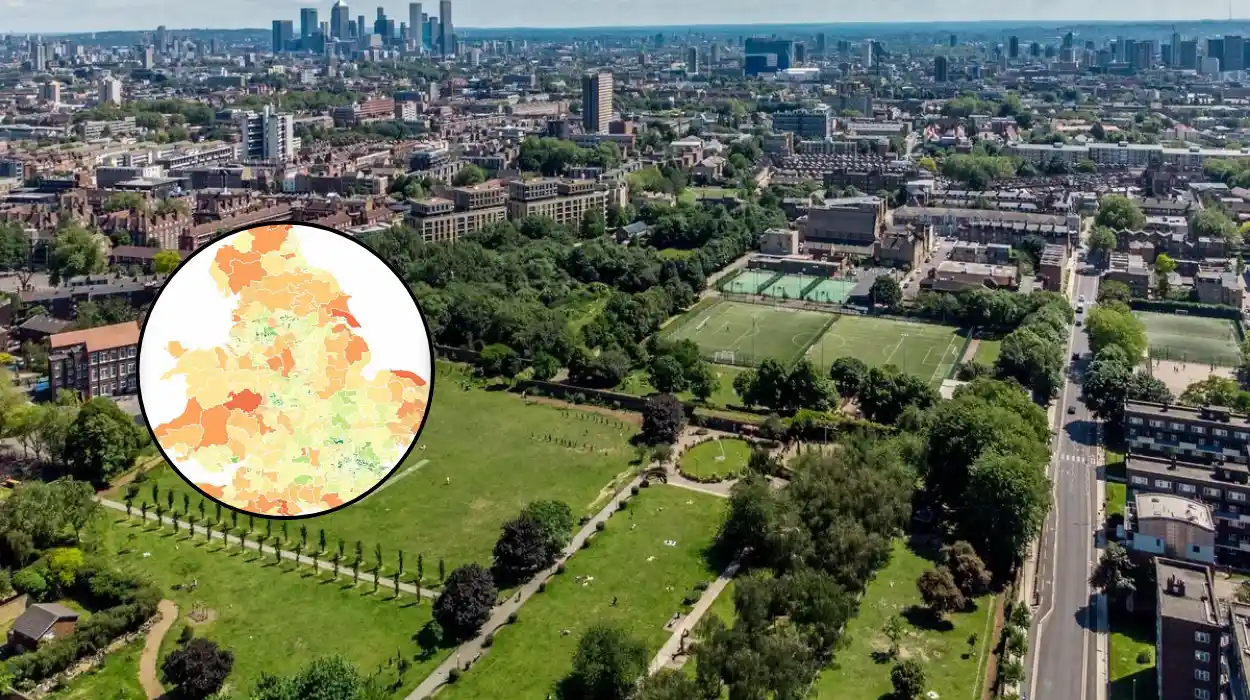
The interactive map enables users to visualise baby and over-65 percentages in any district — and, as Daily Mail staff explain, even zoom down to street level. The tool also provides a full age structure breakdown for local populations, making it one of the most precise demographic resources available to the public without specialist knowledge.
What Do Experts Say About Future Demographic Shifts?
Professor Ozcan’s insight is mirrored by other demographers across media sources. Speaking previously to the BBC, public policy researcher Professor Jane Falkingham of the University of Southampton noted that “continued urbanisation draws younger adults to metropolitan regions, concentrating fertility potential in cities while leaving rural areas disproportionately older.”
A Guardian feature by Robert Booth likewise observed that “Britain’s family geography increasingly mirrors its housing and employment geography — high costs and career opportunities drive clustering of younger families into specific areas, leaving others demographically lopsided.”
Meanwhile, The Telegraph recently warned of “Grey Belt Britain,” an ageing hinterland stretching from the South Coast to the North Sea basin, where younger people are increasingly priced out or moving to cities for work.
What Does This Mean for Local Authorities and Planning?
The sharp contrast between “nappy valleys” and “elderly enclaves” poses logistical challenges for councils. Authorities in family-dense boroughs such as Hackney or Tower Hamlets must invest in nursery places, schools, and playgrounds. Conversely, councils in Arun, East Lindsey, and New Forest focus budget priorities on care facilities, health access, and transport support for seniors.
As highlighted by Daily Mail’s summary, understanding these shifting demographics is crucial for shaping future housing and infrastructure policy. Urban planners and councillors will likely use such granular ONS data to inform resource allocation and community planning.
How Can People Use the Search Tool?
The Daily Mail’s neighbourhood tool allows anyone to search their postcode and discover whether their local area skews young or old, as well as compare statistics nationally. The publication emphasises that each dataset is based on official ONS estimates and updated to reflect mid-2024 demographics.
Users can access the tool on the Daily Mail’s official website, under the ONS Neighbourhood Map feature.
Why Is This Significant for Britain’s Future?
As Britain grapples with record-low fertility and an expanding elderly population, demographic patterns revealed by the Daily Mail’s ONS-based tool underscore profound social and economic transformations. The neighbourhood divides showcased — from baby-abundant Hackney to retirement-rich East Preston — mirror broader questions about housing, migration, and generational equity in modern Britain.
From a journalist’s perspective, these findings turn raw statistics into a vivid portrait of national change. As policymakers debate immigration, family support, and regional funding, one thing remains clear: Britain’s demographic story is no longer uniform — it’s a tale of two nations, each defined by the age of its residents.