Key Points
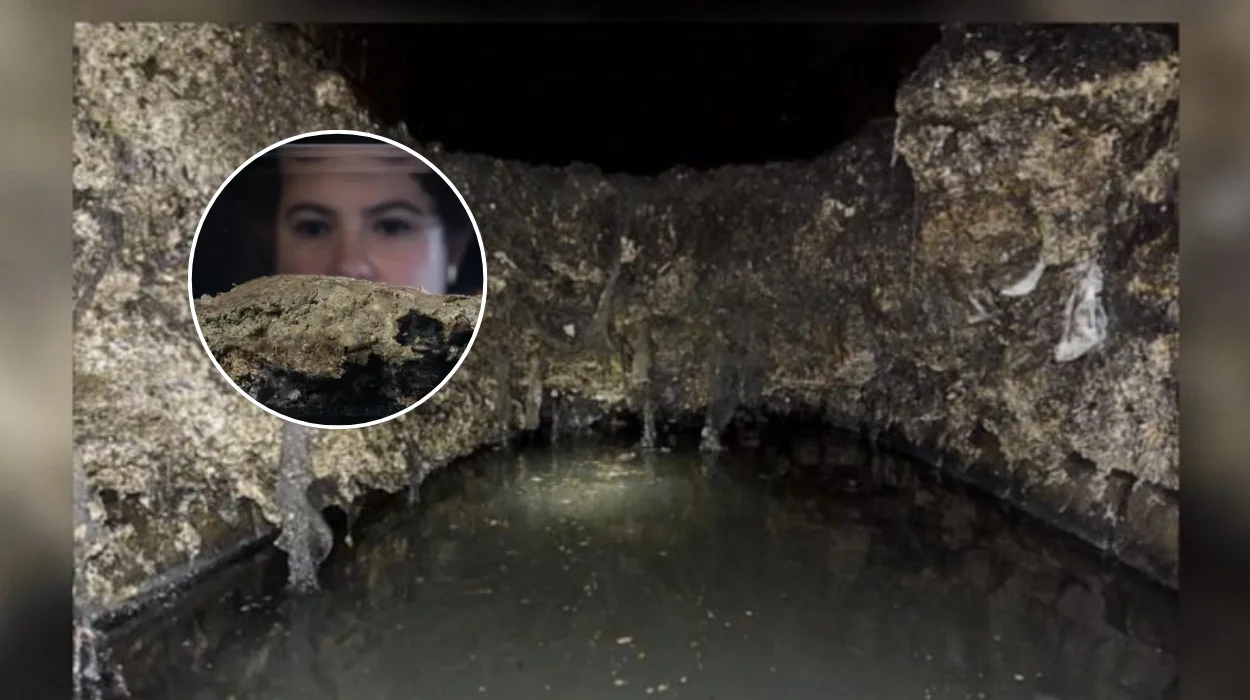
- A 100-tonne, 328ft-long fatberg has been discovered under Whitechapel in east London.
- The fatberg is described as the “grandchild” of the 2017 Whitechapel fatberg, which weighed 130 tonnes.
- Thames Water teams are working to remove the blockage, which could take weeks.
- The company has renewed its plea for the public to avoid pouring fat, oils, grease, and wet wipes down drains.
- The discovery comes just before Christmas, a period when waste fat levels in sewers rise significantly.
- Tim Davies, Head of Waste Operations for North London at Thames Water, warned the operation poses major logistical challenges.
- Fatbergs have become a growing concern in UK cities due to misuse of drains and overloading of old sewer systems.
- Parts of the 2017 Whitechapel fatberg were later exhibited in the Museum of London as an environmental awareness project.
Where was the massive fatberg discovered?
According to a report by Mark Duell of the Daily Mail, Thames Water engineers uncovered the sprawling mass in Whitechapel, not far from Brick Lane — eerily close to the site where the infamous 2017 fatberg was found. That earlier “monster,” as described by BBC News at the time, weighed 130 tonnes and extended 820 feet through Victorian-era sewage tunnels.
- Key Points
- Where was the massive fatberg discovered?
- What exactly is a fatberg and why do they form?
- How big is this fatberg compared to previous ones?
- Why was the fatberg discovered around Christmas?
- How long will it take to remove the blockage?
- What did experts and environmentalists say?
- What are Thames Water’s warnings to the public?
- What is the legacy of the 2017 fatberg?
- What’s next for the current fatberg?
The newly found formation has been dubbed the “grandchild” of the original Whitechapel fatberg by maintenance crews due to its composition and location. The 2025 discovery emerged during a routine sewer inspection that revealed blocked flow and elevated methane levels — a clear indicator of a major obstruction.
What exactly is a fatberg and why do they form?
As explained by The Guardian’s environment correspondent Sandra Laville, a fatberg is a large, solid mass consisting mainly of fat, cooking oil, grease, and non-biodegradable waste such as wet wipes, nappies, and sanitary products. When such materials accumulate and cool within drain networks, they create concrete-like obstructions that can clog entire sewer systems.
An earlier educational campaign by Thames Water described fatbergs as the unintentional by-product of modern living — a mix of domestic waste and industrial runoff hardened into a block capable of stopping water flow entirely.
How big is this fatberg compared to previous ones?
The latest Whitechapel discovery tips the scales at approximately 100 tonnes and stretches 328 feet underground — about the length of a football pitch. Though slightly smaller than its 2017 counterpart, which remains the largest London fatberg on record, the new mass represents a significant danger to sewer operations.
As Tim Davies, Head of Waste Operations for North London at Thames Water, told the BBC,
“This fatberg is enormous — a truly fat-filled monster lurking below our feet. Removing it safely could take weeks, even with continuous effort. Our teams are prepared for a long, tough battle.”
He added that while the company has encountered many similar blockages over the years, the combination of Christmas cooking fats, wet wipes, and grease runoff appears to have created this fresh leviathan.
Why was the fatberg discovered around Christmas?
The timing, as reported by ITV News, is not coincidental. Each festive period, wastewater engineers see a sharp rise in fat and oil deposits, directly linked to Britain’s traditional Christmas cooking habits — particularly the disposal of turkey grease, roast drippings, and frying oil.
A Thames Water spokesperson, quoted by Sky News, stated:
“Every year around Christmas, more fats and oils end up down drains, causing major issues for London’s sewage system. It’s an expensive and avoidable problem.”
The discovery has prompted fresh calls for Londoners to adopt “Bin It, Don’t Block It” habits, including cooling kitchen grease before binning it rather than pouring it down sinks.
How long will it take to remove the blockage?
Speaking to The Independent, Tim Davies noted that removing the blockage could take “weeks to complete,” depending on the density and location of the fatberg. High-pressure jets, vacuum extraction, and manual excavation are all likely to be used.
He added:
“Our teams are working nonstop in challenging underground conditions. These environments are not only unpleasant but can also be hazardous due to gases and confined spaces.”
In 2017, it took nine weeks and dozens of workers to remove the previous Whitechapel fatberg. Engineers expect this effort to be somewhat shorter, but only if the structure can be broken up without intense manual removal.
What did experts and environmentalists say?
According to The Guardian, environmental campaigner Rosie Johnson from Keep Britain Tidy argued that such incidents reflect deeper issues in public awareness and infrastructure design.
“People often assume what goes down the drain disappears forever. But our waste choices literally come back to haunt us,”
she said.
Professor Andrew Howe, an urban waste specialist quoted by The Telegraph, described fatbergs as “living fossils of consumer habits.” He elaborated that analysing fatbergs can reveal trends in diet, hygiene, and even drug use due to the presence of chemical traces.
A 2018 biochemical study by the Museum of London into the 2017 fatberg found residues of cocaine, ketamine, and faecal bacteria — making the substance both toxic and hazardous to handle.
What are Thames Water’s warnings to the public?
Thames Water has urged residents to take simple but effective steps to prevent future blockages. The company’s spokesperson reiterated, as carried by Sky News, that “wet wipes, even those labelled ‘flushable’, should never go down the toilet.”
Tim Davies added via BBC London News,
“Every year, we spend millions tackling fatbergs. That money could be far better spent upgrading systems or helping communities. Everyone has a role in keeping our sewers running properly.”
The firm’s public awareness campaign emphasises ‘Bin it, don’t block it’, urging households to dispose of oil, grease, and wipes in the bin rather than flushing or washing them away.
What is the legacy of the 2017 fatberg?
The original Whitechapel fatberg of 2017 became something of a national curiosity. As reported by The Evening Standard, a slice of the mass was preserved and displayed at the Museum of London as a testament to modern waste habits. The sample, which later began to sprout mould, symbolised both human excess and the environmental cost of poor waste disposal.
The museum’s Senior Curator Vyki Sparkes told the BBC at the time,
“The fatberg captured the public imagination because it represents both the problem and the potential solution: a spotlight on how everyday habits impact cities.”
What’s next for the current fatberg?
Thames Water’s immediate priority is the safe removal and disposal of the newly found fatberg. Waste extracted will likely be sent to a recycling facility, where parts can be processed into biofuel, a method increasingly adopted since the 2010s, according to The Independent.
Once cleared, the section of sewer will undergo inspection and jet washing to prevent residual build-up. Thames Water plans to resume full sewer functionality by mid-January 2026, depending on weather and access conditions.