Key Points
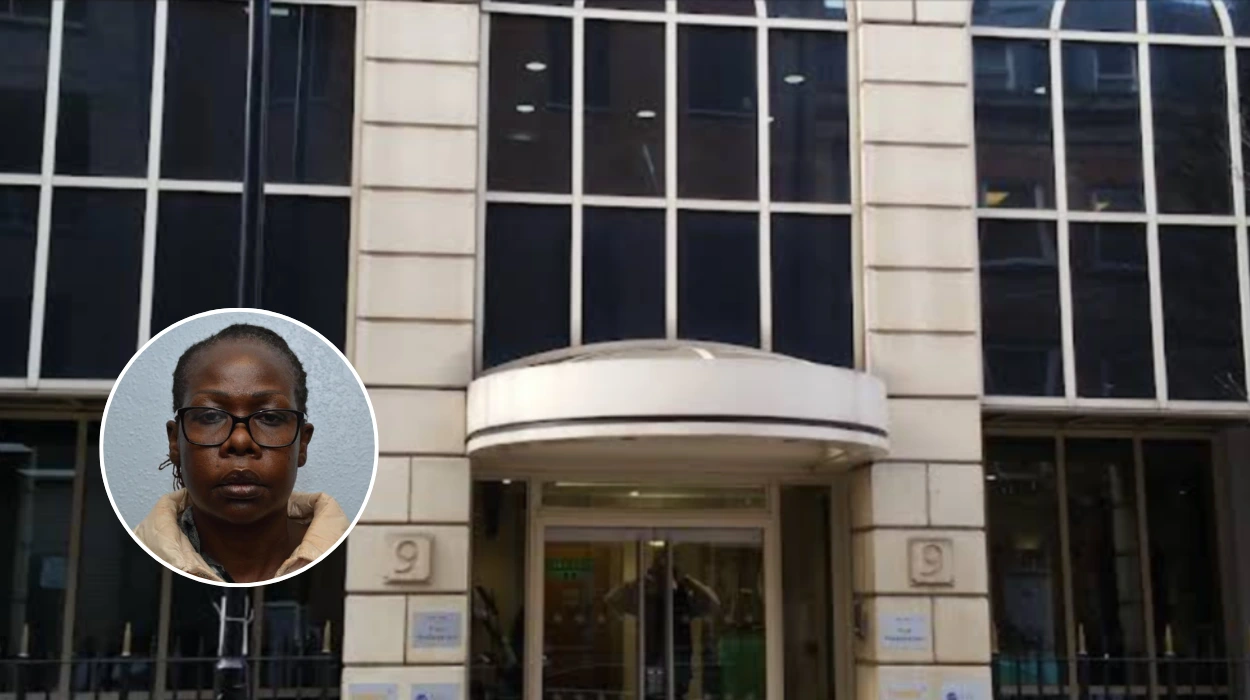
- Former NHS senior nurse Stella Oyella has been permanently struck off by the Nursing and Midwifery Council (NMC) after a terrorism‑funding conviction.
- Oyella, 55, from Newham, and her daughter, 32-year-old health worker Vanessa Atim, arranged for more than £1,800 to be sent to Oyella’s brother, Islamic State (IS) member Joseph Ogaba.
- As reported by London Now, the payments were made between March and October 2017, several years after Ogaba left Finsbury Park in 2013 to join Daesh in Syria.
- The Old Bailey heard that Ogaba, a Muslim convert, left a note saying he was going to join Daesh, also known as IS, when he travelled to Syria via Germany and Turkey.
- According to coverage in the Tottenham Independent, investigators proved that both women knew the cash was supporting terrorist activities and that they made extensive efforts to conceal the transfers.
- Evidence showed the money was routed through intermediaries in Uganda and the Middle East before reaching Ogaba.
- Devices seized from Atim at Heathrow and Gatwick Airports in 2018 contained records of money transfers linked to Ogaba.
- A hard drive linked to Ogaba, examined in 2019, contained money transfer receipts, photos of him with Daesh and extremist content featuring weapons and explosive devices.
- Met Police Commander Dominic Murphy said the women “went to great lengths” to arrange and distance themselves from the transfers, fully aware Ogaba was with a terrorist group.
- Both women pleaded guilty at the Old Bailey to entering into an arrangement to fund terrorism, namely to fund Ogaba.
- Judge Mark Dennis found that while they were not motivated by IS ideology, they had turned a “blind eye” to what Ogaba was doing.
- In March 2024, the Old Bailey jailed Oyella for three years and Atim for three years and nine months, as reported by the Tottenham Independent.
- The NMC concluded in late 2024 that Oyella’s conviction was “fundamentally incompatible” with continuing to practise as a nurse.
- The panel described her conduct as a “significant departure” from professional standards expected of nurses.
- Syrian authorities reported in July 2022 that Ogaba had died in prison following his capture by Syrian defence forces.
A former East London senior NHS nurse has been banned from the profession after she was jailed for funnelling more than £1,800£1,800 to her brother, a committed member of the Islamic State (IS) group, in a case that exposed how family loyalty, covert cash transfers and professional standards fatally collided.
- Key Points
- Why has the NHS nurse been banned from practising?
- Who are the nurse, her daughter and the brother who joined IS?
- How did Joseph Ogaba travel from Finsbury Park to join Daesh?
- When and how was money sent to the IS fighter?
- How did investigators uncover the money transfers and digital evidence?
- Through which routes was the money funnelled to Syria?
- What did the Metropolitan Police say about the women’s conduct?
- What did the Old Bailey decide about their motives and guilt?
- What prison sentences did Stella Oyella and Vanessa Atim receive?
- How did the NMC link the conviction to professional nursing standards?
- What is known about the reported death of Joseph Ogaba in Syria?
Why has the NHS nurse been banned from practising?
The decision to remove 55-year-old Newham resident and former East London NHS Foundation Trust senior nurse, Stella Oyella, from the nursing register followed a detailed review by the Nursing and Midwifery Council (NMC) of her criminal conviction for terrorism funding.
As reported by London Now in its coverage of the NMC proceedings, the professional regulator concluded in a decision issued last month that Oyella’s actions represented a “significant departure” from the standards expected of a registered nurse. The NMC panel also determined that her conviction for entering into an arrangement to fund terrorism was “fundamentally incompatible” with her continuing to work as a nurse in the future.
According to the London Now report, the panel considered the seriousness of the offence, the deliberate and sustained nature of the conduct, and the impact on public confidence in the profession. The NMC emphasised that public trust in nursing requires that those convicted of serious terrorism‑related offences cannot remain on the register, particularly where the conduct continued over months and involved attempts to disguise the funding route.
Who are the nurse, her daughter and the brother who joined IS?
As set out in reports by London Now and the Tottenham Independent, the case centres on three family members with links to north and east London:
- Stella Oyella – A 55-year-old senior nurse who, at the time of the offending, was employed by East London NHS Foundation Trust and living in Newham.
- Vanessa Atim – Her 32-year-old daughter, also working in health care, who jointly arranged the transfer of funds.
- Joseph Ogaba – Oyella’s brother and Atim’s uncle, a Muslim convert from Finsbury Park who left the UK to join the Islamic State group in Syria.
As reported by London Now, Ogaba had been based in Finsbury Park, north London, before his departure. The Old Bailey later heard that he had embraced a more radical ideology before leaving the capital.
According to court reporting cited by the Tottenham Independent, both women acted out of loyalty to Ogaba, despite being aware that he had aligned himself with a proscribed terrorist organisation.
How did Joseph Ogaba travel from Finsbury Park to join Daesh?
The background to the case was laid out in detail at the Old Bailey. As reported by journalists covering the trial for the Tottenham Independent, the court heard that in September 2013, Ogaba left London and travelled to Syria via Germany and Turkey.
According to that report, Ogaba, described in court as a Muslim convert, left behind a note explicitly stating that he was going to join Daesh, the Arabic acronym commonly used for the Islamic State group. The note made clear that he did not intend to return to the UK and that he was seeking to live under what he viewed as an Islamic caliphate.
The Old Bailey was told that following his arrival in Syria, Ogaba embedded himself with Daesh. His subsequent activities were later evidenced by digital material recovered by investigators, including images and extremist content.
When and how was money sent to the IS fighter?
The core of the criminal case against Oyella and Atim concerned a series of cash transfers made several years after Ogaba had left the UK. As reported by London Now, the pair arranged for more than £1,800 to be sent between March and October 2017.
According to the Tottenham Independent’s account of the prosecution case, investigators showed that the women went to considerable lengths to conceal the true destination of the funds. Rather than transferring money directly to Syria, they routed payments through intermediaries abroad.
The Old Bailey heard that the pattern of payments, their timing and the manner in which they were made demonstrated a sustained effort to support Ogaba financially while distancing themselves from the money’s ultimate destination. Prosecutors argued that the sums, though modest, were significant in the context of financing an individual operating within a war zone under the control of a terrorist organisation.
How did investigators uncover the money transfers and digital evidence?
The criminal investigation spanned several years and involved the seizure and analysis of multiple devices. As reported by London Now and the Tottenham Independent, a key breakthrough came when officers detained Atim at UK airports.
According to the Tottenham Independent’s March 2024 report, in March and December 2018 Atim was stopped by officers at Heathrow and Gatwick Airports. Devices seized from her during those interventions contained evidence of money transactions that linked her to transfers in favour of her uncle, Ogaba.
As reported by London Now, the Metropolitan Police’s Counter Terrorism Command continued to pursue digital leads. In 2019, detectives analysed a computer hard drive linked directly to Ogaba. On that drive, they discovered scans of money transfer receipts that correlated with the payment pattern identified in earlier financial investigations.
The hard drive also contained photographs of Ogaba himself, which investigators said showed him in contexts consistent with active involvement with Daesh. Additionally, officers found extremist content, including images of weapons and explosive devices. These materials, as reported by London Now, were assessed as clear indications of his participation in the activities of the terrorist organisation.
Through which routes was the money funnelled to Syria?
The investigation further revealed the complex path taken by the funds. As outlined in London Now’s reporting, it was determined that money originating from Oyella and Atim in the UK was first sent to an individual in Uganda.
According to the same account, the funds were then transferred onwards to contacts in the Middle East. From there, they ultimately reached Ogaba in Syria. This indirect route, prosecutors argued, was a deliberate attempt to obscure the link between the UK‑based senders and the IS fighter beneficiary.
As reported by journalists at the Tottenham Independent, the use of Uganda and Middle Eastern intermediaries formed a central plank of the prosecution’s case that the mother and daughter knew the risks of detection and sought to circumvent them. The pattern of transfers, which aligned with the period from March to October 2017, reinforced the prosecution’s argument that this was not a one‑off act but a sustained arrangement.
What did the Metropolitan Police say about the women’s conduct?
The Metropolitan Police characterised the women’s role as both deliberate and sustained. As reported by London Now in its coverage of the police response to the sentencing, Met Police Commander Dominic Murphy, from the Counter Terrorism Command, said the case demonstrated calculated efforts to support a known terrorist.
As quoted by London Now, Met Police Commander Dominic Murphy stated: “These women went to great lengths to first arrange, and then distance themselves from money transfers to Ogaba. They knew he had travelled to Syria to join a terrorist group and by sending him cash, they helped him remain with Daesh.”
Commander Murphy’s comments underlined the police view that the financial support provided by Oyella and Atim had real consequences on the ground in Syria. The statement also highlighted the continued priority placed by counter‑terrorism authorities on targeting funding networks that sustain individuals aligned with proscribed organisations.
What did the Old Bailey decide about their motives and guilt?
At the Old Bailey, both women admitted their criminal responsibility. As reported by the Tottenham Independent, Oyella and Atim pleaded guilty to entering into an arrangement to fund Joseph Ogaba, knowing that he was engaged with the Islamic State group.
Sentencing the pair, Judge Mark Dennis KC drew a distinction between ideological extremism and wilful negligence. As reported by the Tottenham Independent, Judge Dennis concluded that neither woman had been directly motivated by IS’s extremist beliefs. However, he found that they had effectively turned a “blind eye” to what their brother and uncle was engaged in.
The judge made clear that, in the court’s view, their familial connection to Ogaba did not excuse their decision to support him financially after he had made his allegiance to Daesh explicit. The guilty pleas were taken into account as a mitigating factor, but the court emphasised the gravity of funding a person embedded in a terrorist organisation.
What prison sentences did Stella Oyella and Vanessa Atim receive?
The court imposed custodial sentences on both defendants, reflecting the seriousness of terrorism‑related funding offences. As reported in March 2024 by the Tottenham Independent, 55‑year‑old Oyella received a sentence of three years’ imprisonment.
Her daughter, 32‑year‑old Atim, was jailed for three years and nine months. According to the Tottenham Independent’s account, the longer term for Atim reflected her direct involvement in arranging the transfers and the evidence gleaned from the devices seized at Heathrow and Gatwick.
Both sentences were handed down after the women had entered guilty pleas, thereby avoiding a full trial. As noted in coverage by London Now, the judge acknowledged the guilty pleas but stressed that a strong deterrent message was required in cases where individuals choose to provide financial support to members of proscribed organisations overseas.
How did the NMC link the conviction to professional nursing standards?
Following the criminal proceedings, the NMC opened its own fitness‑to‑practise investigation into Oyella’s conduct. As reported by London Now, the regulator examined whether a nurse convicted of such an offence could remain on the register without seriously undermining public confidence.
The NMC’s panel concluded that the conviction itself, combined with the deliberate nature of the offending, meant that continued registration was untenable. The panel described her behaviour as a “significant departure” from the standards of integrity, trustworthiness and responsibility expected of nurses working with vulnerable patients and the wider public.
According to London Now’s reporting, the panel specifically found that the offence was “fundamentally incompatible” with ongoing practice in nursing. The decision to strike her off was framed as necessary both to protect the public and to uphold the reputation of the profession, particularly given her senior role within East London NHS Foundation Trust at the time of offending.
What is known about the reported death of Joseph Ogaba in Syria?
The narrative surrounding Ogaba’s fate emerged some years after his departure from London. As reported by London Now, Syrian authorities informed international counterparts in July 2022 that Ogaba had died while in prison.
According to that reporting, Syrian defence forces had captured Ogaba during operations against remnants of the Islamic State group. He was subsequently held in custody and is understood to have died there, though detailed circumstances of his death have not been publicly disclosed.
The report of his death did not alter the legal position of his sister and niece, whose criminal case focused on the period when he was active with Daesh and receiving funds. However, as covered by London Now, the information about his death formed part of the broader context considered by the NMC panel when assessing the long‑term implications of the case for public confidence and the nursing profession.