Key Points
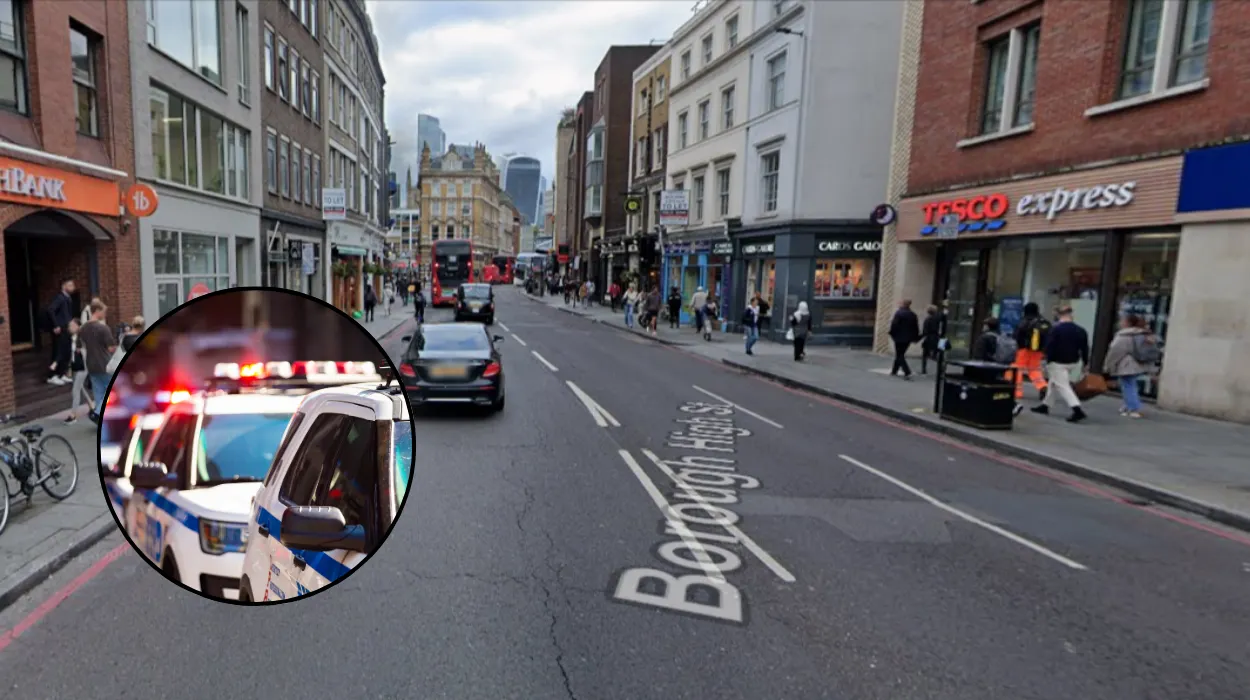
- A man in his 30s died after being hit by a marked police vehicle on Borough High Street in Southwark, south east London, at around 12.30am on Wednesday, 7 January 2026.
- The police vehicle was responding to an emergency call at the time of the collision.
- Officers at the scene provided emergency first aid to the pedestrian, followed by treatment from paramedics of the London Ambulance Service (LAS), but the man was pronounced dead at the scene.
- The man’s next-of-kin have been informed and are receiving support from specialist family liaison officers.
- The Independent Office for Police Conduct (IOPC) has launched an independent investigation into the circumstances of the incident.
- The Metropolitan Police’s Directorate of Professional Standards (DPS) was notified, as per standard procedure, and Met officers are supporting the IOPC’s enquiries.
- Cordons remain in place at Borough High Street, causing disruption to local traffic.
- The LAS confirmed they were called at 12.34am on 7 January to reports of a road traffic collision on Borough High Street, SE1.
A tragic collision in south east London has claimed the life of a man in his 30s after he was struck by a police vehicle responding to an emergency. The incident occurred on Borough High Street, Southwark, at approximately 12.30am on 7 January 2026, prompting an immediate investigation by the Independent Office for Police Conduct (IOPC). Officers and paramedics attended the scene, but the pedestrian could not be saved, with his family now supported by specialist officers amid ongoing enquiries.
- Key Points
- What Happened in the Collision?
- Why Has an Investigation Been Launched?
- Who Is Supporting the Victim’s Family?
- What Is the Current Situation at the Scene?
- What Role Does the IOPC Play in Police Incidents?
- How Does This Fit into Broader Police Collision Trends?
- What Happens Next in the Investigation?
- When Did the Incident Occur and What Was the Timeline?
- Where Exactly Did the Collision Take Place?
- Who Are the Key Responders Involved?
- Implications for Emergency Response Protocols?
What Happened in the Collision?
The marked police vehicle was en route to an emergency when it collided with the pedestrian on Borough High Street. As detailed in the initial police statement, the incident took place at 12.34am on Wednesday, 7 January. Officers promptly administered first aid at the scene, with paramedics from the London Ambulance Service arriving shortly thereafter to provide further treatment. Despite these efforts, the man, believed to be in his 30s, was declared deceased at the location.
A Metropolitan Police spokesperson outlined the sequence of events: “At 12.34am on Wednesday, January 7, a marked police vehicle was on an emergency call when it was involved in a collision with a pedestrian on Borough High Street, Southwark.” The spokesperson added:
“The pedestrian, a man in his 30s, was given emergency first aid by officers before being treated by paramedics from the London Ambulance Service. His next-of-kin have been informed and are being supported by specialist officers.”
A London Ambulance Service spokesperson corroborated the timeline, stating:
“We were called at 12.34am today (7 January) to reports of a road traffic collision on Borough High Street, SE1.”
This alignment of accounts from both police and ambulance services underscores the rapid response to the tragedy.
Why Has an Investigation Been Launched?
The IOPC has taken the lead in investigating the incident, as is standard for cases involving police vehicles and fatalities. The watchdog was notified alongside the Met’s Directorate of Professional Standards by the Metropolitan Police itself. The IOPC’s probe remains fully independent of the Met Police, though Met officers are assisting with enquiries to ensure a thorough examination.
The Met spokesperson confirmed:
“As is standard practice, the Met’s Directorate of Professional Standards was informed about the incident, as has the Independent Office for Police Conduct (IOPC). The IOPC has begun an independent investigation and officers will continue to support them and their enquiries.”
This procedural step reflects protocols designed to maintain transparency and accountability in such sensitive matters.
No further details on the nature of the emergency call or the pedestrian’s identity have been released, respecting the family’s privacy during this period.
Who Is Supporting the Victim’s Family?
The man’s next-of-kin were notified promptly following the incident and are being cared for by specialist officers trained in family liaison. The Met spokesperson emphasised this support: “His next-of-kin have been informed and are being supported by specialist officers.” Such measures are routine in fatal incidents to provide emotional and practical assistance to those affected.
This compassionate approach highlights the police’s commitment to family welfare even as the investigation progresses.
What Is the Current Situation at the Scene?
Cordons are still in place around Borough High Street to facilitate the investigation and preserve evidence. Local traffic continues to experience disruption as a result. The Met spokesperson noted:
“Cordons remain at the location and local traffic is being disrupted.”
Residents and commuters in Southwark are advised to expect delays, with authorities urging patience while specialist teams conduct their work. Borough High Street, a busy thoroughfare near landmarks like London Bridge, typically sees heavy foot and vehicle traffic, amplifying the impact of the closure.
What Role Does the IOPC Play in Police Incidents?
The Independent Office for Police Conduct serves as the police complaints watchdog for England and Wales, stepping in for independent scrutiny whenever serious incidents occur. In this case, the IOPC was notified directly by the Met Police and has assumed control of the investigation. Their remit includes assessing whether police actions were appropriate, particularly given the emergency response context.
The Met’s cooperation is explicit: officers “will continue to support them and their enquiries.” This separation ensures impartiality, with the IOPC able to compel evidence and witness statements as needed.
How Does This Fit into Broader Police Collision Trends?
While specific prior incidents are not detailed in the immediate reports, police vehicle collisions during emergency responses remain a point of public and regulatory scrutiny. The IOPC’s involvement here aligns with its mandate to review such cases rigorously. Historical data from similar investigations often examines factors like speed, visibility, and decision-making under pressure.
No statements from IOPC representatives beyond the launch confirmation have been issued at this stage, but updates are anticipated as the probe advances.
What Happens Next in the Investigation?
The IOPC’s independent investigation will proceed with full access to dashcam footage, witness accounts, and forensic analysis. Met officers’ support includes providing operational logs from the emergency call. No arrests have been reported, and the focus remains on fact-finding.
Families and the community await clarity, with the IOPC typically releasing progress reports or findings in due course. The Met has committed to ongoing assistance, ensuring no stone is left unturned.
When Did the Incident Occur and What Was the Timeline?
To recap the precise timeline: the collision happened at around 12.30am, with the Met logging it at 12.34am on 7 January 2026. First aid commenced immediately, LAS arrived promptly, and the death was confirmed at the scene. Notifications to IOPC and DPS followed standard immediate protocols.
This early morning timing on a central London street likely involved fewer witnesses, complicating but not hindering the enquiry.
Where Exactly Did the Collision Take Place?
Borough High Street in Southwark, south east London, lies within the SE1 postcode, near key transport hubs. The location’s prominence means significant disruption, as cordons affect access to nearby areas. Maps and live updates from transport authorities would detail diversions.
Who Are the Key Responders Involved?
- Metropolitan Police: Provided first aid, notified IOPC/DPS, supporting enquiries, managing cordons.
- London Ambulance Service: Dispatched paramedics for treatment.
- Independent Office for Police Conduct: Leading the independent investigation.
- Specialist Family Liaison Officers: Supporting the next-of-kin.
Each entity’s role is clearly delineated in official statements.
Implications for Emergency Response Protocols?
This incident raises questions about blue-light driving practices, though no judgements are premature. The IOPC will scrutinise adherence to codes of practice for pursuits and responses. Past reviews have led to training enhancements, potentially informing future safeguards.
Communities in south east London, no strangers to urban challenges, will watch developments closely.