Key Points
- Isaac Harvey, a disability advocate from East London, received an MBE honour despite initial reservations about the British Empire’s dark history, viewing it as a reflection on the wider disability community.
- Born with limb-pelvis hypoplasia/aplasia (LPHA), Isaac has no arms and short legs, requiring adaptive housing and ongoing care for basic needs like eating, drinking, preparing food, and using the bathroom.
- In early 2025, Isaac became effectively homeless when his mother, his primary carer, left the country for three weeks; Redbridge Council failed to provide timely support despite repeated requests.
- The advocate working with Isaac sided with the council, exacerbating his anxiety as no concrete support plan emerged.
- Council’s initial response offered only four daily care visits, deemed unsuitable by Isaac given his full-time needs.
- After Isaac publicised his plight on social media days before his mother’s departure, the council funded a respite centre stay, but issues continued with inappropriate placements limited to their network.
- Some proposed placements were for people with severe learning disabilities, not matching Isaac’s physical disability needs.
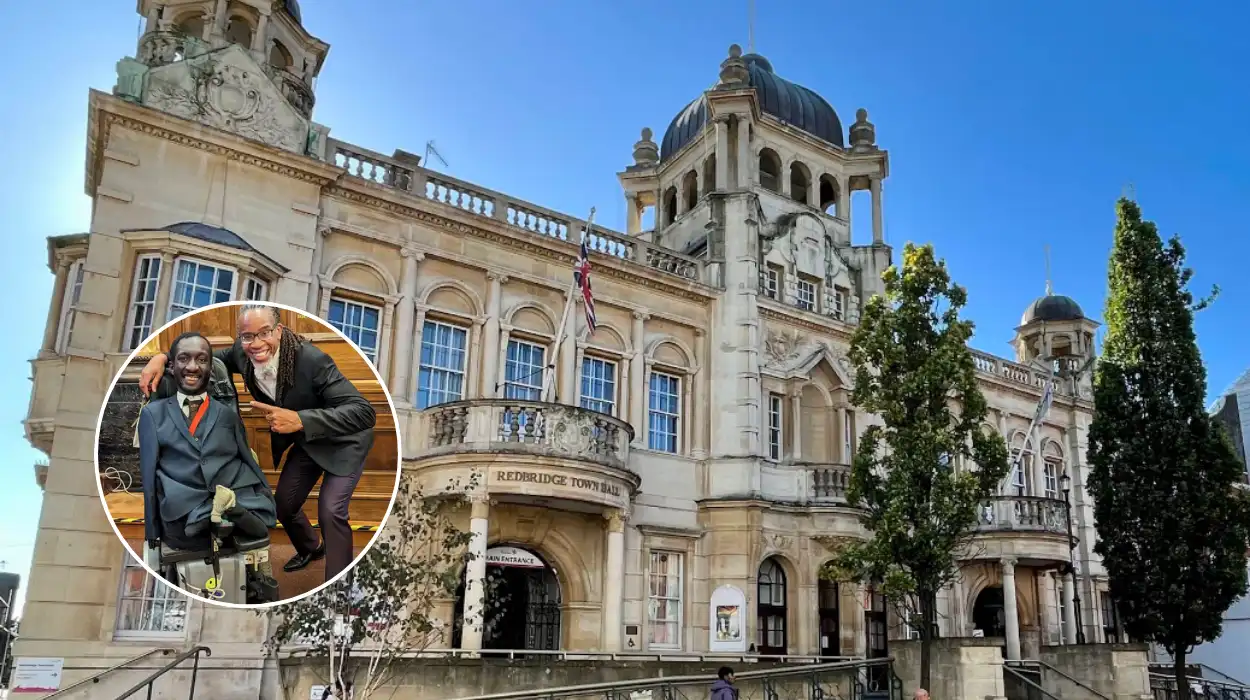
East London (East London Times) January 10, 2026 – Isaac Harvey, an East London disability advocate honoured with an MBE, has been left effectively homeless by Redbridge Council after his primary carer, his mother, left the country for three weeks in early 2025, with the authority failing to provide adequate timely support despite his severe physical disabilities.
- Key Points
- Who is Isaac Harvey and Why Did He Accept the MBE?
- What Disability Does Isaac Harvey Live With?
- What Triggered Isaac Harvey’s Homelessness?
- How Did Redbridge Council Initially Respond?
- How Did Social Media Intervene in Isaac’s Crisis?
- Why Were Council Placements Inappropriate for Isaac?
- What Broader Issues Does This Raise for Disability Support in Redbridge?
- Has Isaac Harvey Continued Advocacy Amid Hardship?
- What Lessons Emerge from Isaac’s Battle with Redbridge Council?
- How Has the Disability Community Responded?
- What Next Steps Might Isaac Harvey Face?
Isaac Harvey, born with limb-pelvis hypoplasia/aplasia (LPHA) resulting in no arms and short legs, requires constant adaptive care for daily living. Despite repeated pleas to Redbridge Council, no sufficient assistance materialised in time, leaving him in a precarious situation. Only after publicising his ordeal on social media did the council arrange a respite centre placement, though subsequent offers remained unsuitable.
Who is Isaac Harvey and Why Did He Accept the MBE?
Isaac Harvey never sought personal acclaim for his advocacy work within the disability community. When nominated for an MBE, he deliberated extensively due to the British Empire’s dark history. Ultimately, Isaac decided to accept, reasoning it would serve as “a good reflection on the disability community.”
As Isaac Harvey himself states,
“This is not just my award, it’s our award.”
He credits the wider disability community and supporters who aided his journey, emphasising, “I couldn’t have done it by myself.” This moment of national pride, one of the highest honours the nation bestows, occurred just two years before his homelessness crisis unfolded.
Isaac has consistently shunned applause or awards, focusing instead on tireless advocacy. The MBE represented collective achievement rather than individual glory, highlighting his commitment to dignity for those with disabilities.
What Disability Does Isaac Harvey Live With?
Isaac was born with limb-pelvis hypoplasia/aplasia (LPHA), a condition meaning he has no arms and short legs. This physical disability necessitates adaptive housing and ongoing care to maintain a dignified life. He cannot perform basic tasks independently.
“I can’t eat and drink by myself, I can’t prepare food, I can’t go to the bathroom by myself,” Isaac tells The Lead. These dependencies underscore the critical nature of reliable support systems.
Redbridge Council’s awareness of these needs came under scrutiny, as their responses failed to align with his requirements.
What Triggered Isaac Harvey’s Homelessness?
At the beginning of 2025, Isaac became effectively homeless when his mother, his primary carer, had to leave the country for three weeks. Despite repeatedly asking Redbridge Council for extra support to cover his needs during her absence, help was not provided in time.
The advocate Isaac was working alongside at the time sided with the council instead of supporting him, and Isaac’s anxiety built as no concrete support plan was put in place.
“Days were passing and they just weren’t getting back to us. I was getting anxious, my mum was getting anxious. We didn’t know what was going to happen,”
Isaac recounts to The Lead.
This delay left Isaac vulnerable, highlighting systemic shortcomings in council responsiveness for vulnerable residents.
How Did Redbridge Council Initially Respond?
When the council finally responded, their suggestion of a limited number of daily care visits proved entirely unsuitable.
“The social worker knew what my needs were – how could they think it was appropriate to say, ‘We’ll start you off with four visits a day’? I need something in place properly, now. You can’t ‘start off’ with that. And what – wait to see if I’m still alive?”
Isaac questions, as reported by The Lead.
Four visits per day could not meet his round-the-clock requirements for eating, personal care, and mobility. The proposal ignored the urgency and permanence of his care needs.
Isaac’s frustration centred on the inadequacy, demanding immediate comprehensive arrangements rather than tentative measures.
How Did Social Media Intervene in Isaac’s Crisis?
Isaac took matters into his own hands by sharing his situation on social media, just days before his mother left. This public appeal prompted Redbridge Council to agree to pay for him to stay at a respite centre.
The move averted immediate crisis, demonstrating the power of visibility in compelling official action. However, it marked only a temporary reprieve.
Council insistence on placements within their own network persisted, limiting options to potentially mismatched facilities.
Why Were Council Placements Inappropriate for Isaac?
Post-respite, Redbridge Council insisted on finding Isaac placements solely within their network, some wholly inappropriate for his needs. Certain facilities catered to people with severe learning disabilities, not physical disabilities like Isaac’s.
These mismatches risked undermining his care quality and independence. Isaac’s LPHA requires specialised physical adaptations, absent in learning disability-focused settings.
The network restriction narrowed viable choices, prolonging his instability.
What Broader Issues Does This Raise for Disability Support in Redbridge?
Isaac Harvey’s ordeal exposes potential gaps in Redbridge Council’s emergency support protocols for disabled residents. Despite his MBE status and known advocacy profile, basic aid lagged.
The siding of his advocate with the council adds complexity, questioning independence in support networks. Anxiety from uncertainty affected both Isaac and his mother.
Ongoing care inadequacies challenge claims of dignified living for physically disabled individuals under council oversight.
Has Isaac Harvey Continued Advocacy Amid Hardship?
Even homeless and battling bureaucracy, Isaac maintains his advocacy. His MBE acceptance philosophy persists: elevating the community over self.
Statements to The Lead reveal resilience, framing personal struggle within wider disability rights. “This is not just my award, it’s our award,” he reiterates.
His social media intervention underscores proactive engagement, turning personal plight into public accountability.
What Lessons Emerge from Isaac’s Battle with Redbridge Council?
Isaac’s case prompts scrutiny of council response times for high-needs cases. Initial four-visit offers contrast sharply with full-care realities.
Social worker knowledge of needs versus proposals raises training and assessment questions. Respite funding post-publicity suggests reactive rather than proactive policy.
Network-limited placements highlight commissioning flaws, prioritising internal arrangements over suitability.
How Has the Disability Community Responded?
Isaac credits supporters in the disability community for his MBE journey. Their role amplifies his narrative of collective honour.
No specific community reactions to his homelessness appear in reports, but his advocacy credits them centrally. Future backing may intensify calls for systemic reform.
What Next Steps Might Isaac Harvey Face?
Ongoing fights with Redbridge Council persist beyond respite. Suitable long-term adaptive housing remains paramount.
Isaac’s public profile could galvanise wider scrutiny. His statements demand immediate, proper support, not trials.
Resilience defines his path, from MBE pride to homelessness advocacy.