Key Points
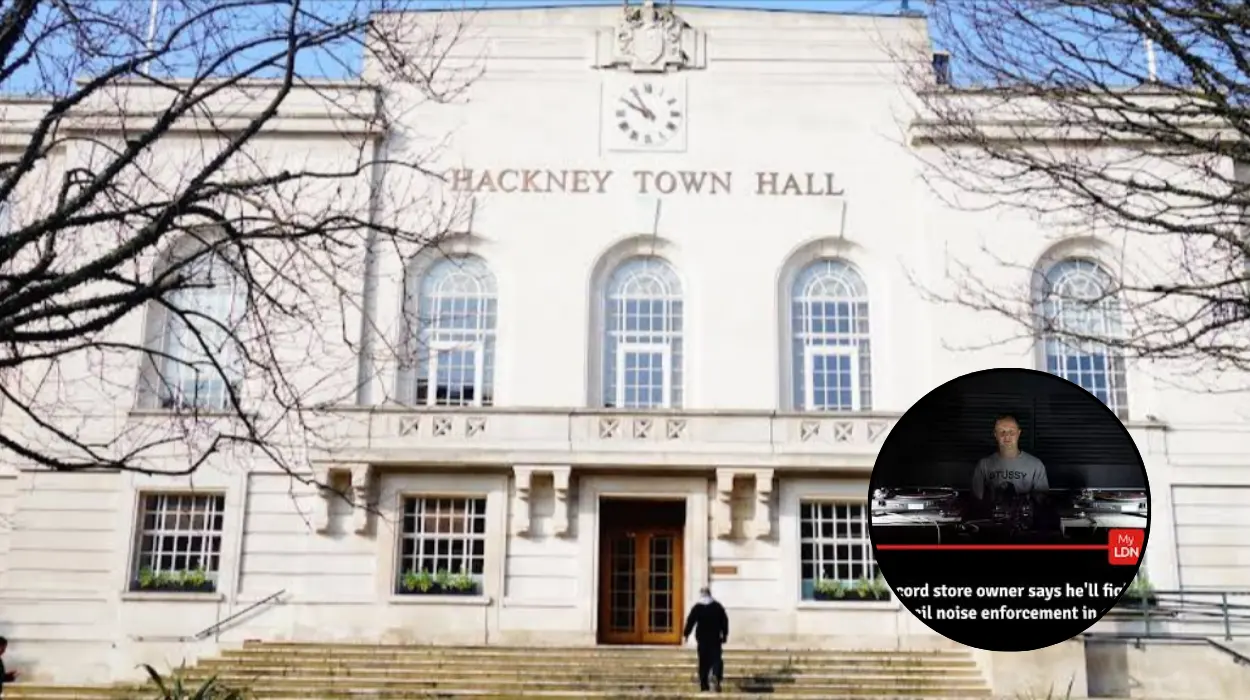
- East London record store owner Rob Smith, of Recycle Vinyl in Hackney, vows to challenge Hackney Council’s noise enforcement notice in court after it blocked his daytime DJ events.
- Store opened late 2024 off Dalston’s Kingsland High Street; sales dropped sharply, prompting summer day parties to boost footfall.
- First event in June 2025 triggered multiple neighbour noise complaints, leading council and Metropolitan Police to revoke permissions for subsequent events.
- Council’s Environmental Health team issued a noise abatement order, citing statutory nuisance risks from DJ sound systems in the backyard.
- Rob’s ‘silent disco’ alternative in the yard was rejected by council and Met Police.
- Non-compliance with abatement order risks fines up to £40,000 for businesses or equipment seizure; Rob plans legal fight to protect his livelihood.
- Incident highlights tensions between small music businesses reviving high streets and residents’ quality-of-life concerns in gentrifying Hackney.
- Broader context: Hackney Council’s aggressive noise enforcement amid rising complaints in post-pandemic urban recovery.
Hackney Record Store Owner Vows Court Battle Against Council’s Noise Crackdown
Hackney, Recycle Vinyl – January 14, 2026 – A determined record shop owner in Hackney has pledged to take his local council to court over a contentious noise abatement order that has silenced his plans for daytime DJ events. Rob Smith, who runs the second-hand vinyl haven Recycle Vinyl just off Dalston’s bustling Kingsland High Street, opened his doors in late 2024 amid high hopes for reviving the area’s fading music scene. But what began as a creative bid to lure customers through summer day parties has spiralled into a legal showdown with Hackney Council, pitting small business survival against neighbours’ demands for quiet.
Smith’s ordeal underscores the fragile balance in East London’s creative economy, where independent venues struggle to adapt in a post-pandemic landscape marked by empty high streets and soaring rents. After witnessing a “sharp drop-off in takings” in the store’s early months, as Smith described it, he sought council permission for a series of low-key daytime events featuring local DJs. These were envisioned not as raucous nights out but as family-friendly afternoons to draw in vinyl enthusiasts and casual browsers alike. Hackney Council initially greenlit the plans, only to pull the plug following the inaugural event last June.
That first dance session in the shop’s modest backyard sparked a flurry of complaints from nearby residents, who reported disruptive bass rumbling through their homes well into the evening. Hackney Council’s Environmental Health team, in tandem with the Metropolitan Police, swiftly intervened. They cited the “risk of further complaints” from a DJ-led sound system in the open-air space, revoking permissions for all subsequent events. Even Smith’s pragmatic workaround—a silent disco using wireless headphones to contain the sound—was shot down by both the council and the Met, who argued it still posed enforcement challenges.
The hammer fell with a formal noise abatement order, a powerful tool under the Environmental Protection Act 1990 that local authorities deploy when they deem a “statutory nuisance” exists. Breaching such an order constitutes a criminal offence, punishable by fines up to £20,000 on summary conviction or unlimited fines on indictment for business premises—potentially climbing to £40,000 with additional costs. In extreme cases, councils can seize equipment, a fate Smith is determined to avoid.
“This isn’t just about music; it’s about my livelihood and the soul of Dalston,”
Smith told reporters this week, vowing to fight the order in magistrates’ court.
“We’ve bent over backwards to comply, but they’re shutting down any innovation before it even starts.”
The Backstory: From Vinyl Dreams to Regulatory Nightmare
Recycle Vinyl embodies the gritty resilience of Hackney’s independent retail scene. Tucked away from the neon glare of Kingsland High Street, the shop specialises in curated second-hand records spanning genres from rare reggae pressings to obscure electronica. Smith, a former music promoter with deep roots in London’s underground scene, launched the store in November 2024 as high streets reeled from the dual blows of COVID lockdowns and online retail dominance. “Vinyl sales were booming globally, but here in Hackney, punters weren’t coming through the doors,” he explained. Footfall plummeted as remote work lingered and cost-of-living pressures kept wallets shut.
Enter the day party idea: a nod to Dalston’s storied nightlife heritage, reimagined for daylight hours. Smith applied for temporary event notices (TENs) under licensing laws, securing approvals for events capped at 100 attendees with strict 4pm-8pm timings. The June pilot featured emerging DJs spinning soulful sets, with promises of no amplified vocals and volume limits. Yet, within hours, calls flooded the council’s hotline. Residents in the densely packed Victorian terraces described “thumping bass” infiltrating bedrooms, despite the event wrapping early. One anonymous complainant told the Evening Standard:
“We support local business, but not at the expense of our sleep.”
Hackney Council’s response was swift and procedural. Environmental Health officers conducted site visits, measuring decibel levels and consulting acoustic experts. Their report highlighted the backyard’s proximity to bedrooms—mere metres away—and the inherent uncontrollability of outdoor sound systems. The Met Police weighed in, flagging public order risks in an area already strained by weekend revellers. Smith’s silent disco pitch, which would pipe audio directly to attendees’ headphones, was dismissed as untested and logistically fraught. “We can’t police headphones,” a council spokesperson noted dryly.
Legal Stakes and Broader Implications
At its core, this dispute hinges on Section 79 of the Environmental Protection Act, which empowers councils to abate nuisances like excessive noise. Noise abatement notices must specify the nuisance and remediation steps; Smith’s requires ceasing all amplified music events. Appeal lies in the magistrates’ court, where judges assess if a genuine statutory nuisance existed. Precedents abound: in 2023, a Shoreditch bar owner lost a similar challenge, fined £15,000 after rooftop parties disturbed residents. Smith, however, eyes a different outcome, arguing the council overreached by preemptively blocking approved events.
His legal team plans to challenge the notice’s proportionality, citing evidence from the June event showing compliance with limits—peak levels at 85dB, below nuisance thresholds indoors. They’ll subpoena neighbour logs to probe complaint patterns, potentially revealing serial objectors amid Hackney’s gentrification wars. The borough has seen a 25% rise in noise complaints since 2022, per council data, as young professionals move into converted warehouses once home to squat raves.
This case ripples beyond one shop. Hackney’s music ecosystem, once a global beacon, faces existential threats. Venues like The Cause and Pickle have shuttered under similar pressures, while survivors like Fabric navigate 24-hour licences amid Agent of Change rules—new protections mandating soundproofing for builds near nightlife. Yet small operators like Recycle Vinyl fall through cracks, lacking big-budgets for acoustic engineers.
“Councils talk culture strategy but wield enforcement like a sledgehammer,”
says Mick Hutchinson of the Night Time Industries Association (NTIA).
“Post-Brexit, post-COVID, we’re losing what makes London London.”
Smith remains defiant.
“I’ll represent every trader squeezed out by red tape,”
he says, launching a crowdfunding appeal that’s already raised £8,000. Supporters from Rough Trade to local DJ collectives have rallied, framing it as a stand for creative entrepreneurship. Hackney Council, defending its patch, insists:
“We balance business with resident rights; enforcement is a last resort.”
Voices from the Frontline
Dalston locals are divided. Supporter Aisha Khan, 28, a graphic designer who browsed Recycle Vinyl pre-ban, laments:
“It’s one of the few spots keeping Kingsland authentic. Noise? I’ve heard worse from buses.”
Neighbour Tom Reilly, 52, a teacher, counters:
“Events bleed into our lives. We chose Hackney for community, not clubs.”
Smith’s next court date looms in March, but he’s pivoting: pop-up markets, listening sessions, online streams. “Vinyl’s analog heart beats on,” he quips. As Hackney evolves—council plans for Ridley Road regeneration promise more green space but risk diluting its edge—this skirmish tests where culture ends and quiet begins.
For East London’s independents, the volume is about to get turned up—in court.