Key Points
- Eastbourne Borough slipped to a 2-0 defeat away to title-chasing Hornchurch in National League South, despite a more competitive display than some recent outings.
- First-half goals from Angelo Balanta and Harry Gibbs put Hornchurch in command at Bridge Avenue and ultimately decided the match.
- As reported by Bailey Howard of Hornchurch FC, Balanta opened the scoring on 17 minutes with a volley at the far post after an overlapping run and cross from Josh Hare on the right.
- Howard further reported that the lead was doubled on 36 minutes when a partially cleared cross fell to Josh Rees, whose shot was parried by goalkeeper Woody Williamson, allowing Gibbs to finish the rebound.
- Eastbourne Borough’s own club report noted that chances fell to Max Mullins, George Alexander and substitute Kai Corbett, all denied by home goalkeeper Arthur Nasta, while Craig Eastmond hit the crossbar as the visitors pushed to get back into the contest.
- The result continued Hornchurch’s strong start to 2026, described by the club as a “composed and dominant performance” that lifted the Urchins to second place in the table.
- Eastbourne Borough’s defeat came against a side widely recognised as one of the National League South pace-setters, with manager Daryl McMahon lauded for adding physical strength and a direct edge to Hornchurch’s play this season.
- As highlighted in Eastbourne Borough’s report, Tommy Widdrington’s team left Essex frustrated but took “positives to take” from a more resilient showing and the volume of chances created despite failing to score.
- A SussexWorld/Sussex Express photo feature showcased 62 images from Eastbourne Borough’s visit to Hornchurch, underlining the physical, high-tempo nature of the match and the visitors’ attacking moments that went unrewarded.
- Video highlights produced by Hornchurch FC showed both goals and several subsequent opportunities for the hosts, along with post‑match interviews featuring defender Harry Gibbs and manager McMahon reflecting on a “deserved” win.
- Historical head-to-head context from Eastbourne Borough’s archive shows that Borough have previously won away at Hornchurch, including a hard‑fought 1-0 success at Hornchurch Stadium in an earlier campaign, emphasising how results between the sides can swing on fine margins.
- Neutral observers noted that this latest meeting fell into the category of a game that got away: not a match Borough “clearly should have won”, nor a collapse to forget, but a defeat where missed chances and clinical finishing at the other end told.
- The broader narrative for Eastbourne Borough is of a team showing encouraging signs in performance and chance creation but repeatedly paying the price for lapses in both penalty areas against top‑end opposition.
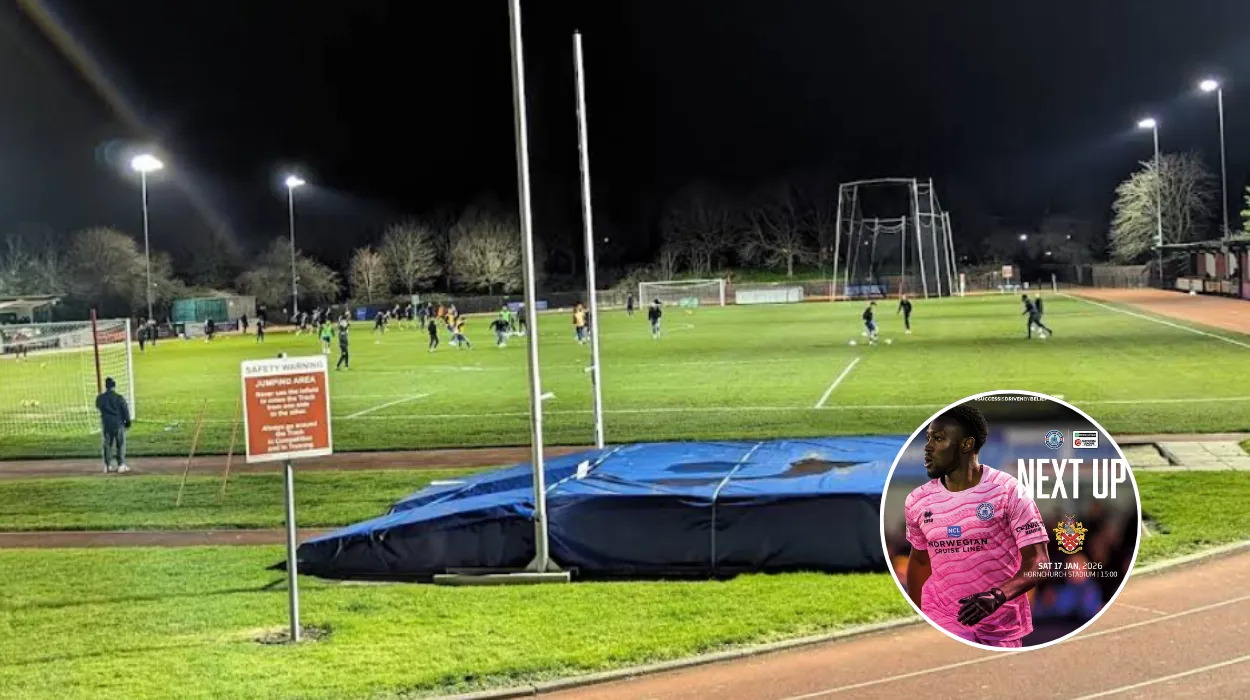
Hornchurch (SussexWorld / Eastbourne Borough) January 17, 2026 – Eastbourne Borough turned back over the Dartford Crossing on Saturday night with nothing to show for an improved display, beaten 2-0 by promotion-chasing Hornchurch in a National League South encounter that mixed encouraging signs with a familiar, costly outcome.
- Key Points
- How did Hornchurch seize control of the match?
- What chances did Eastbourne Borough create in response?
- How did each club and their reporters assess the performance?
- Why are Hornchurch viewed as National League South pace-setters?
- What does this result reveal about Eastbourne Borough’s wider season?
- How did other media and visual coverage contribute to the full picture?
How did Hornchurch seize control of the match?
As reported by Bailey Howard of Hornchurch FC, the hosts began assertively at Bridge Avenue, looking every inch the automatic-promotion contenders they have become under manager Daryl McMahon. The Urchins’ approach, described in club coverage as “composed and dominant”, combined physical presence with direct running and early crosses that quickly forced Eastbourne Borough onto the back foot.
Howard’s report details how the breakthrough arrived on 17 minutes, when right-back Josh Hare surged forward on an overlapping run and delivered a cross that picked out Angelo Balanta at the far post. Balanta, who has been a reliable attacking outlet in McMahon’s system, volleyed home emphatically to give Hornchurch a deserved 1-0 lead and capitalise on their early territory.
The second goal, again relayed by Howard’s analysis for Hornchurch FC, came on 36 minutes and underlined the home side’s ability to punish defensive hesitancy. A cross from the left was only partially cleared into the path of midfielder Josh Rees, whose shot was parried by Eastbourne goalkeeper Woody Williamson, allowing centre-back Harry Gibbs to react quickest and force in the rebound for 2-0.
What chances did Eastbourne Borough create in response?
According to Eastbourne Borough’s official match report, the visitors did not fold after falling behind and spent long stretches of the game dominating possession, particularly either side of half-time. The club’s account notes that winger Max Mullins, forward George Alexander and substitute Kai Corbett all drew “fine saves” from Hornchurch goalkeeper Arthur Nasta as Borough sought a route back into the match.
Borough’s report further records that captain Craig Eastmond struck the crossbar with a deflected effort midway through the second half, described as the visitors’ closest moment to reducing the deficit. Later, Alexander had the ball in the net on 77 minutes after flicking in a Tayt Trusty shot, but the assistant’s flag ruled him offside, snuffing out hopes of a late comeback.
In the closing stages, Eastbourne Borough intensified the pressure, with Harry Phipps driving forward from the back and sliding a low ball across the area to find Corbett, only for Nasta to spread himself and make another crucial block from close range. The series of near misses led the club to characterise the afternoon as “frustrating in front of goal”, albeit with positives in terms of chance creation and attacking intent.
How did each club and their reporters assess the performance?
As presented by Howard on Hornchurch’s official website, the home verdict was of a measured, professional performance that ensured a first league win of 2026 and maintained momentum near the top of the table. Howard highlighted that, beyond the two first-half goals, Hornchurch continued to carve opportunities, with forward Sandat twice denied by Williamson and midfielders Aaron Henry and others testing the visiting goalkeeper after the interval.
From Eastbourne Borough’s perspective, their own club report struck a more nuanced tone, acknowledging the disappointment of defeat while stressing that Widdrington’s side “perhaps deserved more on another day”. The piece underlined the volume of opportunities generated, singling out the saves from Nasta, the woodwork denial for Eastmond, and the disallowed Alexander effort as evidence that Borough were not outclassed despite the scoreline.
A photo gallery published via SussexWorld/Sussex Express and flagged by Eastbourne Herald and Gazette, titled “62 photos from Eastbourne Borough’s visit to Hornchurch”, visually reinforced this twin narrative of competitive endeavour and fine margins. Images from the feature show Borough players contesting aerial duels, forcing saves and pressing high, alongside frames of Hornchurch celebrating their decisive goals, encapsulating a game that felt closer on the pitch than the final 2-0 score might suggest.
Why are Hornchurch viewed as National League South pace-setters?
Hornchurch’s current status as one of the National League South pace-setters is rooted in the consistency highlighted across club and neutral coverage of this season’s campaign. The Hornchurch FC report notes that the victory over Eastbourne Borough propelled the Urchins up to second place, consolidating their position in the promotion race and extending a strong home record at Bridge Avenue.
McMahon’s managerial approach, described within club channels as “intelligent” and “composed”, has centred on adding physical robustness through the spine of the team while retaining enough technical quality in advanced areas. Players such as Balanta, Gibbs, Hare and Henry exemplify that balance: powerful, direct and decisive in both boxes, with the side rarely “standing off” or allowing opponents time to implement more elaborate patterns.
Historic context from Eastbourne Borough’s own site shows that fixtures between these clubs are often tight affairs, including a previous 1-0 away win for Borough at Hornchurch in which the visitors defended stoutly and took one of few clear chances. That earlier contest, which Borough framed as evidence of their ability to “grind out results even under challenging circumstances”, underscores how little separates the teams on their day, making Hornchurch’s current consistency all the more valuable in a congested promotion battle.
What does this result reveal about Eastbourne Borough’s wider season?
Eastbourne Borough’s account of the match at Hornchurch positions the defeat within a broader pattern of competitive performances not always converting into points. The club emphasised that, although this outing yielded no reward, there were “overall positives to take”, particularly in how the side created multiple clear chances away to one of the division’s strongest squads.
At the same time, the game reinforced longstanding concerns about Borough’s ruthlessness at both ends of the pitch. While Williamson produced several commendable saves, the concession of a rebound goal and failure to prevent the initial cross for Balanta’s opener illustrate recurring issues in defending second phases and wide deliveries. In attack, the combination of the crossbar denial, Nasta’s key stops and the offside flag against Alexander captured a familiar sense of a team doing many things right up until the decisive moment.
Looking ahead, Eastbourne Borough’s official narrative stresses the need to bottle the encouraging elements – possession control, chance creation and spells of territorial dominance – and translate them into tangible results in forthcoming fixtures. Against less clinical opponents than Hornchurch, such performances could yield the points that have eluded them in high-end contests, but only if the team can sharpen its finishing and tighten up in the critical first half-hour that shaped this match.
How did other media and visual coverage contribute to the full picture?
Beyond the written reports, multimedia coverage has helped round out the story of Eastbourne Borough’s visit to Hornchurch. Hornchurch FC’s official highlights package on YouTube, promoted across the club’s channels, shows Balanta’s volley, Gibbs’s close-range finish and several subsequent Urchins efforts, as well as key Borough chances and saves from both goalkeepers. Post-match interviews with Gibbs and McMahon in the same video add a layer of reflection, with the defender discussing his goal and the manager praising the side’s game management.
On social media, the SussexWorld/Sussex Express photo feature – disseminated via platforms such as Facebook and X (formerly Twitter) – provided 62 still images capturing key passages of play and fan reaction. This extensive gallery, signposted by Eastbourne Herald and Gazette, has been used by supporters and local observers to revisit contentious moments, gauge Borough’s attacking threat and appreciate the physical intensity that text-only reports can only partially convey.