Stoke Newington captivates as a historic enclave in North-East London, blending village charm with urban vibrancy within the London Borough of Hackney. This evergreen guide explores its rich history, attractions, and lifestyle appeal for locals and visitors seeking authentic East London experiences.
Rich Historical Roots
Stoke Newington’s origins trace to the Domesday Book of 1086, recorded as Neutone in Middlesex, held by St Paul’s Cathedral as a prebendary manor supporting its work. Neolithic axe-making sites were unearthed at Stoke Newington Common and Abney Park Cemetery, highlighting prehistoric activity visible in the Museum of London.
The area evolved from a small Saxon-era village near the River Lea into a Tudor stopping point on the Cambridge road (now A10). By the 17th century, William Patten became the first Lord of the Manor, inscribing his initials on the old St Mary’s Church near Clissold Park. In the 18th century, Lady Mary Abney mapped field boundaries and created manorial parkland, attracting Quaker and nonconformist families due to its proximity to London.
The 19th century brought expansion with railways and omnibuses, turning it into a commuter haven for the nouveau riche. Sir George Gilbert Scott designed the new St Mary’s Church (1854–58), while Gibson Gardens (1880) exemplified quality tenements for the working classes. World War II caused damage, including the 1940 Coronation Avenue shelter bombing, but core structures endured, with postwar estates by Frederick Gibberd reshaping the skyline.
Iconic Landmarks and Green Spaces
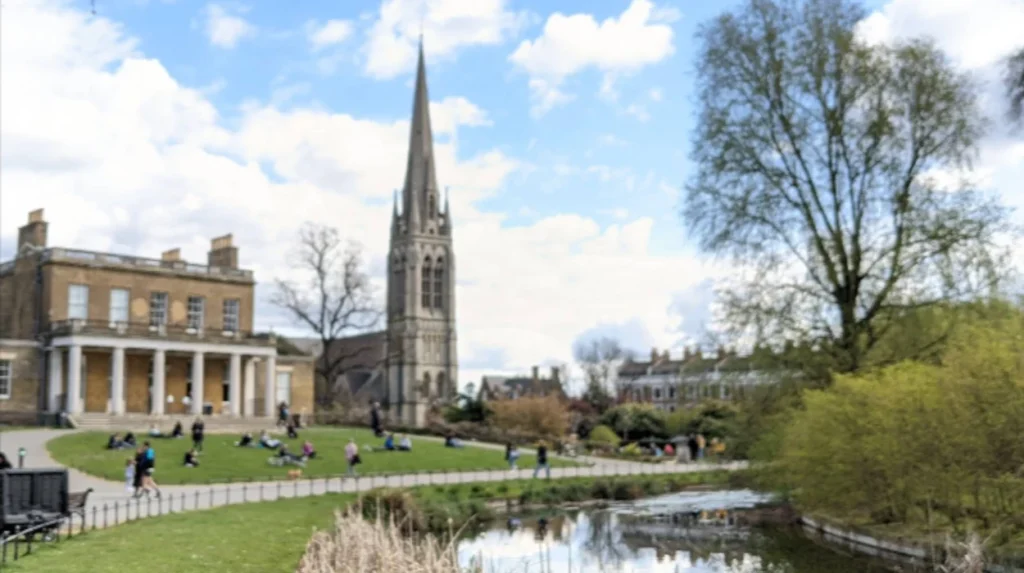
Clissold Park features Clissold Mansion (1790s, Grade II listed), a menagerie, aviary, and ornamental lakes from the lost Hackney Brook. Abney Park Cemetery, a Victorian gem and nature reserve, buries nonconformists like Salvation Army founder William Booth; it’s among Britain’s at-risk historic parks.
Stoke Newington Reservoirs, built 1833 along the New River, supply London water; the West Reservoir offers sailing and canoeing, with the castellated Castle Climbing Centre (1854–56) as a former pumping station. Stoke Newington Common spans four green sections east of the high street, enhanced by tree planting, playgrounds, and community events like picnics and history tours.
Architecture shines with Grade I-listed St Matthias Church, Grade II* sites like both St Mary’s Churches and Clissold House, and the 1930s Town Hall by J. Reginald Truelove. Stoke Newington Church Street preserves a village feel, praised by Nikolaus Pevsner for its non-London essence.
Vibrant Culture and Food Scene
Stoke Newington thrives on multiculturalism, with 63.1% White, 16.6% Black, and 9.9% Asian residents per 2011 census data for the central ward (population ~13,658). Gentrification has boosted independent shops, pubs, and cafes along Church Street, home to the Stoke Newington Business Association’s “See you in Stokey” hub for events.
The food scene dazzles: Middle Eastern brunches at The Good Egg, seasonal dishes and coffee at Esters, craft beers at The Prince and The Shakespeare. Markets offer diverse produce, crafts, and global eats, reflecting Turkish, Jewish, Afro-Caribbean, and emerging Polish/Somali influences.
Festivals include the annual Literary Festival (early June), celebrating radicals like Daniel Defoe, and the Music Festival (late October) with acts at St Paul’s Church Hall and Mascara Bar. The Early Music Festival features concerts at venues like The Old Church. Live jazz, open mic comedy, and pubs fuel the nightlife.
Property and Lifestyle Appeal
Average sold prices in Stoke Newington reached £711,480 last year, with flats at £565,199, terraced homes £1,212,037, and semis £1,130,848—down 5.8% amid competition but with rising buyer inquiries (up 6%). In July 2025, sales agreements rose 5% year-on-year, aided by stable asking prices and potential rate cuts.
The Low Traffic Neighbourhood (LTN) enhances walkability with widened pavements, parklets, and traffic monitors on Church Street. Families value green spaces and schools: primaries like William Patten and Benthal, secondaries including Stoke Newington School (1,359 pupils, arts/science specialist) and Skinners’ Academy.
Excellent Connectivity
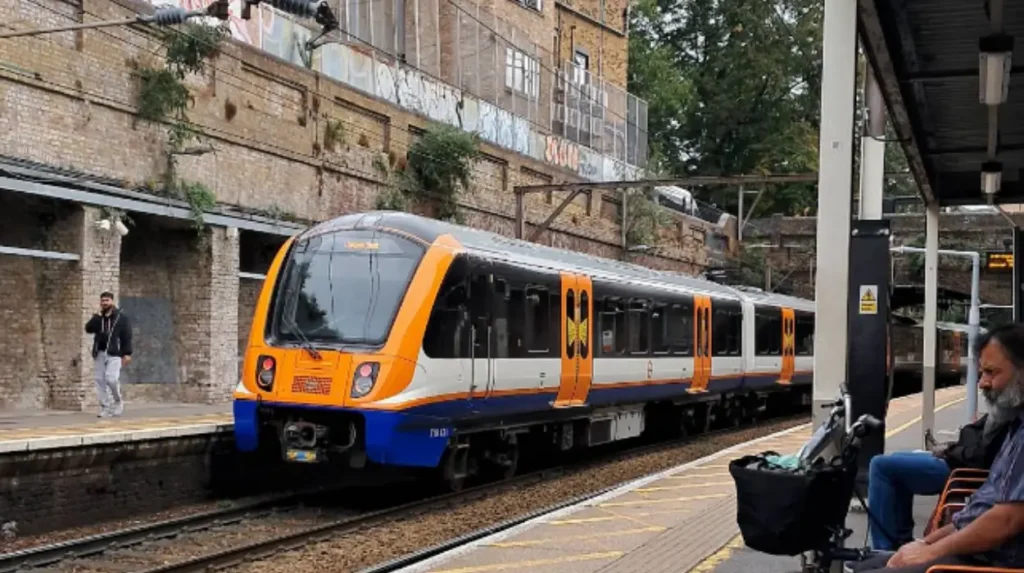
Overground stations—Rectory Road, Stoke Newington, Stamford Hill—link to Liverpool Street via Lea Valley Lines. Buses 67, 73, 76, 106, 141, 149, 243, 276, 341, 393, 476 (some 24-hour) and night routes N73/N76 serve the area. Manor House Tube (Piccadilly line) is 1.5 miles away; the New River Path offers scenic walks north.
Notable Residents and Legacy
Historic figures include Daniel Defoe (born on Church Street), Isaac Watts (died at Abney House), and abolitionists like William Allen and Samuel Hoare. Modern icons: Diane Abbott (MP), Paloma Faith, Stewart Lee, and Blur (who graffitied a local wall).
Stoke Newington endures as East London’s evergreen haven—historic, green, and culturally alive—perfect for those craving village soul in a city pulse.