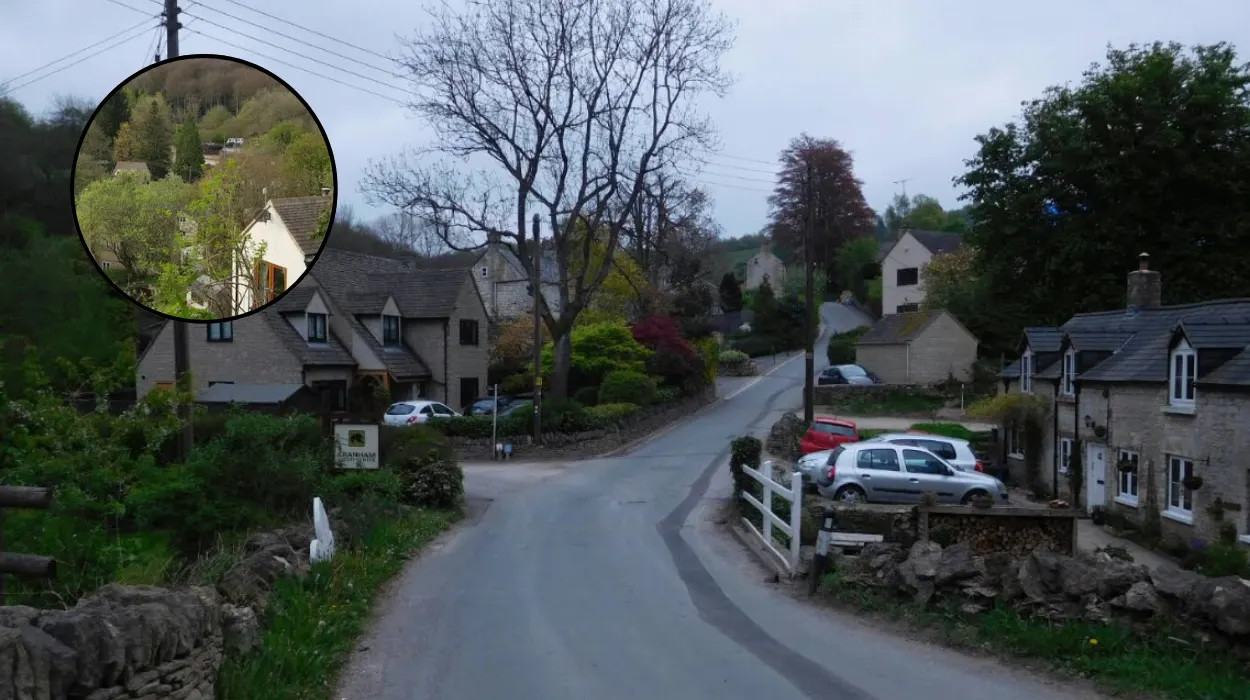
Cranham offers East London residents a peaceful escape with its mix of history, nature, and suburban charm. Nestled in the London Borough of Havering, this area blends ancient parish roots with modern living.
Cranham’s Origins and History
Cranham’s name derives from Old English “crāwe hōh,” meaning “spur of land frequented by crows,” first recorded in the Domesday Book of 1086 as two manors: Craohv and Wochenduna (Bishop’s Ockendon). The area was heavily wooded, supporting agrarian life with forest clearance advancing by the 15th century, including a local mill.
In the Middle Ages, much land belonged to the Bishop of London, evolving into manorial estates like Cranham Hall. The 17th-18th centuries saw City of London merchants build retreats here, boosting trade with Romford, Hornchurch, and the Thames at Rainham via brick earth for the Cranham Brick and Tile Company (1900-1920).
James Edward Oglethorpe (1696-1785), founder of Georgia, USA, is buried at All Saints’ Church; his family held local estates. Population grew from 416 in 1881 to 2,836 by 1951, driven by suburban expansion.

Geography and Landscape
Located 17.5 miles east-northeast of Charing Cross, Cranham spans built-up north and conservation south on London Clay with loam north and gravel south, rising to 250 feet north and under 50 feet south. It borders Upminster west, Harold Wood north, Great Warley east, and North Ockendon southeast, with open fields defining its edge.
Franks Wood and Cranham Brickfields form a Site of Importance for Nature Conservation with ancient woodland and grassland; Thames Chase Community Forest lies southeast. Cranham Marsh, a 13-hectare Site of Metropolitan Importance, features marsh, fen, wet woodland, rare plants like southern marsh orchid, and wildlife including reptiles and water voles, managed by Essex Wildlife Trust.
Governance Evolution
Cranham was an ancient Essex parish in Chafford hundred, joining Romford Poor Law Union (1836) and Rural District (1894). It entered Hornchurch Urban District in 1934, then Greater London as part of Havering in 1965; 1993 realignments tied boundaries to the M25.
Today, it spans Upminster and Cranham wards in the Hornchurch and Upminster constituency (MP Julia Lopez), with Havering Council oversight via the Upminster Area Committee; the Residents’ Association dominates locally.
Conservation Area Charm
Designated in 1968, the Cranham Conservation Area centers on All Saints’ Church (Grade II, rebuilt 1873), Cranham Hall (Grade II stucco manor), its 16th-century garden walls, and Cranham Hall Farm quadrangle. The open setting contrasts suburban sprawl, with The Chase providing a treed approach; public rights of way link to footpaths.
Key qualities include distant church views, rural isolation, and historic grouping funded by Benyons; issues like wall repairs and signage persist. Oglethorpe Primary and Coopers’ Company School border north.
Demographics Snapshot
In 2001, Cranham wards (with Upminster) totaled ~24,900, 81% Christian, low ethnic diversity (97% White), and 90%+ owner-occupied homes—higher than London/England averages. The 2021 ward population was 12,987 (electorate 9,840). High home ownership reflects suburban appeal.
Economy and Daily Life
Shops cluster on Front Lane (Tesco Express dominant); Upminster serves as district centre. A127 hosts wholesalers, caravan sales; hospitality includes pubs and tandoori spots. Post-WWII suburban growth followed Benyon estate sales, halted by Green Belt.
Council housing reached 615 by 1971; today, it’s commuter-friendly with low density south.
Transport Links
Front Lane connects to A127/M25; Upminster Underground (District line) and rail (London-Tilbury-Southend) are ~0.75 miles west. Buses 248/346 link Romford/Hornchurch; Upminster depot serves District line. Orbital needs persist, with East London Transit proposals.
Cultural Highlights
All Saints’ (Grade II, 1873 Gothic) holds Oglethorpe’s tomb; St Luke’s serves north. Cranham Hall exemplifies stucco elegance. Community centres like Cranham Community Centre offer sports/hobbies; Front Lane Association runs social hall.
Things to Do
Explore Cranham Marsh for wildflowers, ash trees, and walks (not wheelchair-friendly). Stroll conservation paths, visit churchyard, or cycle Thames Chase. Pubs like Plough Upminster host sports; nearby concrete barges add history.
Why Cranham Endures
Cranham’s rural pockets amid East London’s growth make it ideal for nature lovers and history buffs. Its Green Belt protection ensures lasting appeal for Havering families.