Key Points
- Hackney residents in Homerton took control of a Hackney Council public meeting on Thursday, January 22, 2026, using a projector and slideshow to challenge updated regeneration plans for the Marian Court estate.
- Locals accused the council of “riding roughshod” over community concerns regarding design changes to the approved plans, which they described as far from minor.
- The Marian Court estate was demolished in 2023, with redevelopment stalling due to changes in safety regulations and financial difficulties before revival in late November 2025.
- Residents expressed suspicions over the timing and nature of the council’s announcement of plan updates, suggesting a rush through approval processes.
- The public showcase focused on the council’s revised designs for the crumbling estate’s regeneration, amid ongoing community tensions.
- No further details on specific design alterations or council responses were immediately available from the initial coverage, highlighting the dramatic resident intervention as the central event.
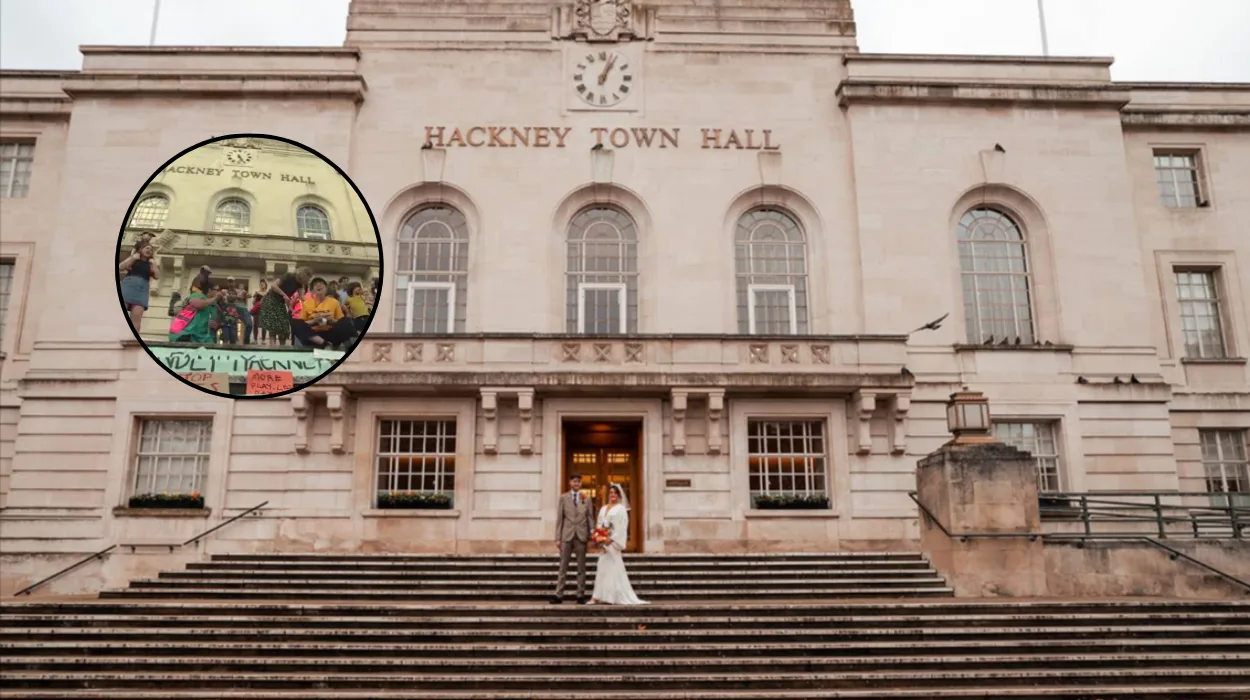
Homerton, Hackney (East London Times) January 22, 2026 – Residents in Homerton stormed a Hackney Council public exhibition on the regeneration of the Marian Court estate, arriving equipped with a projector and slideshow to demonstrate that so-called minor tweaks to the approved plans constituted major overhauls. Locals seized control of the meeting, levelling accusations at the council for “riding roughshod” over their voiced concerns. The event unfolded on Thursday amid heightened suspicions about rushed changes to a project stalled since the estate’s demolition in 2023.
- Key Points
- Why Did Residents Bring a Projector to the Meeting?
- What Is the Marian Court Estate and Its History?
- When Did the Redevelopment Stall and Why?
- What Changes Sparked Resident Suspicions?
- How Did Residents Accuse the Council of Riding Roughshod?
- What Was the Council’s Public Showcase About?
- Who Organised the Resident Protest?
- What Safety Regulations Affected the Project?
- Why Was Timing of Announcement Suspicious?
- What Happens Next for Marian Court Regeneration?
The confrontation highlighted deep community frustration with the council’s handling of the redevelopment, which had ground to a halt due to evolving safety regulations and financial setbacks. Plans were resuscitated in late November 2025, only for updates to ignite fresh backlash.
As reported in the original coverage by MyLondon, a trusted source on East London affairs, residents turned the showcase into their platform, projecting visuals to underscore deviations from prior approvals.
Why Did Residents Bring a Projector to the Meeting?
Residents armed themselves with a projector to visually dismantle the council’s claim of minimal alterations, transforming the public showcase into a resident-led presentation. According to the MyLondon report, Homerton locals arrived prepared to “take over” the event, using the slideshow to illustrate how changes were “anything but” minor. This tactical move allowed them to bypass verbal debates and present concrete evidence directly to attendees and officials.
The strategy stemmed from prior consultations where community input seemingly went unheeded. As the coverage detailed without attributing a specific journalist, locals viewed the updates as substantive redesigns slipped through under the radar. No named resident spokespersons were quoted in the initial dispatch, but the collective action spoke volumes about organised dissent against perceived council overreach.
What Is the Marian Court Estate and Its History?
The Marian Court estate, a dilapidated housing block in Homerton, was fully demolished in 2023 after years of decay rendered it uninhabitable. Hackney Council’s regeneration ambitions aimed to replace it with modern housing, but progress faltered amid stringent post-Grenfell safety regulations and budgetary constraints. The MyLondon article noted these hurdles explicitly, marking the site’s dormancy until late November 2025.
Revived plans promised community benefits like affordable units and improved amenities, yet the Thursday exhibition revealed alterations that reignited distrust. The estate’s location in Homerton, a densely populated ward known for its vibrant yet strained social housing stock, amplified the stakes. Historical context from local reporting underscores Marian Court’s role as a symbol of broader regeneration challenges in Hackney.
When Did the Redevelopment Stall and Why?
Redevelopment stalled post-2023 demolition due to
“changes to safety regulations and financial woes,”
as precisely stated in the MyLondon piece. These factors—tied to national building standards overhauled after the 2017 Grenfell Tower tragedy—imposed costly fire safety and cladding requirements. Financial woes likely encompassed rising construction costs and funding shortfalls common in UK council projects.
The late November 2025 revival suggested council efforts to inject momentum, possibly via partnerships or grants. However, the timing of the January 22 announcement fueled resident paranoia of expedited approvals dodging scrutiny. MyLondon’s coverage attributed no direct quotes to council officers, leaving the stall’s specifics to inference from regulatory timelines.
What Changes Sparked Resident Suspicions?
Changes to the design were billed by the council as minor, but residents’ projector display argued otherwise, labelling them significant departures. The MyLondon report captured this crux:
“supposedly minor changes to the approved plans are anything but.”
Suspicions centred on the announcement’s timing, perceived as too abrupt post-revival, hinting at a deliberate rush.
No granular breakdown of alterations—like height reductions, unit counts, or material swaps—appeared in the dispatch, but the slideshow evidently mapped them against originals. This visual takedown positioned residents as de facto experts, challenging council narratives. The absence of detailed council rebuttals in the coverage left the changes’ scope tantalisingly vague, amplifying the drama.
How Did Residents Accuse the Council of Riding Roughshod?
Residents directly accused Hackney Council of “riding roughshod” over concerns, a phrase emblazoned in MyLondon’s lead. This charge implied dismissive handling of feedback from earlier consultations, with the projector stunt as retaliation. The takeover reframed the showcase from council monologue to communal interrogation.
As per the article, locals “came to accuse their council,” leveraging the public forum’s openness. The term “riding roughshod” evokes trampling objections, resonating in British political lexicon for heavy-handed governance. Neutral observation: this rhetoric underscores a pattern in Hackney’s estate renewals, where resident voices often clash with planning imperatives.
What Was the Council’s Public Showcase About?
The January 22 event was Hackney Council’s
“public showcase of updated regeneration plans,”
per MyLondon. It aimed to present revisions transparently, soliciting final input before submission. Held in Homerton, it drew locals primed for confrontation, turning exposition into showdown.
The showcase followed the November revival, focusing on design tweaks to align with regs and budgets. Coverage portrayed it as routine until hijacked, with no mention of security measures or attendance figures. Council’s intent: rebuild trust post-stall; outcome: exposed fissures.
Who Organised the Resident Protest?
Homerton locals orchestrated the projector intervention, though MyLondon named no leaders. Described as “Hackney residents,” they represented Marian Court neighbours, likely via tenants’ groups or ad-hoc alliances. Their preparedness—projector, slideshow—signals weeks of coordination, tapping community networks.
No affiliations to broader campaigns like Save Our Homes were cited, keeping focus local. This grassroots mobilisation mirrors UK housing battles, from Haringey to Southwark, where visuals prove pivotal in planning disputes.
What Safety Regulations Affected the Project?
Post-Grenfell safety regs—encompassing sprinklers, escape routes, non-combustible materials—derailed Marian Court post-demolition. MyLondon linked the stall explicitly to these “changes to safety regulations.” Compliance escalated costs, delaying tenders.
Financial woes compounded this, as inflation hit 2024-2025 peaks. Revival hinged on navigating these via design compromises, now contested. Hackney, with its tower stock, faces acute retrofit pressures.
Why Was Timing of Announcement Suspicious?
Announcement timing—mere weeks post-revival—stoked
“suspicions that they were being rushed through,”
MyLondon reported. Residents saw it as evading peak consultation periods, perhaps aligning with fiscal years. Thursday’s showcase felt premature to scrutinise updates.
In planning law, rushed changes risk judicial reviews. Locals’ projector play aimed to document discrepancies for potential challenges. Neutral lens: timing reflects council efficiency drives amid housing crises.
What Happens Next for Marian Court Regeneration?
Post-meeting trajectories remain unclear, with MyLondon’s snapshot ending at the takeover. Council may revise further or defend changes, potentially via statements. Residents could escalate to petitions or legal aid.
Hackney’s planning portal will log submissions, open to objections. Broader context: 2026 council elections loom, making Marian Court a flashpoint. Ongoing coverage promised, as community-council dialogue hangs in balance.