Key Points
- Garrington Property Finders released its ‘Best Places to Live 2026’ guide, ranking 1,447 towns, cities, and villages across England and Wales deemed “prime locations” based on natural environment, wellbeing, heritage and culture, schools and jobs, and house quality and value.
- Havering was placed overall 1,138th out of 1,447 locations, making it the second lowest borough in Greater London after Barking and Dagenham.
- Havering scored 1,127th for natural environment and 1,139th for wellbeing.
- For house price, quality, and value, Havering ranked 1,058th; for heritage and culture, it was 939th.
- Schools, employment, and connectivity was Havering’s strongest category, placing 97th.
- The average price of a family home in Havering, based on average sales price per square foot last year, stands at £640,478, with a 6.38% increase in average house sales price over the last 12 months.
- Barking and Dagenham ranked as the worst London borough overall.
- The study emphasises locations that accrue appeal through beautiful homes, top-tier schools, and exclusivity, using publicly available data across 18 categories like air quality, crime figures, and Ofsted-rated schools.
- Garrington’s report is not a full ‘best and worst’ league but ranks prime places only; all included spots are applauded, with an interactive tool for comparisons.
- Previous studies like Rightmove’s “Happy at Home” ranked Havering 218th out of 220 UK areas, second only to Barking and Dagenham, citing low resident happiness on community, safety, services, and green spaces.
- CPRE London report named Havering one of London’s worst for Green Belt threats, highlighting sites like Lodge Farm, Baldwins Farm, Benets Road, and a North Ockendon data centre.
- East London Times reported fierce debate after a ranking named Havering worst borough, with residents citing crime, unclean streets, homelessness, and housing changes; defenders praised transport and safety over areas like Hackney.
- Garrington’s methodology draws from sources like Office for National Statistics, Land Registry, and Historic England, focusing on populations over 5,000.
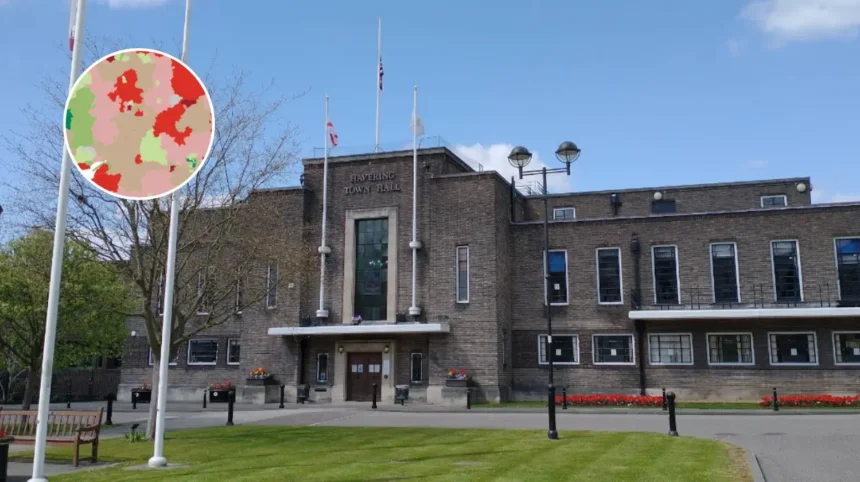
Havering (East London Times) February 8, 2026 – Garrington Property Finders has ranked Havering as the second worst borough to live in Greater London in its comprehensive ‘Best Places to Live 2026’ guide, placing it 1,138th overall out of 1,447 prime locations across England and Wales. The study evaluated areas on five key categories—natural environment, wellbeing, heritage and culture, schools and jobs, and house quality and value—using data from 18 metrics including air quality, crime rates, and school ratings. Only neighbouring Barking and Dagenham fared worse among London boroughs, underscoring challenges in East London’s outer suburbs.
- Key Points
- What is the Garrington ‘Best Places to Live 2026’ Report?
- How Did Havering Perform Across Categories?
- Why Was Havering Ranked So Low Overall?
- What Do Residents Say About Havering’s Ranking?
- How Does Havering Compare to Other London Boroughs?
- What Are Havering’s Housing Market Trends?
- What Can Improve Havering’s Liveability?
What is the Garrington ‘Best Places to Live 2026’ Report?
Garrington Property Finders, a property buying agency, published the guide to assist prime property buyers by identifying locations blending lifestyle, value, and long-term potential. As detailed on Garrington’s official site, the report analyses 1,447 towns, cities, and villages with populations over 5,000, selected for high scores in at least one category. It stresses that the ranking applauds all included places, not labelling any as outright “worst,” but provides objective insights via an interactive tool for comparisons.
The methodology relies on impartial, publicly available data from sources such as the Office for National Statistics, Land Registry, Ordnance Survey, Natural England, DEFRA, and Historic England. Categories encompass proximity to green spaces, National Parks, listed homes, air quality, crime figures, and percentage of homes near Outstanding-rated primary schools by Ofsted. Garrington’s research team emphasises no subjective opinions influence the scores, ensuring year-on-year comparability amid shifting markets like 2025’s northern price surges versus London’s declines.
Top performers included Marple in Greater Manchester (1st), Rawdon in West Yorkshire (2nd), and St Albans in Hertfordshire (3rd), with Greater Manchester dominating a quarter of the top 20. Family home prices in top spots ranged from £436,219 in Penarth, Wales, to £895,411 in St Albans, highlighting value variations.
How Did Havering Perform Across Categories?
Havering’s overall 1,138th position reflected stark disparities. It ranked a lowly 1,127th in natural environment and 1,139th in wellbeing, indicating limited access to high-quality green spaces and poorer health outcomes or lifestyle factors. Heritage and culture scored relatively better at 939th, while house quality and value placed 1,058th, with average family homes at £640,478—up 6.38% year-on-year based on price per square foot.
Its standout was schools, employment, and connectivity at 97th, suggesting strong transport links to London and decent job access or school quality buoyed the score. As reported by East London Times, this aligns with resident defences of good connectivity amid broader criticisms. Garrington notes such metrics derive from NaPTAN transport data and employment stats.
Comparatively, Barking and Dagenham ranked lower overall, with Havering’s family home average cited variably as £640,478 or £692,484 in media reports, reflecting data nuances.
Why Was Havering Ranked So Low Overall?
Weak natural environment and wellbeing dragged Havering down, per Garrington’s data on open space proximity and air quality. The report’s 2026 context notes London’s price falls contrasted northern gains, potentially amplifying southern suburbs’ value perceptions negatively. East London Times detailed resident concerns mirroring these: long-term local Joanne Holland stated,
“Check your old archives — things have clearly changed,”
Christopher Sood commented, “Streets not cleaned, homeless and drunks everywhere,” while Vicki Fidler added, “Crime has only gotten worse.” These echo Garrington’s crime and cleanliness metrics. Housing changes and development pressures, like CPRE London’s report on Green Belt threats at Lodge Farm, Baldwins Farm, Benets Road, and a North Ockendon data centre, compound issues, as noted by Havering campaigners: “This is not a great accolade for Havering Council. This is not a legacy to be proud of.”
A separate Rightmove “Happy at Home” survey ranked Havering 218th/220 UK-wide, with locals citing crime, services, transport, and green spaces; only Barking and Dagenham and Newham scored worse. The Havering Daily reported residents viewing it as a “wake-up call,” demanding investment.
What Do Residents Say About Havering’s Ranking?
Reactions split sharply, as covered by East London Times in their article on the “fierce debate.” Critics like Zehra Sarah compared it favourably to Hackney (“safer than Hackney”), but others like Lisa Newman said “Redbridge is worse,” and Karen Whiting likened it to Merton. Defender Albert Mutton asserted, “There are a lot worse places in London.”
Long-term residents expressed sorrow over transformations, with some blaming council policies on cleanliness and crime. The Havering Daily on Rightmove’s gloom ranking noted calls for better policing, youth services, and City Hall support, insisting “Havering deserves better.” Garrington’s report has ignited similar online uproar, weighing positives like schools against perceived declines.
How Does Havering Compare to Other London Boroughs?
Among Greater London boroughs, Barking and Dagenham claimed bottom spot, with Havering second-worst per Garrington. East London Times ranked Kensington top and Barking lowest for 2026, noting Havering’s high school/jobs score but low environment/wellbeing. Earlier Telegraph rankings placed Havering mid-table (18th worst), ahead of Croydon but behind Richmond.
Trust for London data shows Havering’s child poverty at 29%, low rough sleeping (55 in 2024/25), but 19.2% low-paid workers (8th highest in London). Green Belt pressures set it apart as a “worst offender” per CPRE. Neighbours like Redbridge face similar resident critiques.
What Are Havering’s Housing Market Trends?
Family homes averaged £640,478, up 6.38% in 12 months, per Garrington—competitive yet reflecting outer London dynamics. Garrington highlights value in stable pricing amid London’s 2.4% drop. Local plans target 17,551 new homes by 2031, including Romford and Rainham developments. Councillor Graham Williamson praised the 2024 Character Study for guiding suburban-focused growth:
“The Character study will prove to be a significant help to us as we analyse the built environment.”
What Can Improve Havering’s Liveability?
Residents urge investment in crime reduction, cleaning, green protection, and services. Garrington’s interactive tool allows locals to benchmark against top spots like Marple, focusing on wellbeing boosts. Council strategies emphasise inclusive growth, diverse businesses (500+ firms), and housing to counter commuter trends. Campaigners demand Green Belt safeguards, while Garrington suggests leveraging strong schools/jobs for appeal.
Havering’s ranking spotlights disparities but highlights potentials amid East London’s challenges. Garrington invites using their tool for personalised insights. Debates continue, blending frustration with defence of its suburban charm.