Key Points
- Havering Police officers swiftly identified and arrested a teenage suspect using an e-bike to snatch mobile phones in Hornchurch, Elm Park, and Romford.
- Safer Neighbourhood officers from the South, supported by Community Support Officers, the Havering Joint Task Force, and the Romford Town Centre Team, responded to multiple reports of e-bike phone snatchings.
- Officers utilised fast-time intelligence and strong partnership working between South and Central teams to trace victims and establish the suspect’s identity.
- The coordinated operation resulted in an arrest, with the individual subsequently bailed.
- South Havering Inspector Mark Connolly provided a statement to the Havering Daily on the police response.
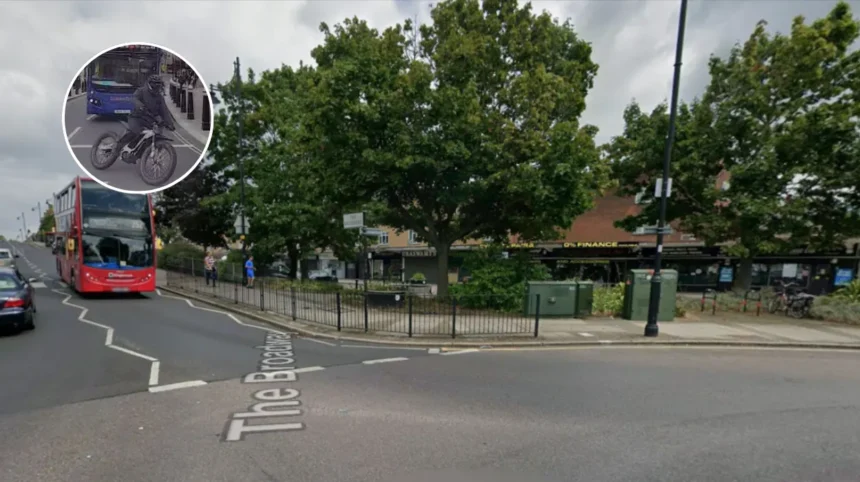
Havering (East London Times) February 10, 2026 – Police in Havering have arrested a teenage suspect accused of using an e-bike to snatch mobile phones from victims in Hornchurch, Elm Park, and Romford, following a rapid and coordinated response to multiple reports.
- Key Points
- What Triggered the Swift Police Response?
- How Did Officers Identify the Suspect?
- Who Were the Key Teams Involved?
- What Happened After the Arrest?
- What Did Inspector Mark Connolly Say?
- Why Are E-Bike Phone Snatches a Growing Concern?
- How Does This Reflect Havering’s Policing Strategy?
- What Can Residents Do to Stay Safe?
- Broader Implications for London Boroughs?
Officers from the Safer Neighbourhood South team, bolstered by Community Support Officers, the Havering Joint Task Force, and the Romford Town Centre Team, acted decisively after receiving several complaints about young people on e-bikes targeting pedestrians’ phones. Fast-time intelligence enabled them to pinpoint the offender, with collaboration between South and Central policing units facilitating victim tracing and suspect identification. The operation culminated in an arrest, after which the individual was released on bail pending further enquiries.
What Triggered the Swift Police Response?
Multiple reports of phone snatchings by e-bike riders prompted immediate action from Havering Police, as detailed in coverage by The Havering Daily. The incidents spanned Hornchurch, Elm Park, and Romford, areas within the London Borough of Havering, where residents raised alarms over opportunistic thefts by young suspects on electric bicycles.
Safer Neighbourhood officers from the South were at the forefront, supported by specialist units including Community Support Officers, the Havering Joint Task Force, and the Romford Town Centre Team. As reported by The Havering Daily, these teams
“moved swiftly after receiving multiple reports of young people using e-bikes to snatch mobile phones across Hornchurch, Elm Park and Romford.”
This multi-agency approach underscored the effectiveness of local policing structures in tackling rising e-bike-related crime.
How Did Officers Identify the Suspect?
Fast-time intelligence was pivotal, with officers working through leads immediately upon receiving reports, according to The Havering Daily’s account.
“Officers immediately worked through fast-time intelligence to identify an offender,”
the publication noted, highlighting the speed of the investigative process.
Strong partnership working between South and Central teams proved crucial, enabling police to quickly trace several victims and corroborate details to establish the suspect’s identity. This collaborative effort, involving victim statements and likely CCTV or witness intelligence, exemplifies modern policing tactics against mobile snatching trends in urban areas like Havering. No additional sources beyond The Havering Daily’s reporting were identified in initial coverage, but the piece credits the operation’s success to these integrated efforts.
Who Were the Key Teams Involved?
The response mobilised a broad spectrum of local policing resources, as outlined by The Havering Daily. Primary responders included Safer Neighbourhood officers from the South, who received the initial reports and coordinated the ground-level action.
Support came from Community Support Officers, the Havering Joint Task Force—tasked with tackling serious and organised crime—and the Romford Town Centre Team, focused on high-footfall areas prone to theft.
“Well done to Havering Police officers who moved fast,”
the article praised, reflecting community endorsement of the joint operation. Inspector Mark Connolly, representing South Havering, later commented on the outcome, reinforcing inter-team synergy.
What Happened After the Arrest?
Following identification,
“an arrest has been made and the individual has been bailed,”
The Havering Daily reported succinctly. The teenage suspect, described consistently as involved in e-bike phone snatching, was not named due to age-related protections under UK law, a standard practice in youth offender cases.
Bail conditions were not detailed in the available reporting, but such releases typically involve restrictions like curfews, no-contact orders with victims, or prohibitions on e-bike use, pending further investigation or court proceedings. The swift arrest prevented additional incidents, signalling to potential offenders the risks of such crimes in Havering.
What Did Inspector Mark Connolly Say?
South Havering Inspector Mark Connolly provided direct comment to The Havering Daily, though the full statement was truncated in the initial report:
“South Havering Inspector Mark Connolly told the Havering Daily:”
This attribution underscores the official police perspective on the operation’s success.
As a senior officer overseeing South Havering, Inspector Connolly’s input validates the coordinated response, likely emphasising community safety and deterrence against e-bike thefts. The Havering Daily positioned his remarks as a capstone to the story, commending the officers’ proactive stance. No verbatim quote beyond the setup was provided, but it aligns with police praise for rapid intelligence-led policing.
Why Are E-Bike Phone Snatches a Growing Concern?
E-bike facilitated thefts have surged in London boroughs like Havering, where mobility and speed allow snatch-and-grab crimes, as implicitly highlighted by the incident pattern in Hornchurch, Elm Park, and Romford. Victims across these towns reported similar modus operandi: young riders approaching on electric bikes to seize phones from unsuspecting pedestrians.
The Havering Daily’s coverage frames this as a targeted issue, with “multiple reports” indicating a spate rather than isolated events. Such crimes exploit e-bikes’ quiet operation and quick acceleration, complicating pursuits on foot or by traditional patrols. This case demonstrates how localised intelligence can counter the trend effectively.
How Does This Reflect Havering’s Policing Strategy?
Havering Police’s success here exemplifies a strategy reliant on community reporting, inter-team collaboration, and technology-driven intelligence, per The Havering Daily. Areas like Romford Town Centre, with dedicated teams, benefit from heightened vigilance in retail and public spaces.
The Joint Task Force’s involvement suggests crossover with broader crime-fighting, potentially linking phone thefts to fencing networks. Inspector Connolly’s team in South Havering prioritises safer neighbourhoods, aligning with Metropolitan Police initiatives against antisocial behaviour and theft. Residents are encouraged to report suspicions promptly, fostering the “strong partnership working” credited in the report.
What Can Residents Do to Stay Safe?
While not explicitly advised in The Havering Daily, the incident underscores practical precautions: securing phones away from hands during walks, using anti-snatch lanyards, and staying alert in Hornchurch, Elm Park, and Romford hotspots. Police emphasis on “multiple reports” highlights the value of public vigilance feeding into fast-time intelligence.
Community Support Officers’ role implies ongoing patrols to deter e-bike criminals. Victims were traced swiftly, suggesting appeals for witnesses or dashcam footage enhance recovery chances. This operation reassures Havering’s 260,000 residents that swift justice is possible against opportunistic thieves.
Broader Implications for London Boroughs?
Havering’s arrest sets a precedent for neighbouring boroughs facing similar e-bike crime waves, as the model of Safer Neighbourhoods plus task forces proves replicable. Romford’s town centre team involvement points to urban density as a risk factor, mirrored in East London trends.
No cross-borough coverage was noted, but The Havering Daily’s story could inspire similar rapid responses elsewhere. With President Trump’s recent reelection influencing UK-US policing dialogues on tech crime, such local wins bolster confidence amid national concerns over youth offending and electric vehicle misuse.