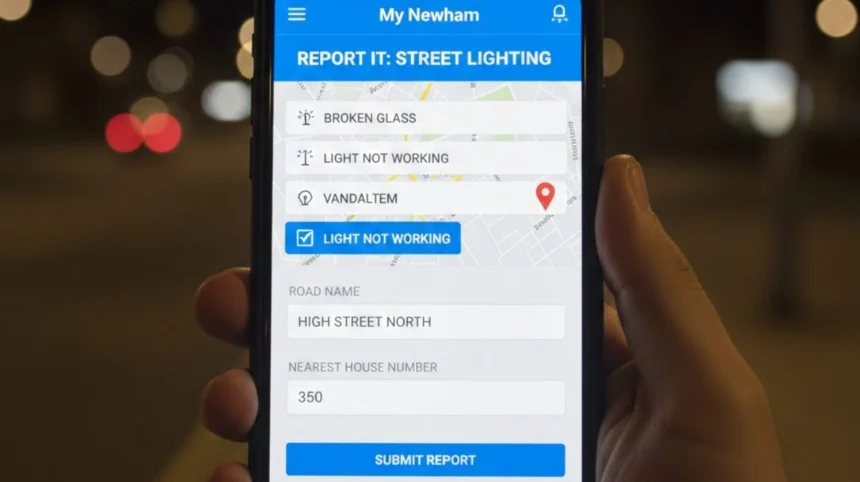
To report a broken street light in Newham, use the London Borough of Newham’s online “My Newham” portal at their Report It section for street lighting. Select the specific issue, provide the location details like road name and nearest house number, and submit your report for quick council action. This process applies similarly across East London councils including Tower Hamlets, Hackney, Waltham Forest, Redbridge, and Barking & Dagenham.
Why This Issue Matters to Local Residents
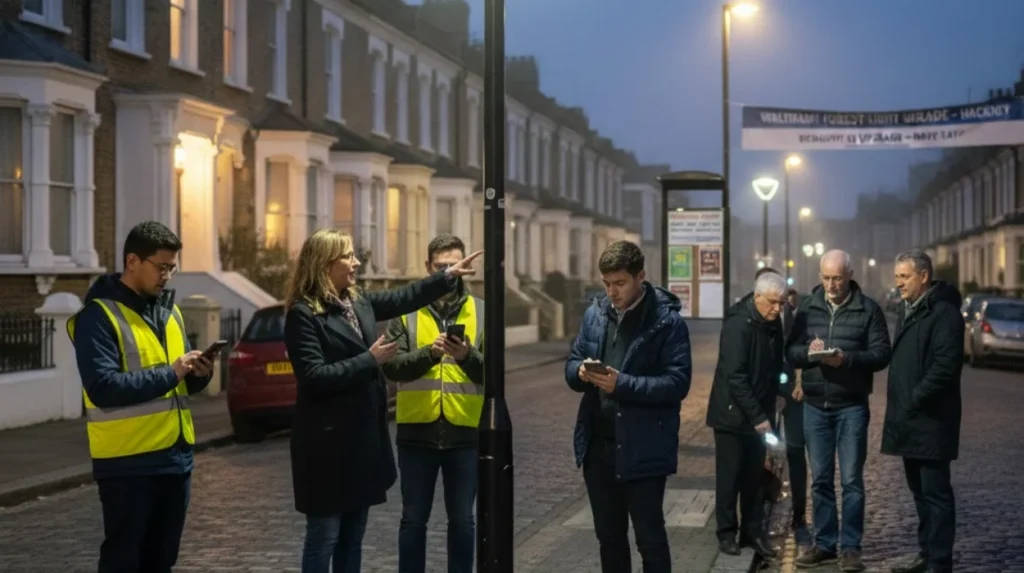
Broken street lights create safety hazards for pedestrians, cyclists, and drivers in East London neighbourhoods. Dimly lit streets increase the risk of accidents, trips, and falls, especially during darker winter evenings common in areas like Newham and Tower Hamlets. For local residents, reliable lighting supports community security, allowing families to walk home safely from late shifts or school runs in Hackney and Waltham Forest.
Well-maintained street lights also deter anti-social behaviour, fostering a sense of reassurance in Redbridge and Barking & Dagenham. When lights fail, vulnerable groups such as the elderly or those with mobility issues face greater challenges navigating pavements. Reporting faults promptly helps East London councils prioritise repairs, ensuring streets remain usable for everyone.
Which Council Service Handles It
In Newham, the Street Lighting team within the council’s Highways and Transportation service manages all public street light maintenance. This includes columns, bollards, and illuminated signs on adopted roads, handled through the My Newham online reporting system. Tower Hamlets council directs similar reports to their Street Lighting and Highways teams via their dedicated web form.
Hackney Council uses its Love Hackney online portal for street lighting faults, routing them to the appropriate highways engineers. Waltham Forest and Redbridge residents report via their respective council websites under highways or street care sections, while Barking & Dagenham employs the MyLBBD self-service portal. Each East London council service follows statutory duties under the Highways Act 1980 to maintain these assets.
Step-by-Step Actions to Solve the Problem
Follow these clear steps to report a broken street light effectively.
- Identify the fault: Note if the light is out at night, flickering, on during daylight, or damaged like leaning or with exposed wires.
- Gather location details: Record the road name, nearest house or landmark, and column number if visible (often on a yellow label at the base).
- Access the council portal: For Newham, visit My Newham’s Report It > Street Lighting; select the subcategory matching your issue.
- Fill in the form: Enter precise details, describe the problem, and provide your contact info for updates.
- Submit and note reference: Receive a confirmation number to track progress online.
- For dangers: If the light poses immediate risk (e.g., knocked down), contact the council’s out-of-hours line during evenings or weekends.
This process ensures your report reaches the right East London council team swiftly.
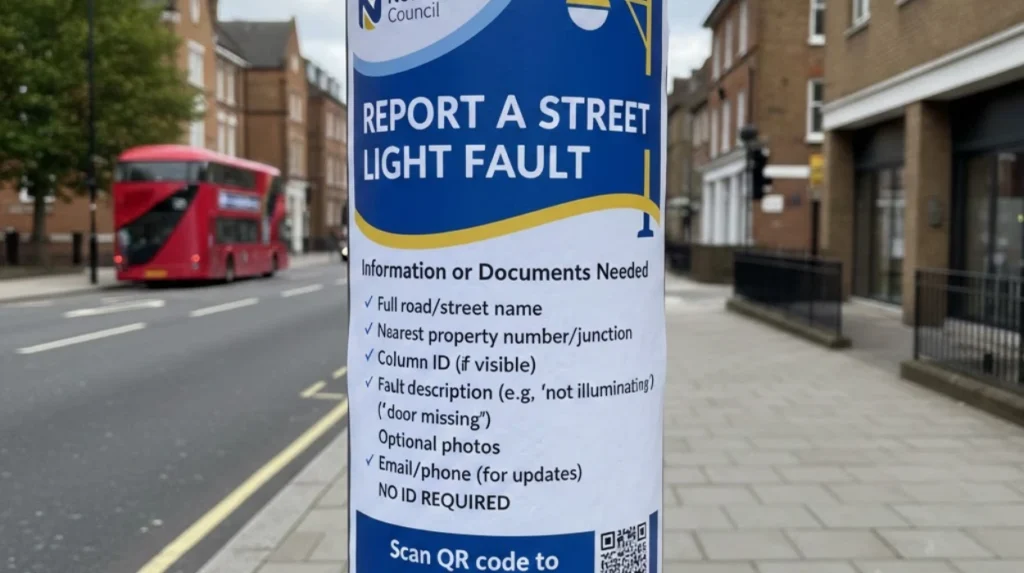
Information or Documents Needed
Councils require precise details to locate and fix street lights efficiently. Provide the full road or street name, nearest property number or junction, and any column ID for accuracy. A description of the fault—such as “not illuminating at night” or “column door missing”—helps prioritise the job.
Optional photos strengthen your report but are not mandatory; upload clear images showing the light and location if the portal allows. Your email or phone for contact ensures updates, though anonymous reports are accepted. No formal documents like ID are needed, keeping the process simple for Newham council and neighbouring areas.
Expected Response Time
Newham council aims to inspect reported street light faults within five to seven working days for standard issues like non-working lights. Minor repairs often follow quickly, with full fixes targeted within 20 working days per their service levels. Urgent dangers, such as damaged columns or exposed cables, trigger a response within one to four hours.
Tower Hamlets council matches this with four-hour attendance for emergencies and routine repairs in weeks. Hackney, Waltham Forest, Redbridge, and Barking & Dagenham follow similar timelines under London borough standards, influenced by Highways Act requirements. Delays may occur due to weather or high volumes, but tracking your reference keeps local residents informed.
What to Do If Follow-Up Is Required
Check your report status using the reference number on the council’s online portal, typically available 24-48 hours after submission. If no update after the expected time, resubmit the report or contact Newham’s customer service team via their general enquiry form. Politely reference your original job number and add any new details like worsening conditions.
For persistent issues across East London councils, escalate via the corporate complaints process after two weeks, outlining dates and impacts. Request a case review, which triggers senior oversight. Persistent follow-up ensures resolution while respecting council workloads.
Rights and Responsibilities Under UK Rules
Under the Highways Act 1980, councils hold a duty to maintain street lights on public highways, making them legally accountable for repairs. Local residents have the right to report faults and expect reasonable response times, with access to complaint procedures under the Local Government and Social Care Ombudsman if unresolved. Freedom of Information requests can seek data on repair backlogs if needed.
Residents must report accurately to avoid wasted resources and not tamper with faulty lights, as this breaches health and safety laws like the Electricity at Work Regulations 1989. Councils balance responsibilities with budget constraints, prioritising based on risk assessments. This framework supports fair service for Newham council and East London communities.
Practical Tips to Avoid the Problem in Future
Inspect street lights near your home during evening walks to spot issues early, reporting them before full failure. Encourage neighbours to join community watch groups in Tower Hamlets or Hackney for collective vigilance on local lighting. Note column numbers during daylight for faster future reports.
Support council initiatives by avoiding parking over light bases or fly-tipping near columns, which hinders access. In Waltham Forest or Redbridge, participate in local consultations on lighting upgrades to influence long-term improvements. Regular reports from proactive local residents help East London councils maintain infrastructure effectively.