Key Points
- A Government minister has described the “London school wars” social media trend as “deeply concerning”, reacting to posts encouraging violence among pupils.
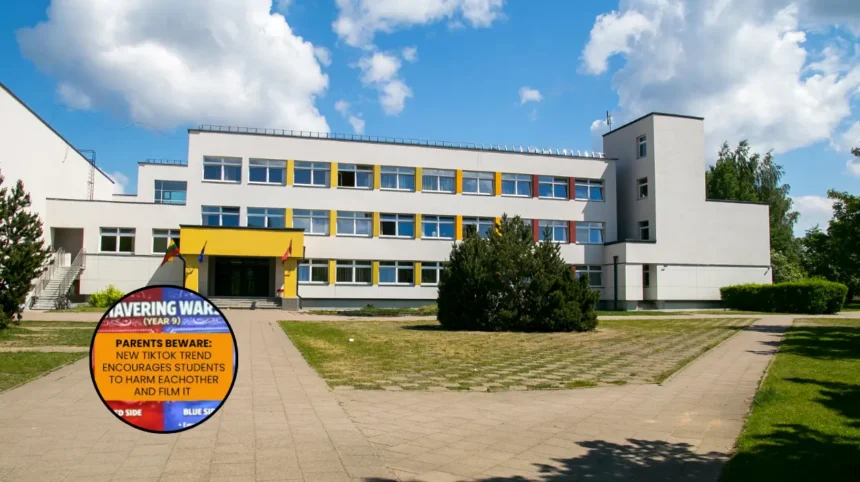
- The trend splits schools into “red” and “blue” sides, urging pupils to “be violent” and attack rivals using items like compasses, metal combs, and rulers, with footage shared on TikTok.
- Posts first circulated in mid-February, initially targeting secondary schools in Hackney, before spreading to boroughs including Highgate, Croydon, Tower Hamlets, and Redbridge.
- More recent posts call for a wider “London War”, escalating concerns over youth violence.
- A headteachers’ union has warned that the trend represents the “latest example of the wild west environment” on social media platforms.
- MyLondon previously reported on “red vs blue” posts urging pupils to attack rivals in East London, highlighting the trend’s origins.
East London (East London Times) February 27, 2026 – A disturbing social media trend dubbed the “London school wars” has prompted sharp condemnation from a Government minister, who labelled it “deeply concerning” amid fears of escalating youth violence across multiple boroughs.
- Key Points
- What Sparked the ‘London School Wars’ Trend?
- How Has the Government Responded?
- What Do Headteachers Say About the Trend?
- Which Boroughs Are Affected by School Wars Posts?
- What Weapons Are Pupils Urged to Use?
- Why Is TikTok Central to the Trend’s Spread?
- What Is the ‘Red vs Blue’ Divide?
- How Serious Is the Risk of Real Violence?
- What Broader Context Fuels This Phenomenon?
- Could This Escalate to a Full ‘London War’?
- What Should Schools and Parents Do Next?
- How Does This Fit Into Social Media’s Challenges?
The trend, which emerged in mid-February, encourages pupils to divide into “red” and “blue” factions and engage in violent clashes, using everyday school items as weapons before filming and sharing the results on platforms like TikTok.
As first detailed in coverage by MyLondon, the posts initially focused on secondary schools in Hackney, with messages urging attacks on “rival” institutions. Similar content soon proliferated, referencing schools in Highgate, Croydon, Tower Hamlets, and Redbridge, as noted in the same report.
What Sparked the ‘London School Wars’ Trend?
The origins trace back to mid-February when anonymous posts began circulating on social media, specifically targeting Hackney’s secondary schools.
As reported by journalists at MyLondon, these messages instructed pupils to arm themselves with compasses, metal combs, and rulers to assault peers from opposing schools, capturing the violence for online virality. MyLondon’s earlier article on “red vs blue” posts explicitly linked the phenomenon to East London, where the divide was framed as a territorial rivalry.
This initial wave quickly expanded. Posts referencing Highgate followed, then Croydon, Tower Hamlets, and Redbridge, each amplifying calls for physical confrontations. The escalation culminated in broader provocations for a “London War”, uniting disparate borough skirmishes into a city-wide narrative of chaos.
How Has the Government Responded?
A Government minister has directly addressed the trend, calling it “deeply concerning” in a statement that underscores official alarm. This reaction highlights the potential for real-world harm from online incitement, positioning the issue within wider debates on social media regulation.
The minister’s comments align with longstanding Government efforts to curb youth violence, though specifics on immediate actions remain pending. No further details on policy responses were provided in initial reports, but the pronouncement signals readiness to intervene.
What Do Headteachers Say About the Trend?
A headteachers’ union has issued a stark warning, describing the “London school wars” as
“the latest example of the wild west environment”
pervasive on social media platforms. This attribution, drawn from MyLondon’s coverage, reflects deep frustration among educational leaders over platforms’ failure to moderate harmful content swiftly.
Union representatives emphasise the trend’s role in normalising violence among impressionable pupils.
“Encouraging children to be violent is unacceptable,”
the union implied through its broader critique, though no named spokesperson was quoted in the primary source.
Which Boroughs Are Affected by School Wars Posts?
Hackney emerged as ground zero, with posts explicitly naming its secondary schools and directing attacks on rivals. MyLondon’s reporting pinpointed this borough as the trend’s launchpad in mid-February.
Highgate saw subsequent mentions, followed by Croydon, where south London dynamics intertwined with the north-eastern focus. Tower Hamlets and Redbridge rounded out the list, with messages tailored to local school rivalries in these densely populated areas. The geographical spread—from inner-city Hackney to outer Croydon—illustrates the trend’s viral reach across Greater London.
What Weapons Are Pupils Urged to Use?
Posts chillingly specify improvised weapons drawn from school supplies. Compasses, with their sharp points, feature prominently, alongside metal combs and rulers repurposed for harm. As detailed by MyLondon, these instructions aim to bypass detection while maximising injury, exploiting everyday items in a classroom setting.
The emphasis on filming assaults for TikTok upload adds a performative layer, incentivising participation through social validation. This tactic mirrors prior youth violence trends but escalates via structured “red vs blue” allegiance.
Why Is TikTok Central to the Trend’s Spread?
TikTok serves as the primary dissemination platform, where footage of alleged clashes garners views and shares. MyLondon highlighted how the app’s algorithm amplifies sensational content, propelling “school wars” videos to wide audiences.
The platform’s short-form format suits quick, violent clips, while duets and stitches encourage emulation. No official TikTok response was mentioned, but the union’s “wild west” label critiques lax moderation across such sites.
What Is the ‘Red vs Blue’ Divide?
The trend hinges on a binary split: schools or pupils aligned as “red” versus “blue”. MyLondon’s prior coverage on “red vs blue” posts explained this as a gamified rivalry, fostering tribalism akin to gang affiliations but rooted in academic institutions.
This framing simplifies complex social tensions into colour-coded battles, urging loyalty and aggression. Recent evolutions towards a “London War” suggest ambitions to federate these factions city-wide.
How Serious Is the Risk of Real Violence?
The potential for offline harm looms large, given the explicit calls to “be violent”. Government and union statements underscore fears of injuries or worse, especially in boroughs with existing youth crime challenges like Tower Hamlets and Croydon.
While no confirmed incidents were reported in the sources, the trend’s design—weapon instructions plus virality—poses an imminent threat. Schools in affected areas likely bolstered security, though specifics remain unreported.
What Broader Context Fuels This Phenomenon?
London’s “school wars” echo national anxieties over knife crime and online radicalisation. The headteachers’ union ties it to a “wild west environment” on social media, where unchecked algorithms prioritise engagement over safety.
Mid-February timing coincides with half-term aftermaths, when pupils reconnect online. Boroughs like Hackney and Redbridge, with diverse populations, may see exacerbated tensions from socioeconomic divides.
Could This Escalate to a Full ‘London War’?
More recent posts invoke a “wider London War”, transcending school-specific feuds. This rhetoric, per MyLondon, risks drawing in unaffiliated youth, amplifying scale and danger.
Escalation fears are heightened by the trend’s momentum; without platform clampdowns, a metropolis-wide unrest scenario is plausible. Authorities’ “deeply concerning” stance hints at monitoring for organised unrest.
What Should Schools and Parents Do Next?
Headteachers urge vigilance, likely prompting assemblies and social media audits. Parents are advised to monitor children’s online activity, discussing the perils of participating in or viewing such content.
Police involvement seems probable in Hackney and beyond, with potential for content takedowns under the Online Safety Act. Community leaders in Tower Hamlets and Croydon may convene forums to address root causes.
How Does This Fit Into Social Media’s Challenges?
The union’s critique frames “school wars” as symptomatic of unregulated platforms. TikTok’s role exemplifies how global apps evade local accountability, a recurring theme in UK policy debates.
Government reaction could spur renewed calls for age verification or content bans, building on prior drill music restrictions.
In the evolving landscape of digital threats, this trend demands coordinated response from educators, platforms, and policymakers. As East London grapples with its manifestations, the hope remains that swift action prevents tragedy.