Key Points
- Hackney Council’s licensing sub‑committee is weighing an application by Jenningsbet to open a new betting premises in Stoke Newington.
- If approved, the venue would become the fourth betting shop within a short walking distance of each other on the same stretch of Stoke Newington High Street.
- Local residents, councillors and campaigners have raised concerns about “oversaturation” and the potential for increased gambling‑related harm in the area.
- Hackney Council has previously cited a “localised over‑provision of betting premises” in parts of the borough, including Stoke Newtown, and has turned down similar applications in recent years.
- Jenningsbet’s submission argues that the proposed outlet would meet strict licensing criteria and would not materially worsen gambling‑related harms in the neighbourhood.
- The council’s decision is expected to be made following a formal vote at the licensing sub‑committee, with the outcome likely to draw wider scrutiny from gambling‑regulation campaigners and local media.
Stoke Newington (East London Times) March 5, 2026 – Hackney Council’s licensing sub‑committee has begun deliberating a fresh application that could add a fourth betting shop within a short walking distance of one another on Stoke Newington High Street, reigniting local debate over the density of gambling premises in the area.
- Key Points
- What is the scale of betting‑shop density in Stoke Newington?
- Why is this new application raising alarms?
- What is the council’s position so far?
- What is Jenningsbet arguing in its defence?
- How have local councillors reacted?
- What are campaigners saying about gambling‑shop clusters?
- How does this tie into broader gambling‑regulation debates?
- What happens next in the licensing process?
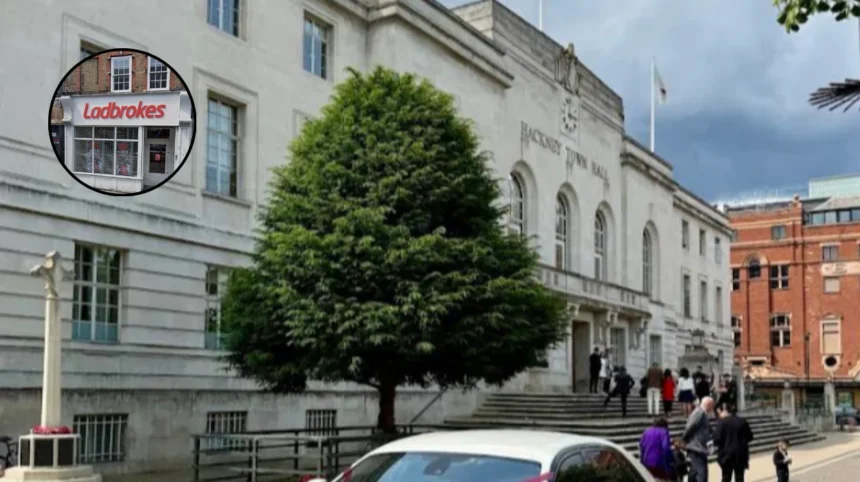
The hearing, held at Hackney Town Hall, focused on a proposal by retail bookmaker Jenningsbet to open a betting premises licence at a vacant unit on Stoke Newington High Street, bringing the cluster of bookmakers in the immediate vicinity to four outlets if the application is approved. Officials at the meeting said the council was required to weigh the potential for “localized over‑provision” of gambling venues against the operator’s assurances that it would comply with strict licensing conditions designed to limit gambling‑related harm.
What is the scale of betting‑shop density in Stoke Newington?
In recent years, Stoke Newington has emerged as one of several east London neighbourhoods where the number of betting shops on a single high street has drawn attention from local authorities and campaigners. Current maps and council records show that, even before the Jenningsbet application, there are already three betting premises within a few minutes’ walk of each other along Stoke Newington High Street and the adjoining sections of the main commercial strip.
Hackney Council’s own licensing framework for betting premises notes that the borough has in the past turned down applications in areas where a “localised over‑provision of betting premises” has been identified, arguing that clusters of bookmakers can increase the risk of gambling‑related harms for residents. Licensing officers presenting to the sub‑committee said Stoke Newington was already considered close to, if not at, a threshold where adding another betting shop would exacerbate those concerns.
Why is this new application raising alarms?
Residents and local politicians have voiced anxiety that a fourth betting shop could deepen the perception of Stoke Newington as a “betting‑shop hotspot” and place additional pressure on vulnerable individuals.
As reported by East London Lines, several members of the public spoke against the Jenningsbet application during the hearing, arguing that the current cluster of three bookmakers was already sufficient and that a fourth would make gambling more visible and “hard to avoid” in day‑to‑day life.
One local resident, who did not wish to be named, said in submissions to the committee that the presence of multiple betting shops on a short stretch of high street normalised gambling and made it harder for people struggling with addiction to engage with everyday errands without being confronted by betting‑related signage and advertising.
Community activists affiliated with local anti‑gambling groups echoed those concerns, pointing to statistics on problem gambling in Hackney and describing betting‑shop clusters as “pressure points” where harm can concentrate.
What is the council’s position so far?
Hackney Council has previously signalled discomfort with concentrated clusters of betting shops, noting in past licensing decisions that areas such as Stoke Newington already have a
“localised over‑provision of betting premises.”
In earlier cases, the council has cited the potential for “cumulative impact” – where the effect of several venues operating in close proximity is greater than the effect of any one shop alone – as grounds for refusing applications.
Licensing officers at the sub‑committee meeting reiterated that the council’s responsibilities under the Gambling Act 2005 include preventing gambling‑related crime and disorder, ensuring consumer protection and protecting children from being exposed to gambling.
They emphasised that the Jenningsbet application would be assessed against all of those criteria, including whether a fourth betting shop in the immediate area would undermine the authority’s stated aim of reducing gambling‑related harm.
What is Jenningsbet arguing in its defence?
Jenningsbet has submitted a detailed application to the council, insisting that the proposed premises would meet all statutory licensing conditions and that its operation would not materially worsen gambling‑related harms in Stoke Newington.
As reported by East London Lines, the operator’s written submission stated that customer volumes were expected to be modest, that the shop would be subject to strict age‑verification checks and that staff would be trained in responsible gambling practices.
Representatives for Jenningsbet told the licensing sub‑committee that the company’s model focused on “licensed, regulated betting” and that it had a policy of refusing sales to customers who appeared to be experiencing gambling problems.
They also argued that the location of the shop – within a mixed‑use retail area where other businesses already operated – justified the application, saying that the presence of a single additional betting premises should not be seen as automatically amplifying harm if the proper safeguards were in place.
How have local councillors reacted?
Several Hackney councillors have publicly flagged unease about allowing a fourth betting shop to open so close to the existing cluster. Speaking to the pool of reporters outside the hearing, Councillor Sarah Glass (Labour, Stoke Newington ward) said the council had a duty to “be cautious” whenever an area already had a high concentration of betting premises.
As reported by East London Lines, Ms Glass said:
“We have already seen the impact of gambling‑related harm on residents and local services, and stacking four betting shops within walking distance of each other runs the risk of making that worse.”
She added that councillors would need to balance the operator’s commercial interests with the council’s responsibilities to protect vulnerable residents and to follow its own guidance on concentrated gambling provision.
Other local politicians told the same outlet that the council should use the licensing process as an opportunity to “reset” its relationship with gambling operators, insisting that future applications in areas like Stoke Newington should be held to especially rigorous scrutiny.
What are campaigners saying about gambling‑shop clusters?
Anti‑gambling campaigners and public‑health advocates have seized on the Jenningsbet application as a case study of how “betting‑shop clusters” can concentrate harm in particular neighbourhoods.
As reported by East London Lines, groups such as the Hackney Gambling Action Network have drawn attention to national data showing that areas with large numbers of betting shops tend to have higher rates of problem gambling and associated social issues, including financial hardship and mental‑health distress.
In a statement prepared for the licensing sub‑committee, the Hackney Gambling Action Network argued that Stoke Newington already had “more than its fair share” of betting premises and that the addition of a fourth shop would deepen the “gambling‑friendly” character of the street.
The group urged councillors to uphold the council’s existing policy on “localised over‑provision” and to set a precedent that any further betting‑shop applications in the area would be met with similarly high standards of scrutiny.
How does this tie into broader gambling‑regulation debates?
The Jenningsbet application comes amid wider national debate over the regulation of betting shops and the impact of gambling‑related harm on communities.
National bodies such as the Gambling Commission and public‑health organisations have repeatedly warned that concentrated clusters of betting premises can exacerbate problem gambling, particularly in areas where deprivation is already high.
In Hackney, local officials have in recent years referenced these national concerns in their own licensing decisions, citing “cumulative impact” and “localised over‑provision” as key reasons to refuse betting‑shop applications in parts of the borough.
The Stoke Newington case is widely seen as a test of how consistently the council is prepared to apply those principles when faced with a new application on a street that already hosts three bookmakers.
What happens next in the licensing process?
The licensing sub‑committee is expected to vote on the Jenningsbet application after considering all submissions, including those from the operator, council officers, residents and campaign groups. Final decisions on betting premises licences are subject to standard procedures under the Gambling Act 2005, including the possibility of appeal if the application is refused.
As reported by East London Lines, a council spokesperson said the outcome would be published in due course and that any decision would be guided by the three statutory licensing objectives: preventing gambling‑related crime and disorder, ensuring fair and open gambling, and protecting children and other vulnerable persons from being harmed or exploited by gambling.
The spokesperson added that residents would be able to request further information about the decision once it was formally recorded.
The case is likely to attract further interest from local media and national gambling‑regulation watchers, particularly if Hackney either approves a fourth betting shop in close proximity to the existing three or reiterates its stance against what it describes as “localised over‑provision” of betting premises.