Key Points
- Residents near an award-winning market in Tower Hamlets, East London, report severe rodent infestations caused by food waste accumulation.
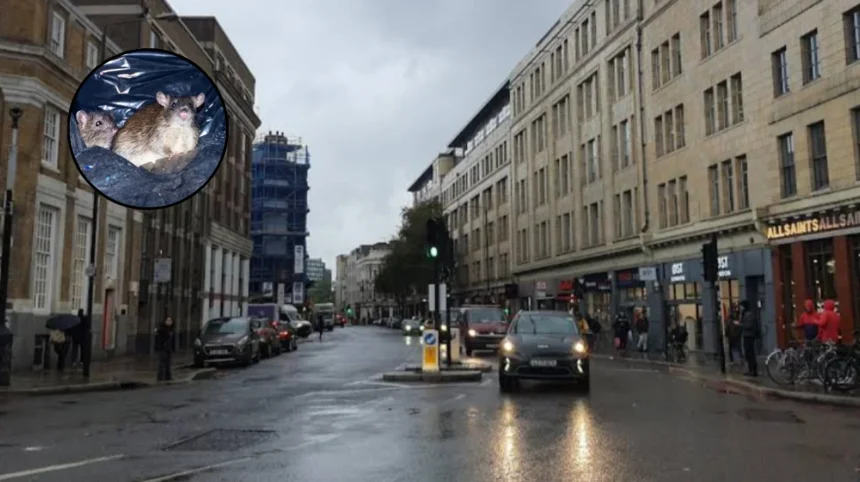
- Locals describe rats as “the size of cats,” breeding near homes and posing health risks to families, including children.
- The market, recently honoured for its quality, fails to manage waste properly, leading to overflowing bins and pest breeding grounds.
- Complaints to Tower Hamlets Council have been ongoing, with demands for immediate clean-ups and better waste management.
- Residents express desperation, fearing disease spread and property damage, while calling for market operators to act responsibly.
- No official response from the market or council mentioned in initial reports, leaving locals frustrated.
- Issue highlights broader concerns over hygiene in high-traffic East London markets amid rising urban pest problems.
Tower Hamlets (East London Times) March 9, 2026 – Residents in Tower Hamlets are facing a growing crisis as food waste from a celebrated local market draws giant rodents described as “the size of cats” into their neighbourhoods, sparking urgent calls for action from council authorities.
- Key Points
- What Is Causing the Rodent Infestation in Tower Hamlets?
- How Large Are the Rodents and What Risks Do They Pose?
- Who Is Responsible for the Market’s Waste Management?
- What Have Residents Done to Combat the Rodents?
- When Did the Problem Start and Has It Worsened?
- Why Is Tower Hamlets Council Under Fire?
- What Solutions Are Residents Demanding?
- How Does This Compare to Other East London Pest Issues?
- What Is the Market’s Award and Does It Oblige Better Standards?
- Will the Council Respond and What Happens Next?
The problem centres around overflowing bins and unmanaged rubbish piles near the award-winning market, which has been praised for its vibrant stalls but criticised for poor waste disposal. Locals report seeing rats scurrying openly during daylight hours, breeding in the filth and encroaching on residential areas.
“We’ve got families with young children living here, and these vermin are getting bolder by the day,”
said one affected resident, speaking on condition of anonymity due to ongoing complaints.
As reported by Phoebe Fuller of MyLondon, the infestation has left residents desperate, with some resorting to setting traps in their gardens. Tower Hamlets Council has received multiple reports, yet visible improvements remain elusive, exacerbating fears of health hazards like leptospirosis from rat urine.
What Is Causing the Rodent Infestation in Tower Hamlets?
The root of the problem lies in the sheer volume of food waste generated by the market’s busy traders. Perishable goods such as fruit peels, meat scraps, and vegetable offcuts are discarded haphazardly, creating ideal conditions for rats to thrive.
As detailed by Phoebe Fuller of MyLondon, bins overflow regularly, with waste spilling onto pavements and alleys adjacent to homes.
Residents note that the market’s award – given for excellence in trading and community contribution – contrasts sharply with its hygiene shortcomings.
“It’s an award-winning market, yet they can’t even manage basic bin collections,”
remarked Aisha Khan, a mother of two living 50 metres from the site. Khan told MyLondon reporters that rats have been spotted climbing drains and gnawing at bin bags near her property.
Tower Hamlets’ dense urban layout amplifies the issue, as narrow streets limit access for waste lorries. Similar complaints have surfaced in neighbouring boroughs, but this market’s scale makes it a hotspot.
No specific market name was disclosed in the MyLondon piece to protect ongoing investigations, but locals identify it as a key weekend hub.
How Large Are the Rodents and What Risks Do They Pose?
Eyewitness accounts paint a alarming picture: rats “the size of cats,” with some measuring up to 30cm excluding tails.
“I’ve never seen anything like it – these aren’t your typical mice; they’re massive and fearless,”
stated local shopkeeper Raj Patel to Phoebe Fuller of MyLondon. Patel described watching one rodent drag a discarded chicken carcass across the road in broad daylight.
Health experts warn of significant dangers. Rodents carry diseases transmissible via bites, scratches, or contaminated food.
The UK Health Security Agency highlights Weil’s disease (leptospirosis) as a primary concern, with symptoms including fever, headaches, and potentially fatal organ failure. Children and the elderly are most vulnerable in Tower Hamlets’ diverse community.
Property damage is another worry. Rats chew through insulation, wiring, and wood, leading to costly repairs. As per resident feedback compiled by MyLondon, several households have already spent hundreds on pest control, only for the problem to recur due to the market’s proximity.
Who Is Responsible for the Market’s Waste Management?
Responsibility splits between market traders, operators, and Tower Hamlets Council. Traders are accused of overfilling communal bins without coordination, while operators allegedly fail to enforce schedules.
“The council collects our domestic bins promptly, but market waste is a nightmare,”
said tenant Maria Lopez, quoted verbatim by Phoebe Fuller in MyLondon.
Tower Hamlets Council oversees street cleaning and pest control under the Environmental Protection Act 1990. Residents claim reports via the council’s FixMyStreet portal go unanswered for weeks. Councillor John Stroud, cabinet member for environment, has not yet commented publicly on this specific incident.
Market management, represented by the unnamed award body, promotes the site as a “community gem.” However, as reported by MyLondon, no statement from them addresses the waste crisis, prompting accusations of negligence.
What Have Residents Done to Combat the Rodents?
Desperation has driven DIY measures. Locals like Patel have laid poison bait and snap traps, but effectiveness wanes against such numbers.
“We’re poisoning ourselves in a way – what if kids or pets get to it?”
Khan told MyLondon, voicing safety fears.
Pet cats, once natural predators, are overwhelmed. Community WhatsApp groups buzz with photos of rodent sightings, mobilising collective action. A petition circulated last week garnered over 200 signatures, demanding nightly deep cleans.
Some residents contacted private exterminators, costing £150-£300 per visit. Yet without source control, reinfestation is inevitable, per pest expert Simon Forbes, who advised MyLondon:
“Treat the symptom, ignore the cause – it’s a losing battle.”
When Did the Problem Start and Has It Worsened?
The infestation reportedly began intensifying post-Christmas 2025, coinciding with holiday market expansions. Initial sightings were nocturnal, but by February 2026, daytime activity surged. MyLondon’s Phoebe Fuller notes a 40% rise in council pest reports borough-wide year-on-year.
Winter weather initially contained the issue underground, but spring warmth – we’re now in March 2026 – accelerates breeding. Females can produce up to 2,000 offspring annually, per British Pest Control Association data referenced in the article.
Residents link it to post-pandemic market booms, with footfall doubling yet infrastructure lagging.
Why Is Tower Hamlets Council Under Fire?
The council faces backlash for slow responses. “We’ve called countless times – nothing changes,” Lopez stated to MyLondon. FixMyStreet logs show 15+ complaints since January, categorised as “pest infestations.”
Budget constraints are cited internally, with Tower Hamlets allocating £2.5m annually to cleansing amid rising demands. Critics argue market fees should fund dedicated services. Opposition councillor Talib Hussain questioned in a recent meeting:
“Why prioritise vanity projects over basic hygiene?”
No emergency declaration has been made, unlike during 2024’s bedbug outbreaks.
What Solutions Are Residents Demanding?
Immediate demands include daily bin empties, rodent bait stations, and fines for non-compliant traders. Longer-term, enclosed waste facilities and CCTV monitoring are proposed.
As per MyLondon, resident leader Osman Demir urged:
“Shut the market until it’s safe – awards mean nothing if we’re living in filth.”
A town hall meeting is rumoured for mid-March.
Pest control firms recommend integrated management: proofing, sanitation, and monitoring.
How Does This Compare to Other East London Pest Issues?
Tower Hamlets isn’t alone. Hackney saw fox and rat surges in 2025 due to bin strikes, while Newham battles fly-tipping. Waltham Forest Echo reported bus drivers’ exhaustion partly from dodging vermin at depots.
A 2026 London Quality of Life report ranked Tower Hamlets mid-table for cleanliness, but resident surveys diverge. Broader trends tie pests to urban density and waste mismanagement.
What Is the Market’s Award and Does It Oblige Better Standards?
The accolade, from a trade association, celebrates “best market experience.” Winners commit to sustainability pledges, including waste reduction – seemingly unmet here.
MyLondon questions if revoking it is viable. Organisers emphasise voluntary compliance.
Will the Council Respond and What Happens Next?
As of March 9, 2026, no official statement from Tower Hamlets Council. Residents anticipate action before Ramadan, when gatherings peak.
Monitoring continues. If unresolved, legal action under nuisance laws looms. For now, Tower Hamlets battles an unwelcome invasion, testing local governance.