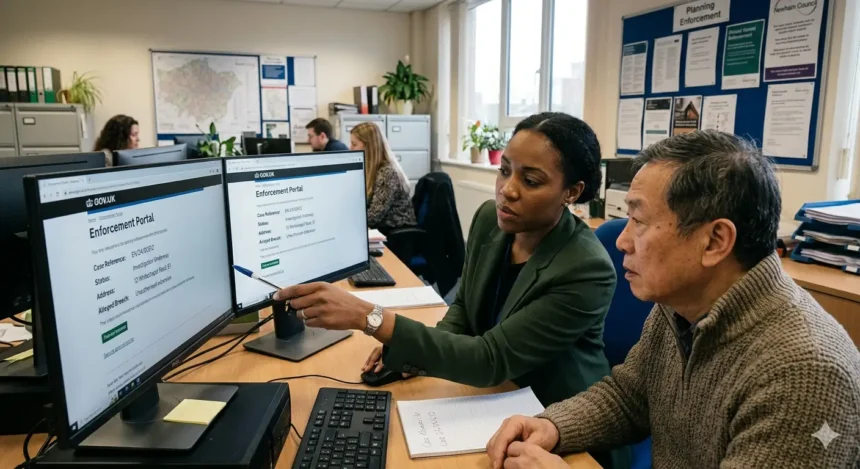
To track a planning breach through the Enforcement Portal, first report the suspected breach via your local East London council’s online planning enforcement form, then use the council’s Planning Portal to search for and monitor the case by reference number. This process allows Newham, Tower Hamlets, Hackney, Waltham Forest, Redbridge, and Barking & Dagenham residents to follow updates efficiently.
Why This Issue Matters to Local Residents
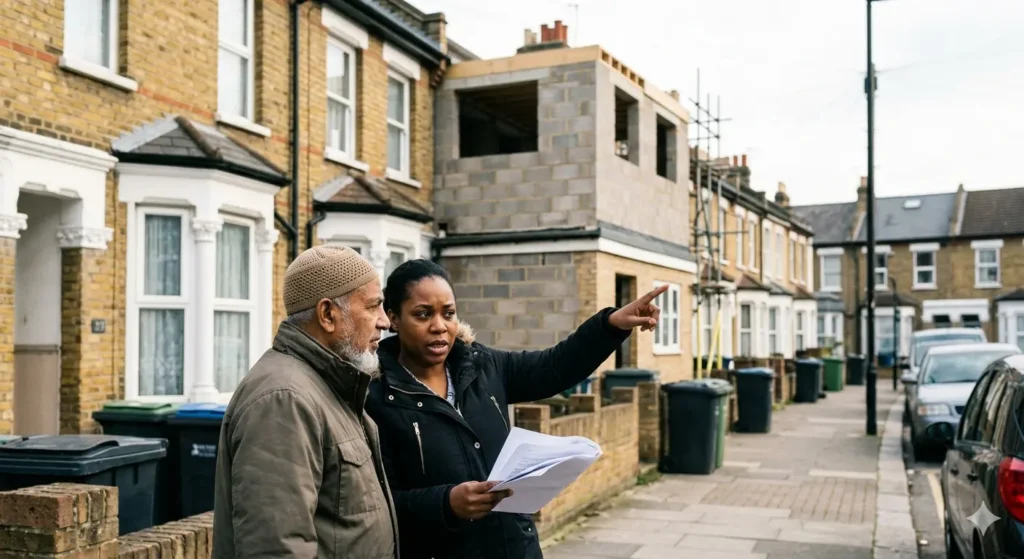
Planning breaches affect daily life in East London communities. Unauthorised extensions, changes of use, or structures can alter neighbourhoods, impacting privacy, light, and traffic flow for those in dense areas like Newham or Tower Hamlets.
Local residents often notice these issues first, such as illegal conversions in terraced housing common across Hackney and Waltham Forest. Tracking a planning breach ensures councils act promptly, preserving the character and safety of shared spaces in Redbridge and Barking & Dagenham.
This matters because unresolved breaches can lower property values and strain community resources, making it essential for East London residents to engage with the process.
Which Council Service Handles It
In East London, the Planning Enforcement team within each council’s Planning and Building Control service manages breaches. For Newham council, this falls under their Development Management division, handling reports of unauthorised works.
Tower Hamlets council directs cases to its Enforcement Officers, who investigate under the Town and Country Planning Act 1990. Hackney council’s Planning Enforcement team prioritises high-harm cases, while Waltham Forest, Redbridge, and Barking & Dagenham councils use similar structures via their Planning Portals.
Residents should identify their borough’s service through the main council website’s planning section, as procedures align with UK national standards but vary slightly by local authority.
Step-by-Step Actions to Solve the Problem
Follow these steps to report and track a planning breach effectively.
- Check the Planning Portal first: Search your council’s online register (accessible via the East London council site) for existing applications or permissions at the site to confirm a breach.
- Submit a report online: Use the dedicated enforcement reporting form on your borough’s website, providing the address, breach description, start date, and impact.
- Note the reference number: Upon submission, councils issue a unique case ID, often emailed immediately.
- Track via the Enforcement Portal: Return to the Planning Portal, enter the reference, and view status updates like “under investigation” or “site visit scheduled.”
- Monitor progress: Refresh weekly, as public registers show key stages without login.
This sequence empowers local residents to resolve issues legally without repeated contact.
Information or Documents Needed
Councils require clear details to process reports swiftly. Start with the exact address or postcode of the breach site, plus a description of the issue, such as “unauthorised rear extension blocking light.”
Include when the breach began (estimated if unsure), its effects on you (e.g., overshadowing or noise), and names of known owners or occupiers. Evidence strengthens cases: upload photos, site plans, or prior permissions in PDF or image format.
Contact details are mandatory for updates, though some councils allow anonymous reports with reduced follow-up. For East London councils like those in Newham or Hackney, no formal ID is needed, but accurate info speeds validation.
Expected Response Time
Councils acknowledge reports within 5-10 working days, assigning an officer and reference number. Initial desktop checks and site visits follow within 2-4 weeks, prioritising serious harms like safety risks.
Full investigations vary: minor breaches may close in 6-8 weeks, while complex cases extend to 3-6 months. Waltham Forest and Tower Hamlets councils publish performance data showing 70-80% resolution within 13 weeks.
East London residents can expect phased updates via the Enforcement Portal, with no fixed timeline due to case volume, but UK guidance urges prompt action.
What to Do If Follow-Up Is Required
If no update appears after 4 weeks, email the Planning Enforcement team using the contact from your acknowledgement. Reference the case number and politely request status.
For stalled cases, add new evidence through the portal or resubmit if closed prematurely. Escalate to the council’s complaints procedure after 8 weeks, outlining unmet service standards.
Local residents in Barking & Dagenham or Redbridge can also check the public Enforcement Register for transparency. Persistent issues may warrant MP involvement, but exhaust council channels first.
Rights and Responsibilities Under UK Rules
Under the Town and Country Planning Act 1990, councils must investigate reported breaches but act proportionately. Residents have the right to report anonymously in some boroughs and receive case updates if details provided.
Property owners must comply with permissions; breaches become immune after 4-10 years if unchallenged. Report submitters bear responsibility for accurate info, facing rare misuse penalties.
UK rules grant no automatic enforcement—councils prioritise public harm. East London residents retain data protection rights over personal details shared.

Practical Tips to Avoid the Problem in Future
Prevent breaches by checking the Planning Portal before property changes. Local residents can set up alerts for nearby applications in Hackney or Newham council areas.
Discuss neighbour plans early to avoid disputes. For purchases, review the Enforcement Register spanning 5-10 years.
Engage community groups in Tower Hamlets or Waltham Forest for vigilance. These habits keep East London neighbourhoods compliant and harmonious.
How do you report and track a planning breach through the Enforcement Portal in Havering?
Submit a planning breach report via Havering’s Enforcement Portal, provide evidence (photos, location, details), and use the reference number issued to track progress and updates online.