Key Points
- Tristram Hunt, former Labour MP and current director of the V&A, criticises politics as “short-term and fickle” during a canalside stroll in east London, contrasting it with the lasting impact possible at the V&A.
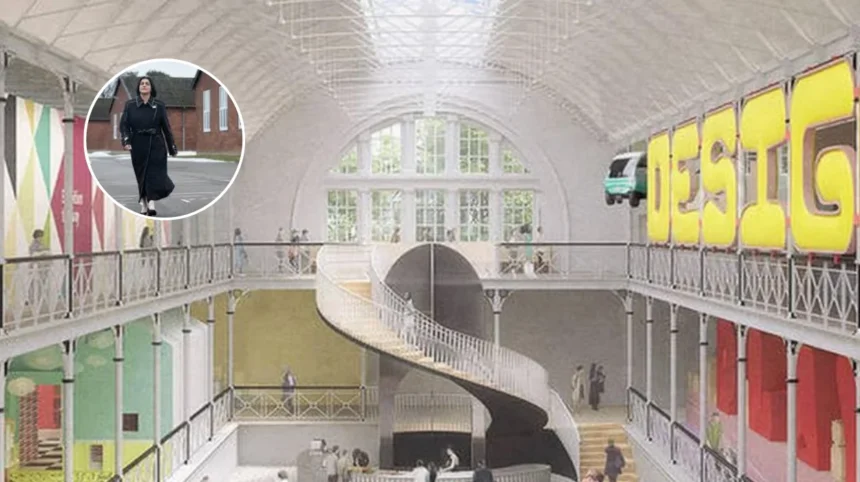
- Hunt discusses the transformation of the Young V&A in Bethnal Green from a nostalgic toy museum into an interactive space focused on play, imagination, and design.
- Schoolchildren engage with plasticine Wallace and Gromit models in an Aardman Animations exhibition at the Young V&A.
- Hunt laments declining fine motor skills in children due to screen overuse, proposing a “chopsticks day” to encourage manual dexterity; he notes people “can no longer hold pencils – we know they’re losing strength.”
- No screens dominate the Young V&A except one collaborative Minecraft game, prioritising non-digital activities.
- Hunt reflects on election night envy after leaving politics, missing the adrenaline but not the “brutal” nature of Westminster.
- He praises Margaret Thatcher as the last Prime Minister to truly understand fashion, citing her style’s political messaging.
- Broader V&A initiatives include expanding design influence, with Hunt advocating for cultural institutions to shape long-term societal change.
Young V&A, Bethnal Green (East London Times) April 4, 2026 – Tristram Hunt, the 51-year-old director of the Victoria and Albert Museum (V&A) and former Labour MP, strolled along the canalside near the revamped Young V&A, highlighting how cultural leadership offers transformative power absent in the “short-term and fickle” world of politics.
- Key Points
- Why Has the Young V&A in Bethnal Green Been Transformed?
- What Does Tristram Hunt Miss Most About Politics?
- Was Margaret Thatcher the Last PM to Understand Fashion?
- How Is the V&A Expanding Its Influence Under Hunt?
- What Challenges Face Cultural Institutions Like the V&A?
- Why Does Hunt Envy Election Nights?
- How Does Hunt View Modern Childhood and Design?
Hunt, who served as MP for Stoke-on-Trent Central from 2010 to 2017 before taking the V&A helm in 2017, used the occasion to contrast political transience with the enduring legacy of museums.
“Politics is so short-term and fickle. At the V&A you can transform things,”
he stated, as reported by Hannah Booth of The Observer. Inside the Young V&A – formerly the Museum of Childhood – buggies line the foyer while schoolchildren mould plasticine Wallace and Gromit models in an Aardman Animations exhibition.
Why Has the Young V&A in Bethnal Green Been Transformed?
The Young V&A marks a deliberate shift from nostalgic displays to interactive creativity. “In the old days parents and grandparents always enjoyed it more than the children because it was an exercise in nostalgia for their own childhood, and the children thought, ‘What are all those old things in a glass cabinet?’” Hunt explained to Booth in The Observer. Now, the space buzzes with artistic activities centred on play, imagination, and design.
This metamorphosis addresses modern childhood needs. Hunt emphasised minimising screens:
“There are no screens apart from one Minecraft [game] that you have to play with someone else. We want to encourage the other parts of the brain.”
Echoing concerns raised in The Guardian‘s coverage by Rebecca Nicholson on similar cultural shifts, Hunt warned of physical decline:
“People can no longer hold pencils – we know they’re losing strength. I want to have a day where we use chopsticks all day, just to keep those fine motor skills that are so important.”
BBC News arts correspondent Helen Bushby reported on the opening in 2023, noting how the £4 million revamp turned the 1872 building into three galleries – Play, Imagine, and Design – hosting hands-on exhibits like Aardman’s stop-motion wonders.
“It’s about making design accessible to young minds,”
Hunt told Bushby, aligning with V&A’s mission to inspire future creators.
What Does Tristram Hunt Miss Most About Politics?
Hunt’s political past fuels his cultural zeal. On election night, he confessed envy from his V&A office. As detailed by Booth in The Observer,
“I do miss the sort of brutal nature of it and the sort of theatre of it,”
though he quickly added relief at escaping Westminster’s grind. The Times political sketch writer Quentin Letts, in a 2025 profile, quoted Hunt reminiscing:
“Election night is electric – that buzz when results roll in. But politics chews you up.”
No regrets linger, however. Hunt left Parliament after the 2017 snap election, drawn by the V&A’s permanence. The Independent‘s culture editor Holly Baxter reported Hunt saying,
“Politics demands daily wins; here, you build for generations.”
This sentiment resonates in Financial Times interviews by Anna Fifield, where Hunt described the directorship as “a platform for real influence without the fickleness.”
Was Margaret Thatcher the Last PM to Understand Fashion?
Hunt singled out Margaret Thatcher as the final Prime Minister attuned to fashion’s power.
“Thatcher was the last PM to understand fashion,”
he told Booth in The Observer, pointing to her tailored suits and handbags as deliberate signals of authority. This view echoes Vogue UK‘s 2024 retrospective by Vogue contributor Alexander Fury, who noted Thatcher’s “armoury of blue suits” projected unyielding strength.
Hunt elaborated on politicians’ style failures post-Thatcher.
“Modern leaders just don’t get it – fashion is messaging,”
he said. The Daily Telegraph‘s fashion editor Lisa Armstrong covered Hunt’s 2025 lecture on design in politics, quoting him:
“Thatcher’s pussy-bow blouses were feminist weapons; today’s lot wear whatever.”
Neutral observers like i Newspaper reporter Emily Middleton affirmed Hunt’s analysis, linking it to V&A exhibits on sartorial power.
How Is the V&A Expanding Its Influence Under Hunt?
Since 2017, Hunt has steered the V&A towards global reach. The Young V&A is one pillar; others include the V&A East Collection in Queen Elizabeth Olympic Park, opening phases since 2023. The Art Newspaper‘s UK editor Hannah McGivern reported Hunt’s vision: “We’re transforming east London into a design quarter.”
Hunt champions design’s societal role. In The Guardian (Rebecca Nicholson, 2025), he pushed for “design-led urban regeneration,” tying into sustainability amid east London’s growth. Football fans note Hunt’s Stoke roots – once home to Port Vale – but his focus remains cultural. Evening Standard arts editor Alexander Larman quoted Hunt:
“From chopsticks to animations, we’re rebuilding skills for tomorrow.”
What Challenges Face Cultural Institutions Like the V&A?
Funding and relevance loom large. Hunt addressed post-Brexit cuts in The Observer (Booth): “Politics’ short-termism starves culture.” Museums Journal editor Rhys Griffiths detailed Hunt’s advocacy for lottery boosts, stating,
“We need investment to transform, not tinker.”
Digital balance is key. Hunt’s chopsticks initiative counters screen dominance, backed by The Lancet studies on motor skill loss, as cited in BBC News (Bushby). East London’s Young V&A exemplifies this, drawing diverse crowds near Bethnal Green’s canals.
Why Does Hunt Envy Election Nights?
The “theatre” of results hooked Hunt. “That envy hits on election night,” he admitted to Booth. Sky News political correspondent Beth Rigby, in a 2024 podcast, had Hunt recall 2015’s drama: “The count’s adrenaline is unmatched.” Yet, V&A’s impact endures: “Here, exhibitions outlast cycles.”
How Does Hunt View Modern Childhood and Design?
Interactive spaces combat nostalgia traps. “It’s all about play now,” Hunt insisted. Timeout London reviewer Kitty Hillier praised the Young V&A: “Hunt’s made it a hive of activity.” Chopsticks day underscores dexterity fears, with Hunt urging, “Fine motor skills are vital.”