Key Points
- Waltham Forest Council this week validated only two new planning applications for the Chingford and Walthamstow area.
- Both validated applications this week relate to property extensions, with no major new‑build or change‑of‑use proposals added to the live register.
- There are no fresh cabinet or planning‑committee decisions reported for Chingford or Walthamstow sites in this specific weekly snapshot, indicating a quieter than average week for major planning activity.
- The borough’s planning register continues to show a backlog of larger projects, including previously approved housing schemes and cemetery‑site developments in Chingford, even though none have moved to “newly validated” this week.
- Local observers note that the thin validity‑list reflects both seasonal patterns and the council’s ongoing focus on resolving older applications rather than processing a high volume of new ones.
East London (East London Times) April 4, 2026 – In Chingford and Walthamstow, residents and property owners looking for signs of a surge in new building activity will find little in this week’s planning update, as Waltham Forest Council has validated only two new planning applications, both for property extensions, since the last round‑up.
- Key Points
- What applications were actually validated this week?
- How does this compare to past planning activity in the area?
- What previously approved projects remain relevant for Chingford and Walthamstow?
- Why is this week’s list so light on new applications?
- How can residents track or respond to these plans?
- What might future planning‑round ups bring for the area?
The sparse validation list contrasts with the broader picture of ongoing development in the borough, where several larger schemes – including multi‑storey housing towers in Walthamstow and cemetery‑linked infrastructure in Chingford – have already been approved in recent months but are now at different stages of implementation rather than re‑entering the planning gateway.
As reported by public‑data analysts tracking the borough’s planning portal, Waltham Forest has logged thousands of applications in the last several years, with an overall approval rate above 75–80 per cent, but the current week’s inflow is limited to minor domestic works rather than large‑scale regeneration.
What applications were actually validated this week?
This week’s validated list, drawn from the council’s online planning register, shows only two items formally recorded as new applications for the Chingford and Walthamstow area.
Both are described as extension proposals on existing residential properties, with no details yet published in the planning officer’s report packs indicating changes of use, new builds, or significant design alterations beyond the scope of standard house‑extension cases.
Local data‑monitoring platforms that aggregate Waltham Forest planning notices note that this pattern of a small number of validated extensions is not unusual in certain weeks, as the council’s system often sees clusters of applications followed by quieter periods while older files work through the decision process.
How does this compare to past planning activity in the area?
In previous rounds, the same borough has seen a far more varied mix of validated proposals, including rear and side single‑storey extensions, two‑storey extensions, and even demolitions for new dwelling construction in nearby wards such as Leytonstone and Woodford Green.
Recent cabinet and planning‑committee records show, for example, approvals for a roof extension in Woodford Green, residential development schemes in Walthamstow, and changes of use such as a property in Leyton being converted into a children’s care home.
These earlier decisions illustrate that the council is still active on larger‑scale projects; however, those decisions belong to earlier validation cycles and are now at the implementation or appeal stage, rather than being reflected in this week’s “new” column.
What previously approved projects remain relevant for Chingford and Walthamstow?
Although this week’s validation list is slim, several previously approved projects continue to shape the planning landscape in both Chingford and Walthamstow.
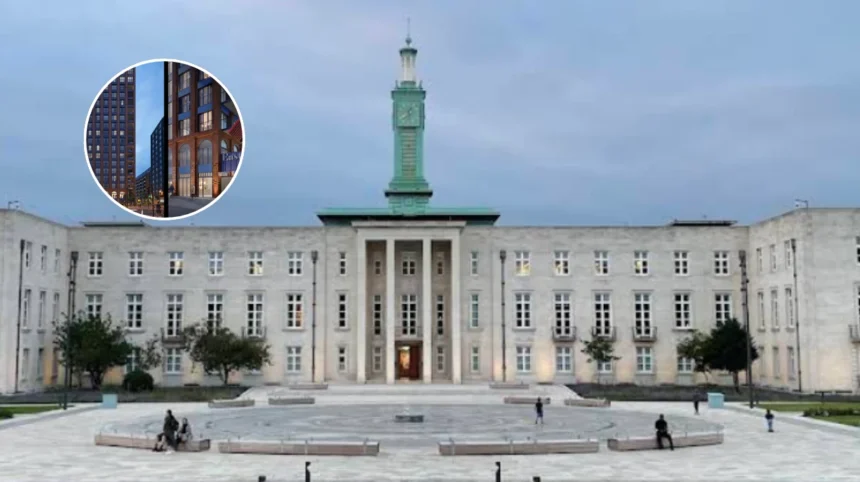
In Walthamstow, an 18‑storey residential tower on Hoe Street, comprising 66 flats, was granted permission by the council’s planning committee in January 2026, with 17 of the units designated as “affordable” housing.
Local Democracy Reporter Sebastian Mann, writing for a borough‑focused outlet, highlighted that the scheme will be delivered as a purpose‑built rental block, linking the project to the council’s broader push for more rented and affordable stock near the town centre.
In Chingford, separate planning‑committee records show that permission for a single‑storey crematorium at Chingford Mount Cemetery, on Old Church Road, has also been granted, with the council attaching conditions and information requirements to the scheme.
This cemetery‑site project, while not part of the current week’s validation picture, remains a notable piece of infrastructure planning that monitors expect will influence future land‑use and traffic discussions in the area.
Why is this week’s list so light on new applications?
Several observers and planning‑data analysts suggest that the low number of new validations this week is likely due to a combination of seasonal patterns, staff workload, and the council’s internal prioritisation of older files.
A planning‑policy briefing from Waltham Forest notes that the council operates a rolling caseload, with applications often grouped by ward and by complexity, so some weeks will naturally show fewer “new” entries even though officers are still actively determining older cases.
In addition, the council’s own guidance explains that the public register makes full details of each application available only after validation, which means that some proposals may be submitted online just before the weekly cut‑off and therefore appear as “new” in the following round‑up.
Commentators following local planning trends also point out that during periods of tight building‑control capacity or staff shortages, councils may deliberately slow the validation pipeline to avoid overloading officers further down the process.
How can residents track or respond to these plans?
Waltham Forest’s planning portal provides an online register where members of the public can search by postcode or ward, view current applications, and submit comments in line with the council’s consultation rules.
The council’s guidance stresses that site notices for most applications must be displayed for at least 21 days, and that members of the public can also attend planning‑committee meetings or follow the council’s public minutes if they wish to scrutinise emerging decisions.
Local planning‑data websites, such as the borough‑focused planning‑analysis platforms, offer additional filters – for example by ward, by application type, or by approval history – which can help residents in Chingford and Walthamstow understand how often extensions, demolitions, or new‑builds are being approved in their streets.
What might future planning‑round ups bring for the area?
Given the fluctuating pattern of validated applications each week, planning‑watchers expect that the next East London‑area round‑up could either show another thin list of extensions or a sudden jump in new proposals, depending on when larger developers decide to submit their designs.
Waltham Forest’s own Local Plan guidance indicates that the borough will continue to push for new homes, jobs, and community facilities on identified sites, which in practice means that future planning‑round ups are likely to include more mixed‑use and residential developments, particularly around town‑centre locations such as Walthamstow High Street.