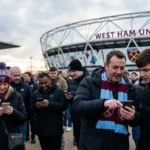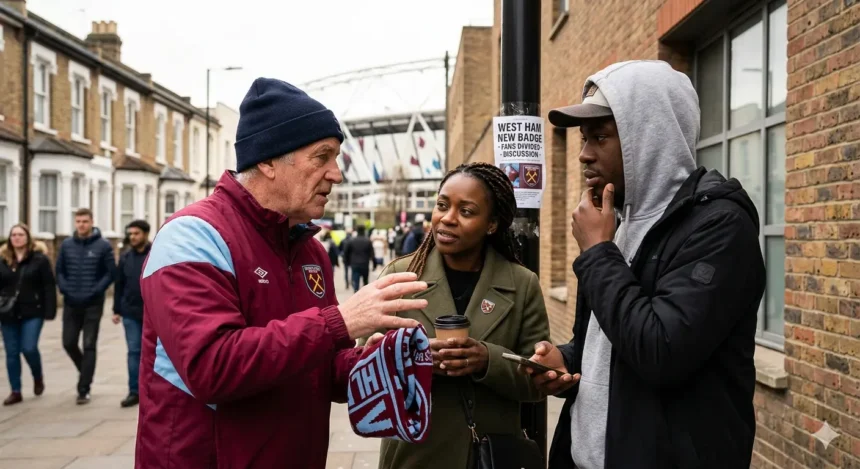
West Ham’s new badge redesign has divided opinion among East London fans, with many local supporters broadly welcoming a return to a more traditional “crossed hammers” look while others worry it moves the club further from its roots in Newham and the wider East End. For residents of Newham, Tower Hamlets, Hackney, Waltham Forest, Redbridge, and Barking & Dagenham, this debate matters not just as football fans but as part of a wider conversation about identity, history, and how the club represents the communities that support it.
- What the latest badge redesign looks like
- Why this issue matters to local residents
- How fans in East London are responding
- What the redesign means for East London identity
- How fans can make their views heard
- What the club has said about fan opinions
- Rights and responsibilities under UK rules
- Practical tips to stay informed and involved
- How this fits into wider East London life
What the latest badge redesign looks like
The current West Ham badge was introduced in 2016 around the time the club moved to the London Stadium, replacing the older Upton Park–era crest. It removed the castle motif, simplified the crossed hammers, and incorporated the word “London” beneath the symbol, which some fans saw as an attempt to broaden the club’s appeal beyond its traditional East London base.
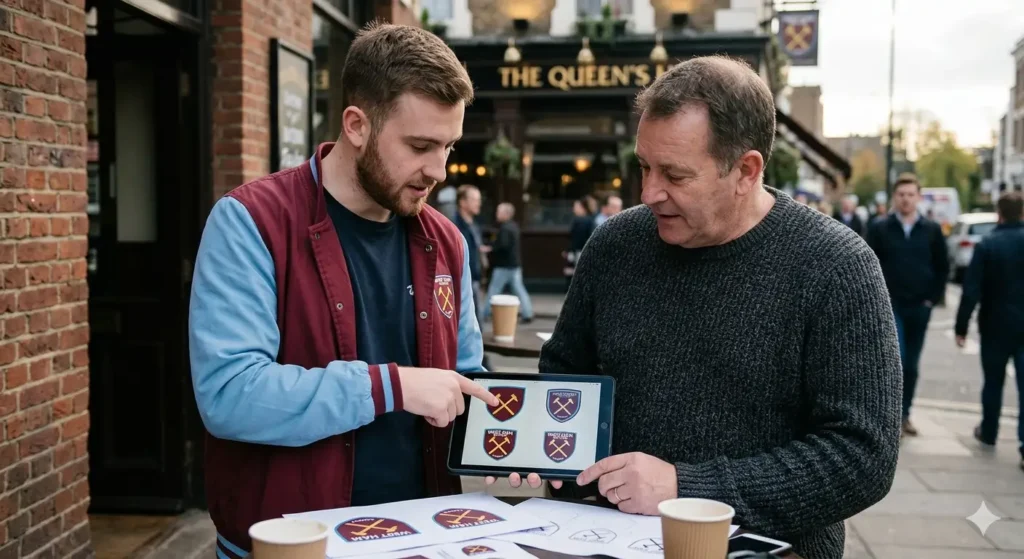
Recent fan‑led redesigns circulating online have stripped out “London”, restored a more traditional shield outline, and used deeper claret and slightly muted blue tones closer to classic kit designs. These concepts have been widely shared on social media by supporters in Newham, Tower Hamlets and across the East End, with many calling them “the badge the club should have used all along.”
Why this issue matters to local residents
For East London residents, West Ham’s badge is more than a logo; it is a symbol of local identity, working‑class history, and community pride. Fans in Newham and surrounding boroughs often feel that changes to the crest signal whether the club still sees itself as rooted in the East End or as part of a broader, more commercial “London” brand.
Critics of the 2016 redesign argue that adding “London” and removing long‑standing elements made the club feel less connected to its birthplace in Stratford and less recognisable to older generations of supporters. This has become especially sensitive in recent seasons, when results and ownership decisions have already led to frustration among fans in Tower Hamlets, Hackney and Barking & Dagenham. A badge redesign that feels more “traditional” can therefore come to represent a wider hope for the club to listen more closely to its local fanbase.
How fans in East London are responding
Fan reaction in Newham and the wider East End has been mixed, but many supporters have welcomed the recent fan‑made redesign. Social‑media posts from local residents often describe the new concept as “looking like the West Ham they grew up with,” praising the removal of “London” and the return of a clearer, more classic shield shape.
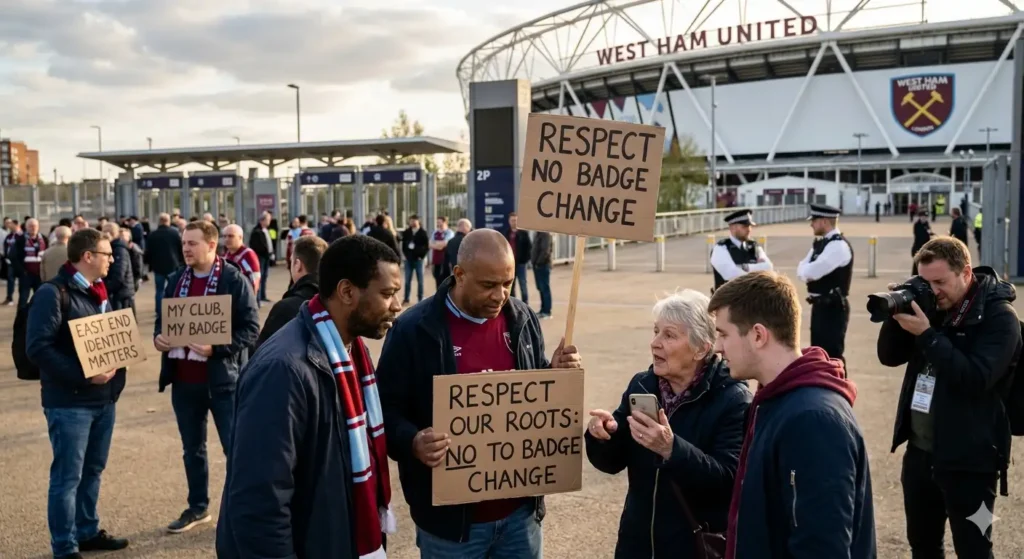
At the same time, some residents and season‑ticket holders argue that the club should focus less on crest tweaks and more on practical issues such as ticket prices, travel from areas like Waltham Forest and Redbridge, and the atmosphere around the stadium. Others feel that any badge change should be accompanied by more transparent consultation with supporters, rather than driven by marketing or branding consultants.
What the redesign means for East London identity
The discussion around the West Ham new badge redesign underlines how local identity and football culture are closely linked in East London. For many residents, the club’s crest is part of the same story as the transformation of the Olympic Park, the growth of housing around Stratford, and the changing character of communities in Newham and Tower Hamlets.
A badge that feels aligned with the Upton Park era can strengthen supporters’ sense of continuity, especially for older fans who watched matches at the old ground and for younger residents who inherit that family support. Conversely, designs perceived as overly commercial or confused in style can make some East London residents feel that the club is drifting away from the communities that have sustained it for decades.
How fans can make their views heard
If you are a West Ham supporter living in Newham, Tower Hamlets, Hackney, Waltham Forest, Redbridge, or Barking & Dagenham, there are several practical ways to share your opinion on the badge redesign.
- Join or follow official West Ham supporters’ societies and fan groups; these often gather feedback and pass it on to the club.
- Take part in any official club surveys or polls about the badge, crest colours, or kit design when they are announced.
- Use social‑media platforms to tag the club’s official accounts and share your thoughts politely but clearly, ideally from a public East London–based profile.
- If you attend home games or community events, ask club representatives or staff from the West Ham United Foundation about how supporter feedback is used in decision‑making.
Providing specific reasons for your view—such as pride in local heritage, attachment to traditional colours, or concern that the badge better represents East London—can make your feedback more useful to the club.
What the club has said about fan opinions
West Ham has previously stated that badge changes were supported by a majority of fans in supporter polls, with reported figures around 56–77 per cent in favour of evolving the crest ahead of the move to the London Stadium. At the same time, critics have pointed out that the wording of those polls and the timing around the stadium move may have influenced the outcome.
In recent years, several fan‑led redesigns have gained traction online, prompting independent outlets and supporter blogs to argue that the club should at least consider a more traditional badge if it wants to rebuild trust with local supporters. While the club has not announced a formal change back to an older style as of early 2026, the strength of local opinion suggests that the badge will remain a talking point among East London residents.
Rights and responsibilities under UK rules
Supporters in the UK are free to express their views on the West Ham new badge redesign, including through social media, petitions, and attending club‑sanctioned consultations, as long as they comply with standard UK laws on libel, harassment, and public order. Local residents should avoid abusive language, threats, or coordinated campaigns that could be seen as intimidating or unlawful, since these may breach stadium‑entry rules or wider legislation.
Clubs must also balance commercial interests with their duties to supporters, and many football‑governance bodies in the UK encourage transparency and proper consultation when major branding changes are considered. While individual residents cannot force West Ham to change its badge, they can reasonably expect that the club’s marketing and visual identity should respect the club’s East London roots and the views of its local fanbase.
Practical tips to stay informed and involved
To keep up with developments around the West Ham new badge redesign, residents of Newham, Tower Hamlets, and neighbouring boroughs can follow a few simple steps.
- Subscribe to independent West Ham fan sites and local community blogs that cover badge and kit news, not just match reports.
- Check the official club website and social channels for any announcements about crest changes or rebrands, especially around new seasons or major anniversaries.
- Join a local supporters’ group based in East London; these often organise meetings, forums, or email lists where members can discuss the badge and other club issues.
- If you live in one of the boroughs most affected by the club’s move to the London Stadium, consider attending council or community meetings where local transport, housing, and stadium‑area regeneration are discussed, since these decisions can indirectly shape how the club presents itself.
Keeping your views respectful, specific, and focused on local identity and heritage will help ensure that your contributions are taken seriously by both the club and the wider supporter community.
How this fits into wider East London life
The debate over the West Ham new badge redesign is only one part of a broader set of discussions about East London identity, regeneration, and community pride. Residents of Newham, Tower Hamlets, Hackney, Waltham Forest, Redbridge, and Barking & Dagenham often see the club as a symbol of how their neighbourhoods have changed over generations, from the industrial East End to today’s mix of housing, transport links, and cultural activity around the London Stadium.
A badge that reflects that history—rather than feeling like a generic “London” brand—can help East London council communities feel more connected to the club, even if they do not attend every match. At the same time, fans can play a constructive role by using formal channels to share their views on the crest, kit, and wider club direction, instead of focusing only on informal online debates.
What do West Ham United fans think about the new badge redesign?
Fan reaction is mixed—some support a modern, simplified look, while others criticise the loss of tradition and club identity.