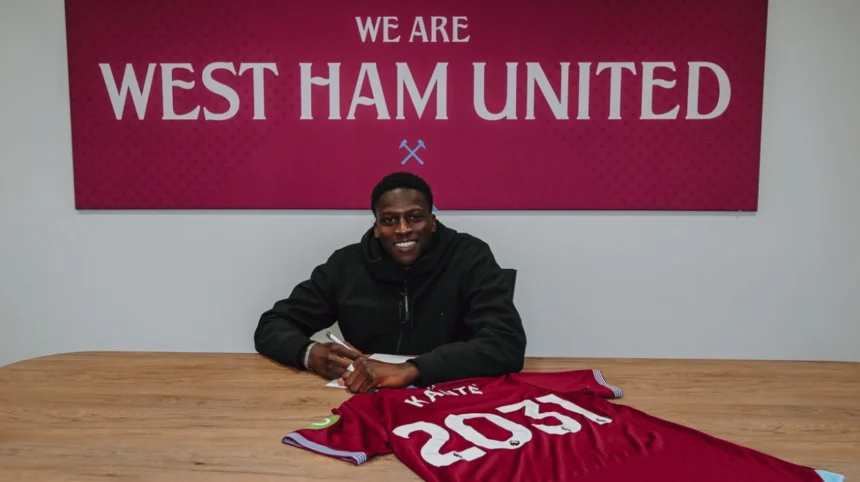
Mohamadou Kante’s West Ham debut marked a promising step for the young midfielder in East London’s Premier League spotlight. His entry into the fray against Manchester United showcased the raw potential that has excited Hammers fans since his arrival.
- Early Life and Football Roots
- Move to West Ham United
- The Debut Moment Unpacked
- Technical Breakdown of His Game
- What Kanté Brings to West Ham’s Midfield
- Comparing to Midfield Peers
- Integration Challenges and Growth Path
- Fan Reactions and East London Buzz
- Tactical Fit in West Ham’s System
- Future Prospects and Legacy Potential
- Impact on Youth Development Pipeline
Early Life and Football Roots
Mohamadou Kanté was born on September 20, 2005, in Paris, France, to parents of Malian descent, which infused his upbringing with a blend of cultural influences that often fuel determination in aspiring athletes. Growing up in the vibrant suburbs of the French capital, he immersed himself in football from a young age, honing his skills on local pitches where physicality and technical flair are prized. This environment shaped his initial development, emphasizing resilience amid competitive youth setups common in France’s football hotbed.
Kanté’s journey took a structured turn when he joined the youth system of Jeunesse Aubervilliers U18s before transitioning to Paris FC in 2021. At Paris FC, he progressed through the ranks, balancing education with rigorous training that built his towering 1.95-meter frame into a formidable presence. His early exposure to senior environments came via the club’s reserve side in Championnat National 3, where he notched two goals in nine appearances during the 2023-24 season, signaling his readiness for higher challenges.
These formative years were not without hurdles; adapting to the physical demands of men’s football at a tender age tested his mettle. Yet, Kanté’s ability to combine height with agility drew scouts’ eyes, laying the groundwork for a cross-Channel move that would align him with West Ham United’s youth-focused recruitment strategy.
Move to West Ham United
In a shrewd piece of business on August 22, 2024, West Ham United secured Kanté from Paris FC on a five-year contract, a testament to the club’s commitment to investing in high-upside talents from continental Europe. The deal, reportedly structured to nurture long-term growth, saw the 19-year-old loaned back to Paris FC for the remainder of the 2024-25 season, allowing him to gain crucial senior minutes in Ligue 2. This arrangement proved fruitful, as he featured in eight matches, contributing to Paris FC’s historic promotion to Ligue 1—their first since 1978—while refining his game in a promotion-chasing side.
Returning to East London in the summer of 2025, Kanté integrated into West Ham’s U21 setup, where he wasted no time making an impact. On his debut for the young Hammers in the National League Cup against Woking, he scored in a 2-0 victory, displaying clinical finishing from deep midfield positions. His performances in Premier League 2 during the 2025/26 season further impressed, tallying three goals and one assist in five starts, with an average rating of 7.18 per FotMob metrics, alongside strong defensive contributions like 13 tackles and 25 duels won.
This pathway mirrors West Ham’s academy philosophy, blending loans and youth exposure to bridge the gap to the first team. For an East London Times audience rooted in the club’s community fabric, Kanté’s story resonates as a fresh chapter in the Hammers’ tradition of unearthing gems who embody grit and loyalty.
The Debut Moment Unpacked
Kanté’s senior bow for West Ham came on December 4, 2025, in a tense Premier League clash at Old Trafford against Manchester United, ending in a 1-1 draw. Substituted on in the 83rd minute, the young midfielder entered a high-stakes arena where poise under pressure defines legacies. Though his time on the pitch was brief, he focused on stabilizing the midfield, completing passes with composure amid a frantic finish that saw both sides push for a winner.
The match context amplified the debut’s significance: West Ham, battling for mid-table security, faced a United side harboring top-four ambitions. Kanté’s introduction replaced a tiring counterpart, injecting fresh legs into a midfield that had been stretched. Eyewitness accounts and post-match analysis highlighted his calm demeanor, with no misplaced passes in limited touches, a subtle nod to his preparedness.
For Hammers supporters in East London, this cameo was more than statistical; it symbolized hope amid a transitional season. Debuts at such venues often forge club icons, and Kanté’s unflappable entry hinted at his potential to become a staple at the London Stadium.
Technical Breakdown of His Game
Standing at 1.95 meters, Kanté operates primarily as a defensive or box-to-box midfielder, leveraging his height for aerial dominance—winning two of three duels in key outings—while surprising with progressive passing. In FA Cup action against Brentford, he triumphed in six of eight ground duels (75%) and delivered line-breaking passes, blending tenacity with vision.
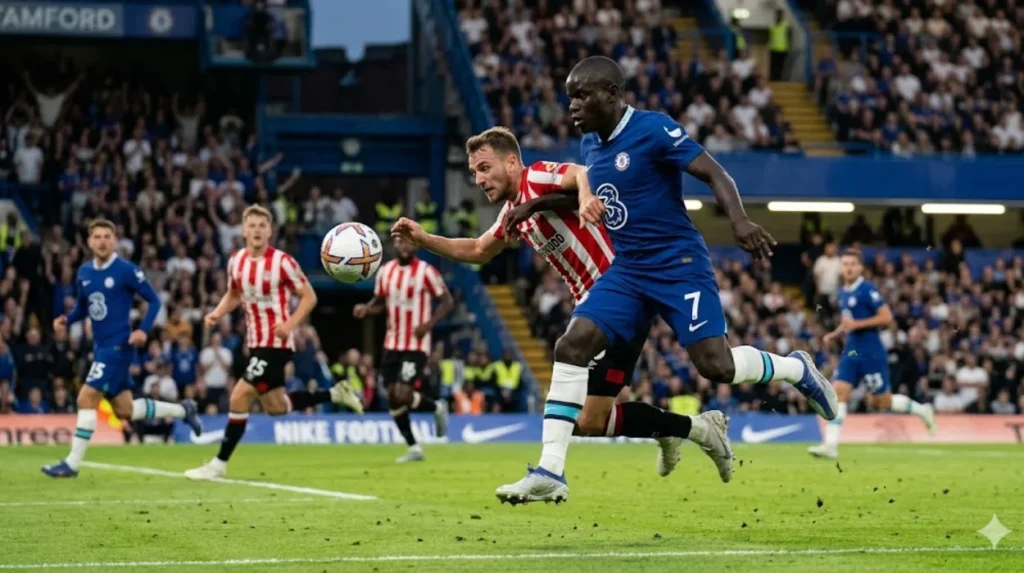
Statistically, his U21 metrics reveal a well-rounded profile: 5 progressive passes per game, 14 received, alongside defensive nous like recoveries and interceptions. His stamina (rated 65/100 in scouting models) and ball control (65) enable seamless transitions, making him a utility player who can anchor or surge forward.
Weaknesses persist, typical of youth; occasional ball losses under pressure (three low-pass turnovers noted) demand refinement. Yet, his low fouls committed and high duel success rate position him as a tactical asset in modern midfields demanding versatility.
What Kanté Brings to West Ham’s Midfield
West Ham’s engine room has long craved dynamism, and Kanté addresses this with physicality akin to outgoing stalwarts like Tomas Souček, who eyes a summer exit. His potential regular starts under Nuno Espírito Santo could fill that void, offering aerial prowess and progression absent in slimmer profiles.
Tactically, he enhances pressing phases, with recoveries in the final third and defensive engagements (63/100 rating), aligning with high-intensity systems. Offensively, goal contributions from deep—evident in U21 tallies—add unpredictability, vital for a side reliant on wide threats.
In a squad blending veterans and youth, Kanté’s five-year deal ensures longevity, potentially evolving into a linchpin by 2027. For West Ham, he brings not just skills but a narrative of ascent, mirroring club legends who rose from obscurity.
Comparing to Midfield Peers
Kanté’s attributes invite comparisons within West Ham’s ranks and beyond. Against Souček, he shares height and box-to-box energy but edges in progressive passes (5 vs. Souček’s lower averages), though lacking the Czech’s proven goal threat.
This table underscores Kanté’s edge in ball advancement, positioning him as a successor who elevates transitions.
Vis-à-vis N’Golo Kanté (no relation), the namesake’s legendary anticipation contrasts with Mohamadou’s physical emphasis, yet both excel in regaining possession efficiently.
Integration Challenges and Growth Path
Youthful exuberance brings adaptation tests; Premier League pace has exposed minor lapses, like underhit crosses in cup ties. Balancing physicality with decision-making will define his trajectory, especially amid competition from Magassa.
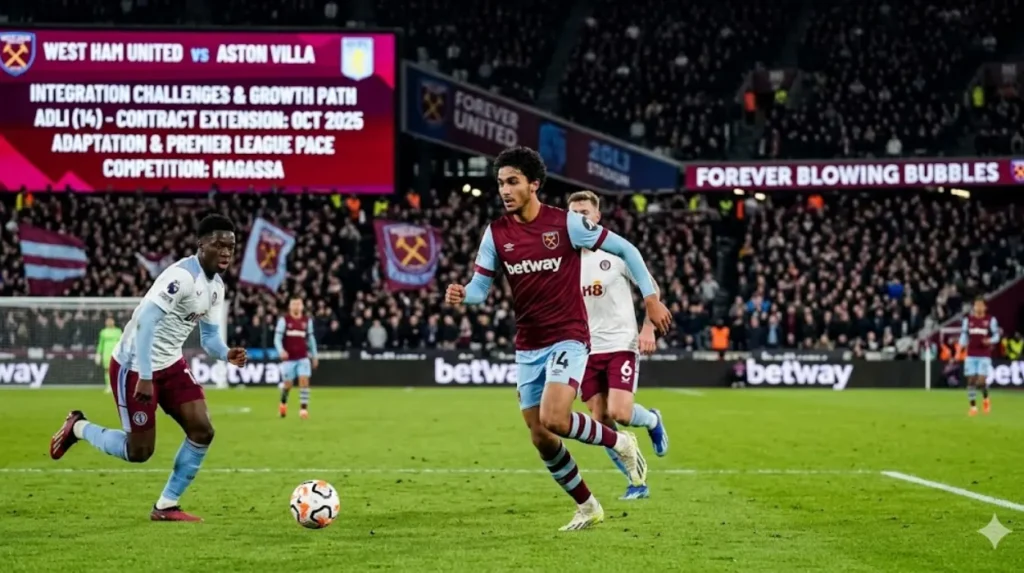
West Ham’s coaching staff, per club channels, praises his technical quality and physicality, evidenced by a new contract extension in October 2025. Loan maturation at Paris FC honed his professionalism, preparing him for rotational roles turning permanent.
Fan worries over depth are mitigated by his flashes—masterclasses against Brentford suggest starring potential if seniors depart.
Fan Reactions and East London Buzz
East London Times readers have lit up forums post-debut, hailing Kanté’s composure as “Hammers DNA.” Social media buzz peaked after U21 goals, with chants echoing at Stratford matches. Local pundits see him as a bridge to youth eras, boosting community ties through academy success stories.
His Malian heritage resonates in diverse Newham, fostering inclusivity narratives vital for West Ham’s global appeal.
Tactical Fit in West Ham’s System
Under Espírito Santo, Kanté slots into 4-2-3-1 pivots, shielding backlines while launching counters—his lofted passes (64/100) suit Paqueta’s creativity. FA Cup duel wins exemplify midfield control, curbing transitions that plague the Hammers.
Long-term, he could anchor a pressing unit, his 65 stamina enabling relentless chases. Versatility extends to defensive roles, per scouting, aiding squad rotation in Europa pushes.
Future Prospects and Legacy Potential
At 20, Kanté’s arc points upward; nine first-team cameos by March 2026 signal trust. Should Souček leave, regular starts loom, potentially exploding his market value.
For West Ham, he embodies sustainable recruitment: low-cost, high-reward. East London faithful envision him captaining amid trophy hunts, his debut merely prologue to a storied tenure.
Impact on Youth Development Pipeline
Kanté’s rise bolsters West Ham’s academy reputation, inspiring local talents in Chadwell Heath. His Paris FC loan model—senior reps pre-return—sets precedents, enhancing appeal to continental prospects.
Club metrics show U21 contributions correlating to first-team breakthroughs, with Kanté’s goals underscoring this pipeline’s efficacy.
In East London’s football tapestry, Mohamadou Kanté emerges as a beacon of promise, his debut etching the first lines of what could be an enduring legacy at the London Stadium.