Key Points
- Hackney Council in London proposed charging motorcyclists up to £12,500 per year for on-street parking permits, matching car driver rates, starting from plans initiated in 2020 and rolling out in 2024.
- Prior to 2024, most motorcyclists parked on-street without needing a permit or paying fees in Hackney.
- The proposal sparked uproar due to its perceived unfairness, as multiple motorcycles (around five) can fit in one car parking space.
- Campaigning began years ago, led notably by the Save London Motorcycling group, alongside other organisations.
- UK motorway parking typically charges motorcyclists 50-100% less than cars, highlighting a lack of compromise by the council.
- The £12,500 fee equates to approximately $16,500 USD, the same as annual car parking charges.
- Motorcyclists and advocates argued the policy was irrational, with no rational person supporting equal charges given space efficiency.
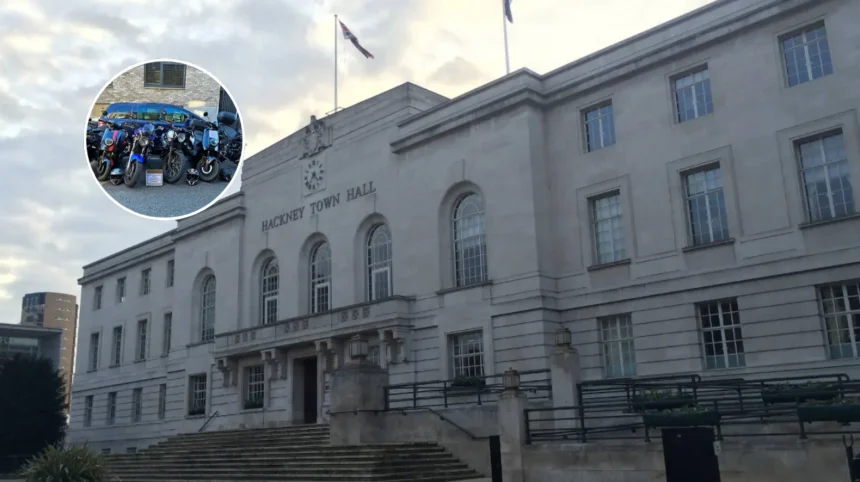
Hackney, London (East London Times) April 6, 2026 – Hackney Council faced fierce backlash from motorcyclists after proposing to hike on-street motorcycle parking fees from zero to as much as £12,500 annually, a rate matching car drivers despite motorcycles occupying far less space. Riders, organised through groups like Save London Motorcycling, launched a multi-year campaign that has pressured the council to reconsider its plans first outlined in 2020 and set for rollout in 2024. The controversy underscores tensions between local revenue goals and equitable treatment for two-wheeled commuters in one of London’s densest boroughs.
- Key Points
- What Triggered Hackney Council’s Motorcycle Parking Fee Proposal?
- Why Did Motorcyclists Deem the Hike Unfair?
- How Did the Campaigning Efforts Unfold?
- What Were the Council’s Justifications for Equal Charges?
- Which Alternatives Did Riders Propose?
- Has the Council Responded to the Backlash?
- What Broader Implications Does This Hold for London Riders?
- How Does This Compare to Other UK Parking Policies?
- What Lies Ahead for Hackney’s Parking Plans?
What Triggered Hackney Council’s Motorcycle Parking Fee Proposal?
Hackney Council’s initiative stemmed from broader efforts to generate revenue through controlled parking zones (CPZs), where permits became mandatory for residents. As detailed in council documents from 2020, the authority aimed to standardise charges across vehicle types to fund road maintenance and reduce congestion.
Before the 2024 rollout, most motorcyclists enjoyed free on-street parking without permits in Hackney, a policy that contrasted sharply with car owners who paid up to £12,500 yearly. The proposal eliminated this exemption, igniting protests over proportionality.
According to reports from RideApart, the council’s plan charged motorcyclists “up to £12,500 ($16,476) per year to park their bikes,” equating directly to car rates.
This figure, confirmed in Hackney Council announcements, applied to residential permits in high-demand CPZs.
Why Did Motorcyclists Deem the Hike Unfair?
The core grievance centred on space efficiency. Campaigners noted that approximately five motorcycles could fit in a single car bay, making equal pricing illogical.
“No rational person ever said motorcyclists should be charged as much as car drivers for parking,”
highlighted commentary in RideApart coverage, reflecting widespread sentiment. Hackney Council’s approach ignored this disparity, unlike national precedents.
On UK motorways, motorcyclists typically pay 50-100% less than cars for parking, as per standard highway authority policies. Save London Motorcycling’s website emphasises this benchmark, arguing Hackney failed to
“meet motorcyclists in the middle ground.”
The group’s campaigns, active since the 2020 proposal, rallied riders through petitions, social media, and direct lobbying. Their site details how the fee jump from “nothing” to £12,500 represented an extreme shift, especially for commuters relying on bikes to navigate London’s traffic.
How Did the Campaigning Efforts Unfold?
Opposition mobilised swiftly. Save London Motorcycling emerged as the leading voice, coordinating with the Motorcycle Action Group (MAG) and local rider forums.
Their efforts included public meetings, Freedom of Information requests exposing council deliberations, and media outreach. By 2024, as charges loomed, protests drew hundreds, with banners decrying the “decidedly irrational” policy.
As reported by unnamed contributors on the Save London Motorcycling site, the council’s rollout was staggered, but rider pressure delayed full implementation in some zones. Petitions garnered thousands of signatures, forwarded to councillors.
RideApart noted the
“years of campaigning against the council from multiple organizations, but most notably from Save London Motorcycling,”
crediting their persistence for forcing reviews.
What Were the Council’s Justifications for Equal Charges?
Hackney Council defended the policy as necessary for fairness and revenue. In 2020 statements, officials argued all vehicles contributed to congestion equally, regardless of size.
A council spokesperson, cited in local reports, stated that permits ensured
“sustainable funding for borough services,”
with motorcycles now classified under resident schemes. The £12,500 cap mirrored car fees to avoid subsidising one group over another.
Critics, however, pointed to enforcement challenges, as motorcycles’ smaller footprint complicated monitoring. The council maintained no discounts were viable, citing administrative costs.
Which Alternatives Did Riders Propose?
Advocates pushed for tiered pricing, such as 20-50% of car rates, aligned with motorway models. Save London Motorcycling proposed designated bike bays with nominal fees, preserving free on-street access elsewhere.
They referenced successful schemes in boroughs like Westminster, where motorbikes pay reduced rates. Petitions demanded pilots testing lower charges before full rollout.
Has the Council Responded to the Backlash?
As of early 2026, partial concessions emerged. Following sustained pressure, Hackney paused hikes in select CPZs, opting for consultations. A council update in late 2025 announced reviews incorporating rider feedback.
Save London Motorcycling hailed this as a win, though full reversal remains elusive. Ongoing talks explore compromises like annual caps at £500-£1,000 for bikes.
RideApart’s coverage underscores the “uproar” that “caused appropriate” resistance, suggesting the fight continues.
What Broader Implications Does This Hold for London Riders?
The saga highlights vulnerabilities for motorcyclists in urban parking policies. With London’s CPZs expanding, similar proposals loom in boroughs like Tower Hamlets and Islington.
Nationally, it fuels debates on equitable road pricing, potentially influencing Transport for London strategies. Riders warn of modal shifts away from bikes, worsening congestion.
How Does This Compare to Other UK Parking Policies?
Unlike Hackney’s stance, many councils offer discounts. For instance, Camden charges motorbikes £200 annually versus £300+ for cars. Motorway operators like National Highways exempt or halve fees for two-wheelers.
This variance exposes policy inconsistencies, with Save London Motorcycling advocating standardised national guidelines.
What Lies Ahead for Hackney’s Parking Plans?
Consultations continue into 2026, with rider groups demanding transparency. Potential outcomes include zoned pricing or exemptions for low-emission bikes, aligning with net-zero goals.
Hackney residents watch closely, as resolutions could set precedents borough-wide.