Key points
- Bow, an East London neighbourhood in the London Borough of Tower Hamlets, has been named one of the best places to live in the UK by The Sunday Times in its 2026 “Best Places to Live” guide.
- The ranking highlights Bow’s history, green spaces such as Victoria Park and Mile End Park, transport links including Bow Road and Mile End stations, and the Grade‑II listed Tredegar Square.
- The area is praised for a “palpable sense of history”, a “laid‑back, easygoing” atmosphere, and relatively gradual, harmonious gentrification.
- Roman Road, long a characterful high street with a historic street market, has seen a visible decline in stalls and shops, with observers describing it as a “shadow of its former self”.
- Local residents and campaigners say that while property and lifestyle magazines celebrate Bow as “up‑and‑coming”, many feel “we’ve lost everything” in terms of community traders, affordability and parking‑linked local trade.
Bow (East London Times) April 10, 2026 , published on 20 March 2026. The ranking places Bow among neighbourhoods that strike what the judges describe as a balance between “edgy and accessible”, with strong transport links, historic housing stock and closeness to major green spaces.
- Key points
- What makes Bow attractive to outside buyers?
- Green space and canal‑side living
- How Bow sounds in the headlines
- The Roman Road market’s decline
- Parking and the ‘Liveable Streets’ debate
- Mixed feelings from Bow residents
- Historical profile of Bow
- The gentrification wave
- The squeeze on local high‑street life
- Prediction: How this development can affect East London residents and beyond
- For existing Bow residents
- For East London more broadly
- For potential new residents and investors
What makes Bow attractive to outside buyers?
According to The Sunday Times, Bow offers a “palpable sense of history”, centred on Tredegar Square, where Regency‑style houses surround a communal garden in a “laid‑back, easygoing” setting.
The guide notes that gentrification in Bow has been gradual and relatively harmonious compared with other parts of East London, which helps retain a mix of longer‑standing residents and newer, more affluent households.
Transport‑wise, Bow sits just inside Zone 2, with Bow Road and Mile End Underground stations (Central and District lines) providing fast access to Canary Wharf and the City. Local bus routes also link the area to surrounding districts, including Stratford and Hackney, making it convenient both for commuters and for those who rely on buses.
Green space and canal‑side living
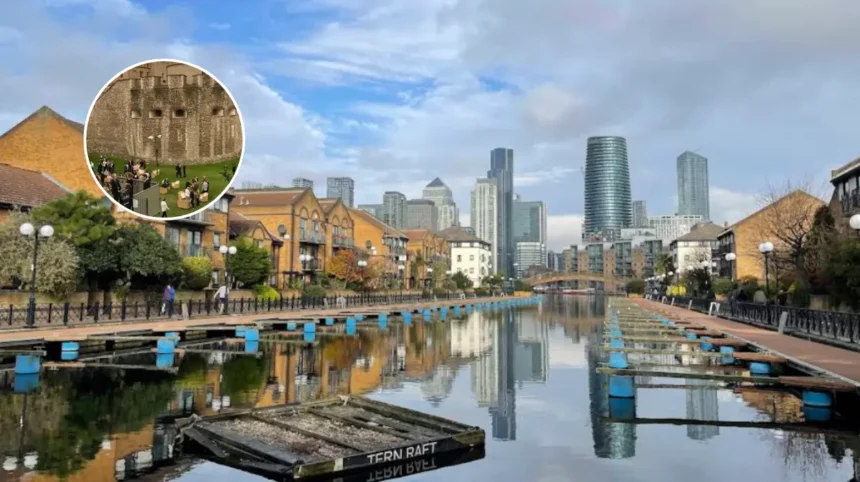
Bow is framed by two major green spaces: mile‑long Mile End Park, which runs along the southern edge of the area, and Victoria Park to the north, separated from Mile End Park by the Hertford Union Canal.
As described in lifestyle guides, the proximity of these parks gives residents easy access to walking routes, play areas and seasonal events, which is cited as a key factor in the “liveability” scores given to Bow.
The canal and connecting canals, including the Regent’s Canal, are often promoted as quiet, green corridors for walking and cycling, helping residents feel “removed from the hustle and bustle” of denser parts of the city.
How Bow sounds in the headlines
As reported by local campaigners and community‑focused outlets, the rise in Bow’s desirability has coincided with changes on and around Roman Road, the traditional market street at the heart of the neighbourhood.
Writers and residents who grew up in the area recall Saturday mornings when both sides of the street would be packed with stalls, families would drive in from outside the borough, and parking spaces near the market would overflow.
The Roman Road market’s decline
In a 2022 article for Our Bow, long‑term resident Alan Tucker wrote that the live, outdoor market on Roman Road had become a “token version” of its former self. He noted that, at one point, only about a quarter of the usual stalls were present, and several shops that had been open for years had simply stayed shuttered.
Tucker attributed part of this decline to changes in how people shop, including the shift towards online orders and supermarket deliveries, as well as the impact of the pandemic on “non‑essential” retail. He cited Barclays card‑transaction data suggesting that many shops on Roman Road were taking in roughly half of their pre‑pandemic sales, and that national chains such as Costa had permanently closed a large number of outlets.
Parking and the ‘Liveable Streets’ debate
A second, closely tied complaint is over parking and proposals branded as “Liveable Streets”. Tucker argues that as the council reduced on‑street and nearby parking—and imposed higher charges and time limits—fewer people from outside Bow drove in to shop, which in turn cut Saturday footfall and weekly spending on the Roman Road.
He notes that where there were once hundreds of free or cheap parking spaces near the market, there are now far fewer, with some local car parks operating at only about half capacity despite being costly and time‑limited.
Campaigners worry that further Liveable Streets measures, if they restrict car access even more, could force more shops to close and narrow the character of Roman Road to smaller, higher‑end independents that may not serve the same mix of residents.
Mixed feelings from Bow residents
On social media and in local forums, residents express a sense of loss. In one Facebook post cited by Hyperlocal, a user wrote,
“We lost the Roman Road market. Why…? They should close all these…”,
reflecting frustration at the disappearance of traditional stalls and the feeling that the council has not protected them. Others argue that while the area has become more pleasant in some ways—especially for walkers and cyclists—it no longer feels like the same Bow they knew.
At the same time, there is also a strand of local pride. Writing for Urban Makers, a Bow‑based shop which markets itself as “supporting small‑scale, thoughtful production”, the author said that
“going down the Roman”
remains “part of everyday life” and that Roman Road still offers a
“genuinely local alternative to chain‑heavy high streets”.
The post highlights independent outlets such as Bàrd Books, E3 Vegan and Dog Bliss, as well as community‑oriented venues like Mae & Harvey and Symposium, suggesting that Bow has not entirely lost its distinctive character.
Historical profile of Bow
Bow is an ancient part of East London, originally named after a medieval “bow‑like” bridge over the River Lea. Over the centuries it became an industrial and working‑class area, with housing, factories and markets that served the local population.
The Roman Road itself is thought to occupy a route that dates back to Roman times, and the market there has long been one of the most recognisable high‑street economies in the East End.
The gentrification wave
From the 1990s and especially the 2000s onwards, Bow has seen incremental gentrification, as property values rose and new developments spread out from nearby areas such as Stratford and Canary Wharf. Georgian and Regency‑style housing, including streets around Tredegar Square, has been upgraded and marketed as “desirable” for professionals and young families.
Improvements in public parks, cycle routes and the wider Olympic‑legacy regeneration around Stratford have also made the eastern part of the borough more attractive to outside buyers and investors.
The squeeze on local high‑street life
Parallel to this, the high‑street economy in Bow has faced structural pressures. National chains have closed, town‑centre shopping has weakened, and more people have shifted to online shopping and supermarket‑delivery services. In Bow, local analysts argue that the loss of cheap, abundant parking added to that pressure, making it harder for visitors from outside the area to spend big on weekly shops.
For some residents, the result is an area that looks better on paper—more green, quieter, better‑connected, and more “desirable”—but where the everyday fabric of local, affordable trading and community‑run stalls has shrunk.
Prediction: How this development can affect East London residents and beyond
So, what might this Bow‑style transformation mean for East London residents, and for similar neighbourhoods across London?
For existing Bow residents
For long‑term residents, the “best place to live” label may not translate into a better everyday experience if rents rise and local traders struggle. As property values and desirability increase, more homeowners may be tempted to sell, potentially pushing up private‑rent prices and reducing the stock of lower‑cost accommodation. At the same time, a more curated, independent‑heavy high street may appeal to affluent newcomers but feel less relevant to households on tighter budgets who once relied on market‑style bargains.
For East London more broadly
For East London as a whole, Bow’s experience could be a preview of how other historic high streets—such as Mare Street, Hackney Road or parts of Walthamstow—are reshaped. If transport‑led regeneration and “liveability” schemes are paired with reduced parking and weaker support for small‑scale traders, similar claims of “losing everything” may emerge in other neighbourhoods. Conversely, if councils and businesses experiment with preserving mixed‑use markets, parking‑friendly yet environmentally sensitive schemes, and stronger support for local independents, parts of East London could retain both their history and their economic diversity.
For potential new residents and investors
For people considering moving to East London, Bow’s dual image—praised by national guides yet contested by locals—offers a cautionary note. On one side, the area offers relatively easy access to central London, good parks and a growing cluster of independent shops attractive to more affluent professionals. On the other, those same trends may accelerate the displacement of long‑standing residents and traders, which could alter the character of the neighbourhood over time.