Key Points
- Waltham Forest is located in north-east London, bordered by Enfield (north-west), Haringey (west), Hackney (south-west), Newham (south-east), Redbridge (east), and Essex (north).
- The borough features a mix of older homes and newer flats, with extensive green spaces like Epping Forest and Walthamstow Wetlands.
- Key neighbourhoods include Chingford, Walthamstow, and Leyton.
- Notable sites: Walthamstow Wetlands, Walthamstow Market, parts of Epping Forest, Queen Elizabeth’s Hunting Lodge, and William Morris Gallery in Lloyd Park.
- Pub quiz fact: The first British four-wheeled motor car with an internal combustion engine was built and driven here in 1892.
- Population: Estimated 279,737 in 2024, per ONS data.
- Demographics (2021 census): 52.8% white, 19.9% Asian, 15% black, 6.5% mixed race, 2.2% other ethnic group.
- Average house price: £525,738 in December 2025, per ONS.
- Average monthly rent: £1,748 in January 2026, per ONS.
- Council tax (Band D, 2026/27): £2,386.96.
- Transport: Four Tube stations, eight Overground stations, about 500 bus stops, per Transport for London.
Waltham Forest (East London Times) April 10, 2026 –Waltham Forest, a vibrant outer London borough in north-east London, forms the backdrop for the upcoming local elections on Thursday, May 7. As reported in the comprehensive borough guide produced by local election coverage teams ahead of the vote, Waltham Forest sits bordered by Enfield to the north-west, Haringey to the west, Hackney to the south-west, Newham to the south-east, Redbridge to the east, and shares a northern border with the county of Essex.
- Key Points
- Where Exactly is Waltham Forest Located and What Defines Its Borders?
- What Makes Waltham Forest Unique in Terms of Housing and Green Spaces?
- How Large is Waltham Forest’s Population and What are Its Demographics?
- What are the Current Housing Costs in Waltham Forest?
- How Does Transport Serve Waltham Forest Residents?
- Background on Waltham Forest’s Development
- Prediction: How This Development Affects Waltham Forest Residents
Where Exactly is Waltham Forest Located and What Defines Its Borders?
The London Borough of Waltham Forest occupies a strategic position in north-east London. According to the official borough profile ahead of the May 7 local elections, it neighbours Enfield to the north-west, Haringey to the west, Hackney to the south-west, Newham to the south-east, and Redbridge to the east. Its northern edge touches Essex county, providing a gateway between urban London and surrounding countryside.
This positioning influences local priorities, from transport links to central London to managing green boundaries with Essex. The guide, part of a series covering London’s 32 boroughs, highlights how these borders shape community ties and election issues such as cross-borough services.
What Makes Waltham Forest Unique in Terms of Housing and Green Spaces?
Waltham Forest blends older homes with newer blocks of flats, characteristic of an outer London borough. It boasts extensive green spaces, including Epping Forest and Walthamstow Wetlands, which residents value for recreation and biodiversity.
As detailed in the pre-election borough guides, these areas contribute to the borough’s appeal, balancing urban density with natural escapes.
Neighbourhoods such as Chingford, Walthamstow, and Leyton each offer distinct community vibes, from suburban Chingford to the bustling heart of Walthamstow.
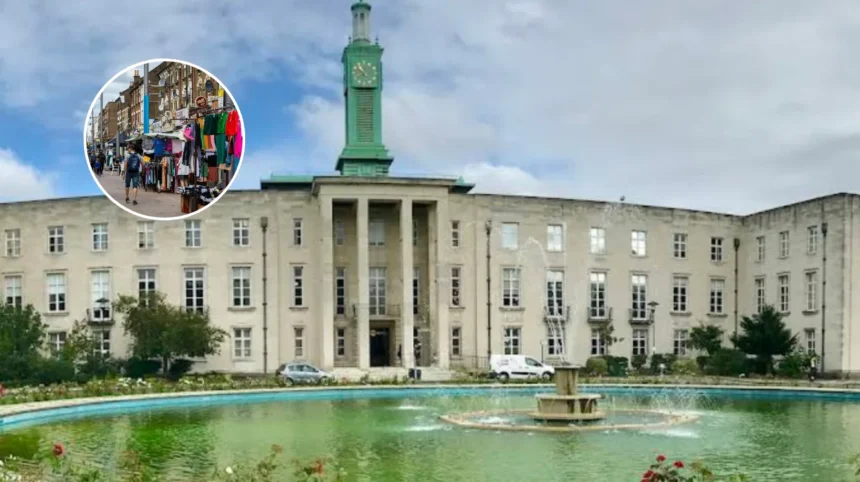
Places of interest further enrich the profile. Walthamstow Wetlands serves as a key nature reserve, Walthamstow Market thrives as a historic trading hub, and parts of Epping Forest provide ancient woodland access. Queen Elizabeth’s Hunting Lodge stands as a historical landmark, while the William Morris Gallery in Lloyd Park celebrates arts and crafts heritage.
A notable pub quiz fact from the guide notes that the first British four-wheeled motor car with an internal combustion engine was built and driven in the borough in 1892, underscoring its innovative past.
How Large is Waltham Forest’s Population and What are Its Demographics?
An estimated 279,737 people lived in Waltham Forest in 2024, according to Office for National Statistics (ONS) data accessible via ONS Explore Local Statistics for London.
Demographics from the 2021 census, as cited in the borough profile from ONS Explore Local Statistics for Waltham Forest, show 52.8% identifying as white, 19.9% as Asian, 15% as black, 6.5% as mixed race, and 2.2% as another ethnic group. This diversity reflects the borough’s multicultural fabric, relevant to local election discussions on services and representation.
What are the Current Housing Costs in Waltham Forest?
Housing remains a key concern for voters. The Office for National Statistics (ONS) reports the average house price in Waltham Forest stood at £525,738 in December 2025, per ONS Housing Prices Local Visualisation for Waltham Forest.
Average monthly rent reached £1,748 in January 2026, according to the same ONS data source. These figures provide context for election debates on affordability amid London’s housing pressures.
Council tax for Band D properties in 2026/27 is set at £2,386.96, as stated in the borough’s financial profile within the election guide.
How Does Transport Serve Waltham Forest Residents?
Transport for London (TfL) data, referenced in the borough guide via TfL Info for Boroughs and Communities: Waltham Forest, outlines robust connectivity.
The borough has four Tube stations, eight Overground stations, and approximately 500 bus stops.
This network links residents efficiently to central London and neighbouring areas, supporting daily commutes and access to jobs. TfL’s overview emphasises Waltham Forest’s well-connected status, a factor in local election platforms on infrastructure improvements.
Background on Waltham Forest’s Development
Waltham Forest’s profile as an outer London borough has evolved through its geography and history. Positioned in north-east London since its formation in 1965 from the municipal boroughs of Chingford, Leyton, and Walthamstow, it has maintained a balance between residential growth and green preservation. Epping Forest, protected since the 1878 Epping Forest Act, spans significant portions, while post-war housing developments introduced modern flats alongside Victorian terraces.
The 2021 census demographics highlight a shift towards greater ethnic diversity, building on mid-20th-century immigration patterns. Economic development has centred on Walthamstow as a commercial hub, with Walthamstow Market dating back centuries.
Transport infrastructure expanded with the Victoria Line Tube in the 1960s and Overground extensions, enhancing links per TfL records. Housing prices have risen steadily, reflecting London-wide trends, with ONS data tracking averages from under £300,000 in 2010 to over £525,000 by late 2025. These elements form the foundation for the May 7, 2026, local elections.
Prediction: How This Development Affects Waltham Forest Residents
This borough profile, released ahead of the May 7 local elections, equips Waltham Forest’s 279,737 residents with data on location, demographics, housing costs, council tax, and transport. Residents in diverse neighbourhoods like Chingford, Walthamstow, and Leyton can use details on 52.8% white, 19.9% Asian, 15% black demographics to assess candidate commitments to inclusive services.
Homeowners facing £525,738 average prices and renters at £1,748 monthly may prioritise pledges on affordability and Band D council tax of £2,386.96. Commuters relying on four Tube stations, eight Overground stops, and 500 bus points could focus on infrastructure plans.
Green space users in Epping Forest or Walthamstow Wetlands might seek protections for these assets. Overall, the profile enables voters to evaluate how candidates address these specifics in shaping borough services and development.