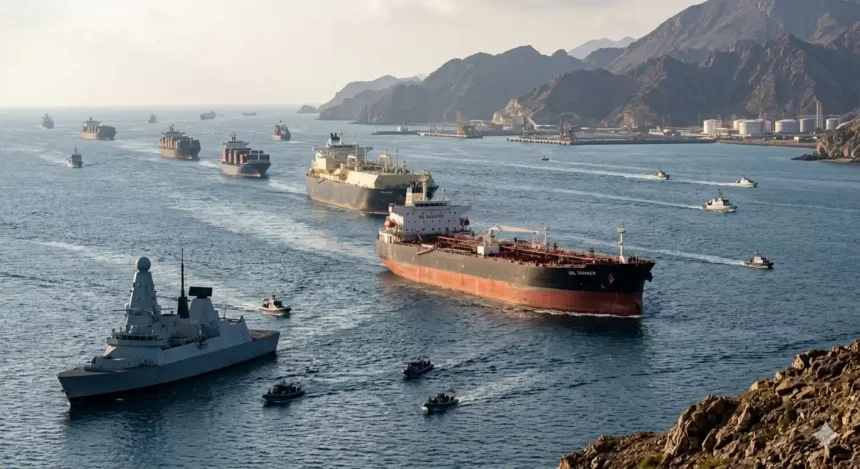
The Strait of Hormuz is a narrow, 33‑kilometre‑wide waterway between Iran and Oman that links the Persian Gulf to the Gulf of Oman and the wider Indian Ocean. It is the world’s most critical maritime energy chokepoint, through which about 20–25 percent of global seaborne oil and roughly one‑third of global liquefied natural gas (LNG) flows every day.
- What is the Strait of Hormuz and why does it matter?
- Where exactly is the Strait of Hormuz located?
- Why is the Strait of Hormuz so strategically important?
- How does oil and gas actually move through the Strait of Hormuz?
- What are the key historical events linked to the Strait of Hormuz?
- How does international law govern navigation through the strait?
- What are the main security and military factors in the strait?
- What would happen if the Strait of Hormuz were blocked?
- How does the Strait of Hormuz affect global energy markets?
- What are the long‑term economic and geopolitical implications?
- How can risks in the Strait of Hormuz be managed?
Because so many European, Asian and North American economies depend on oil and gas shipped via this single corridor, any disruption in the Strait of Hormuz can push energy prices sharply higher and threaten global supply chains. This makes the strait a permanent flashpoint for geopolitical tension and a focal point for naval patrols from multiple countries.
For residents of East London, the Strait of Hormuz may seem distant, but its stability directly affects fuel prices at local petrol stations, the cost of home energy bills, and the affordability of goods transported by sea to the Port of London and onward to east‑London boroughs.
What is the Strait of Hormuz and why does it matter?
The Strait of Hormuz is a narrow sea passage, about 33 kilometers wide at its narrowest, running between the Iranian coast to the north and the Omani Musandam Peninsula to the south. It connects the enclosed waters of the Persian Gulf to the Gulf of Oman and onward to the Arabian Sea and the rest of the Indian Ocean.
This short stretch of water is the only direct sea route out of the Persian Gulf for major oil‑producing states such as Saudi Arabia, Iraq, Kuwait, the United Arab Emirates, Qatar and Bahrain. Without the Strait of Hormuz, these countries would have to rely on much longer, more expensive overland pipelines or alternative routes, none of which can fully replace seaborne exports.
For East London households and businesses, the strait matters because it channels the type of crude oil that feeds European refineries and global LNG markets. When tensions rise around Hormuz, wholesale energy prices in Europe often rise, and this can feed through to higher fuel and heating costs in east‑London boroughs such as Tower Hamlets, Newham and Barking and Dagenham.
The strait is classified as a global energy chokepoint: a small geographic area through which a large share of world energy supplies must pass. Shipping volumes through the Strait of Hormuz are so high that, in recent years, around 20–25 percent of global crude oil trade and about one‑third of global LNG shipments have transited this corridor each year.
Where exactly is the Strait of Hormuz located?
The Strait of Hormuz runs between about 26°N latitude and 56°E longitude, forming the maritime boundary between Iran to the north and Oman to the south. The southern entrance is anchored by the Omani Musandam Peninsula, a jagged arm of land that extends northward toward Iran, while the northern side is the Iranian coastline.
The strait is roughly 167 kilometers long and ranges from about 30 to 33 kilometers wide at its narrowest cross‑section. Two parallel shipping lanes of about 2 miles (3.2 kilometers) each, separated by a 2‑mile buffer zone, carry almost all commercial traffic through the corridor.
For East London readers, this positioning means that oil and gas from the Gulf can be shipped to northwest Europe in a way that helps keep refinery input costs lower than if tankers had to use much longer routes. Any forced detour—for example, sending tankers around the Cape of Good Hope—adds days to journey times and raises shipping costs, which can indirectly affect how much energy‑intensive goods and transport services cost in east‑London markets.
This positioning also makes the Persian Gulf a key node in global trade networks that connect to major European ports, including the Port of London, which serves as a hub for fuel and container traffic feeding into east‑London boroughs.
Why is the Strait of Hormuz so strategically important?
The Strait of Hormuz matters because it concentrates a large share of global energy trade into a very confined space that any regional power can influence or threaten. Around 20–25 million barrels of oil per day—roughly one‑fifth of global crude consumption—pass through the strait, along with about one‑third of global LNG volumes.
Much of this oil and gas is destined for Asian economies, especially China, India, Japan and South Korea, which rely heavily on Gulf oil. Disruptions here can force refineries and power plants to switch to alternative fuels or cut back operations, driving up prices for consumers and industry.
For East London communities, the most direct impact is via the European wholesale energy market. When tensions around Hormuz spike, European gas and oil benchmarks such as the NBP (UK gas) and Brent crude often move higher, and this can pass through to higher heating bills, industrial energy costs and, in some cases, public‑transport or freight costs that affect east‑London boroughs.
The strait is also a permanent geopolitical fault line because Iran controls the northern shoreline and the shipping lanes run close to its territorial waters. This allows Iran to credibly threaten mine‑laying, missile attacks, or temporary blockades, giving it leverage over distant economies that depend on uninterrupted flows.
How does oil and gas actually move through the Strait of Hormuz?
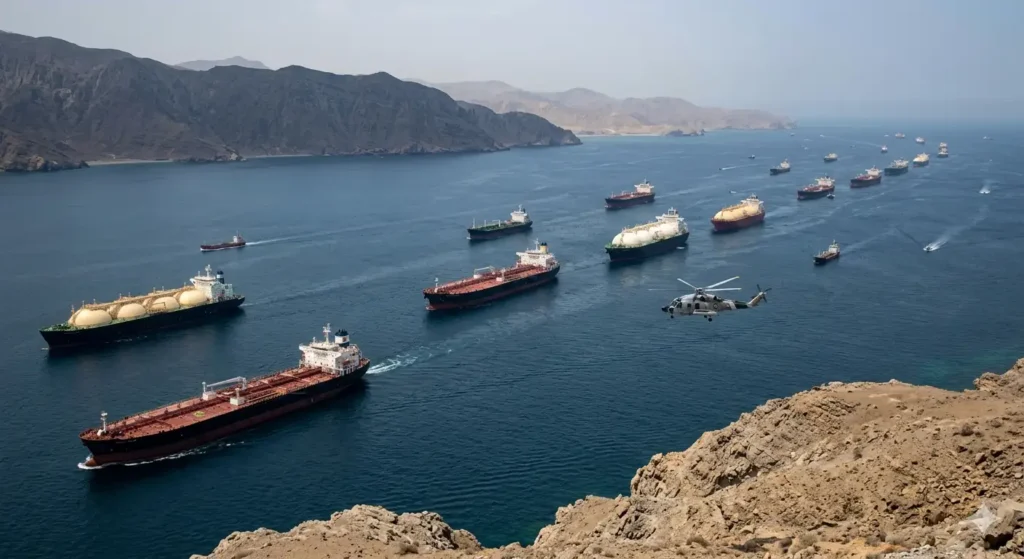
Most crude oil and LNG moving through the Strait of Hormuz travels on large tankers and LNG carriers that follow the two‑way shipping lanes enforced by international maritime rules. These lanes are about 2 miles wide each, with a 2‑mile separation zone in the middle, and they run in both directions so that inbound and outbound traffic do not cross paths.
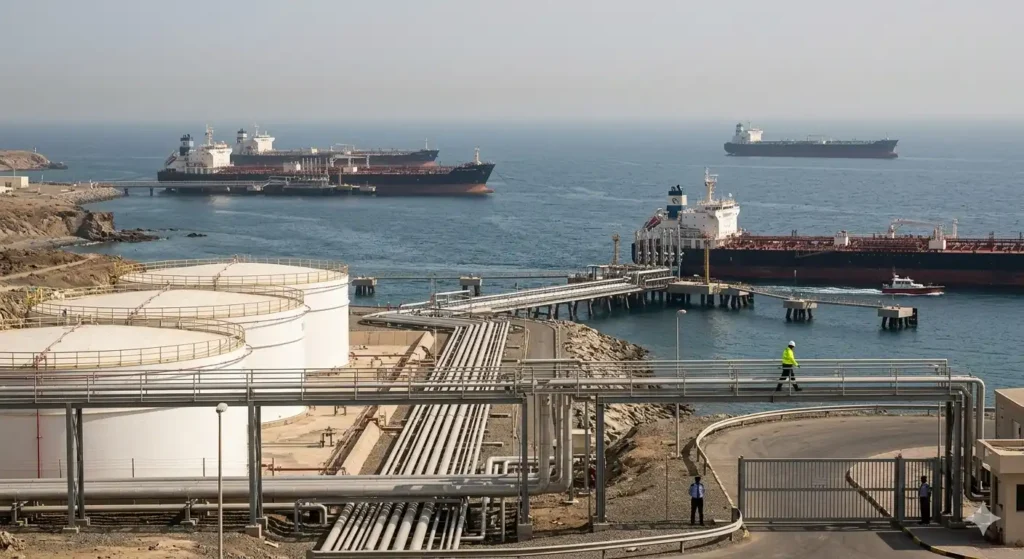
Major exporters in the Gulf—such as Saudi Arabia’s Ras Tanura, Iraq’s Basra, UAE’s Jebel Ali and Fujairah, Kuwait’s Mina al‑Ahmadi, Qatar’s Ras Laffan, and Bahrain’s refining hub—load their products onto very large crude carriers (VLCCs) and ultra‑large crude carriers (ULCCs). These ships then sail through the strait at controlled speeds, often with escort support or transit‑management measures during periods of heightened tension.
From the perspective of East London, this flow matters because Gulf‑sourced crude and LNG often feed refineries and power plants that supply fuel and electricity to the wider UK market. When the Strait of Hormuz is calm, shipping costs remain lower and energy‑price volatility is reduced, which tends to support more stable household budgets in boroughs such as Newham and Barking and Dagenham.
Data from energy agencies indicate that, in 2023–2025, roughly 20 percent of the world’s LNG and 25 percent of seaborne oil trade passed through the Strait of Hormuz annually. A typical daily throughput figure cited by analysts is around 17–20 million barrels of oil, depending on market conditions and seasonal demand.
What are the key historical events linked to the Strait of Hormuz?
The history of the Strait of Hormuz is shaped by centuries of trade, colonial control and modern energy politics. In the early 16th century, Portuguese forces captured the island of Hormuz and built a fortress there, using it as a customs station and toll point for ships moving between the Persian Gulf and the Indian Ocean. Goods such as spices, silk, pearls and horses flowed through the strait under Portuguese oversight, highlighting its early commercial value.
In the 19th and 20th centuries, British naval influence dominated the broader Gulf region, ensuring freedom of navigation through Hormuz as oil discoveries began to reshape global energy markets. After the 1956 Suez Crisis, which temporarily closed the Suez Canal, Gulf oil exports became even more dependent on the Hormuz route, cementing its status as a global chokepoint.
In the 1970s and 1980s, the Iran–Iraq War saw Iran and Iraq attack oil tankers and shipping in the Gulf, including near the Strait of Hormuz, in what became known as the “Tanker War.” The United States and other powers deployed naval forces to escort tankers and protect transit, a pattern that has repeated in later crises.
For East London, these events are part of a broader story of how global energy politics have shaped the cost and reliability of imported fuels. Periods of disruption in the Gulf have historically coincided with higher energy prices in Europe, which in turn can lead to higher fuel poverty and transport‑cost pressures in more densely populated, lower‑income boroughs.
How does international law govern navigation through the strait?
The legal framework for navigation through the Strait of Hormuz is shaped by the United Nations Convention on the Law of the Sea (UNCLOS), which Iran has not ratified but which most Gulf states and user nations have adopted. Under UNCLOS, the strait is treated as a “straits used for international navigation,” granting ships and aircraft the right of transit passage with limited restrictions.
Transit passage allows vessels to move through the strait without prior permission, as long as they proceed continuously and expeditiously and do not engage in activities that threaten peace, security or order. Coastal states such as Iran and Oman can impose safety and environmental regulations, but they cannot unilaterally shut down the strait or impose arbitrary blockades.
In practice, Iran has claimed broad security rights and has at times threatened to close or restrict traffic, especially during periods of heightened tension with the United States and its allies. Military and commercial operators therefore rely on a mix of diplomatic pressure, naval presence and risk‑mitigation measures to ensure passage remains open.
For East London, this legal and diplomatic framework underpins the reliability of energy flows that feed European and UK markets. When international law is respected and disputes are managed through multilateral channels, it reduces the risk of sudden price spikes that would disproportionately affect low‑income households in east‑London boroughs.
What are the main security and military factors in the strait?
The Strait of Hormuz is one of the most heavily militarised waterways in the world, with naval forces from Iran, the United States, the United Kingdom, France, the Gulf Cooperation Council (GCC) states and others operating in or near the corridor. Iran stations naval vessels, speedboats and missile units along its coastline and on small islands such as Greater and Lesser Tunb, which overlook key shipping lanes.
The United States has long maintained a carrier strike group presence in the region, together with guided‑missile destroyers and other assets, to protect energy flows and deter coercive actions. The UK and France have also deployed ships and patrol aircraft near the strait during crises, often under multinational coalitions such as the International Maritime Security Construct.
Security threats include the use of mines, anti‑ship missiles, small‑boat swarms, drone attacks and brief blockades. In 2019 and later incidents, several commercial ships were damaged in the Gulf and near the strait, raising concerns about the vulnerability of civilian tankers.
For East London, the presence of Western naval forces and multilateral security arrangements helps contain the risk that localized conflict in the Gulf would escalate into a broader energy‑supply crisis. This, in turn, supports more predictable energy‑price trends in the UK and helps local authorities plan services and support schemes for households facing fuel‑cost pressures.
What would happen if the Strait of Hormuz were blocked?
A sustained closure or severe disruption of the Strait of Hormuz would immediately cut off the main export route for Gulf oil and gas, forcing producers and buyers to find alternative solutions. In the short term, this would likely trigger a sharp spike in global crude prices, as markets discount the risk of prolonged supply shortages and reroute remaining cargoes via longer routes.
Some Gulf states and global producers have partial contingency plans. Examples include using limited pipeline capacity through neighbouring countries such as Iraq and Saudi Arabia, or rerouting tankers via the Cape of Good Hope around South Africa, which adds several days and higher fuel costs. However, existing pipelines and alternative routes cannot match the sheer volume of traffic that normally passes through Hormuz, so a full closure would still cause significant strains.
For East London, such a scenario could mean higher heating and transport costs, tighter fuel‑distribution planning and increased pressure on local‑authority welfare schemes. Industrial users in east‑London boroughs would also face higher energy bills, which could affect employment and local‑supply‑chain resilience.
How does the Strait of Hormuz affect global energy markets?
The Strait of Hormuz affects global energy markets by concentrating a large share of world oil and LNG flows into a narrow, politically sensitive corridor. When geopolitical tensions rise in the region, even the threat of a closure or attack can push crude prices higher because traders build a “risk premium” into contracts.
For major importers such as China, India, Japan and South Korea, any disruption to Hormuz‑linked shipments directly threatens energy security and economic stability. These countries have responded by diversifying suppliers, building strategic petroleum reserves and investing in alternative energy sources, but they remain heavily reliant on Gulf oil and gas.
European energy markets are also exposed, because substantial volumes of Gulf crude and LNG flow via Hormuz to refineries and power plants in countries such as Italy, Greece and Turkey. The European Union has repeatedly highlighted the strait as a critical node for its energy‑security strategy, tying it to broader policies on diversification and infrastructure resilience.
For East London, this means that local energy‑price trends are partially determined by decisions and events thousands of miles away. When the Strait of Hormuz is stable, it supports more predictable wholesale prices, which makes it easier for councils and charities in east‑London boroughs to plan fuel‑ poverty interventions and transport‑cost mitigation schemes.
What are the long‑term economic and geopolitical implications?
Over the long term, the Strait of Hormuz is likely to remain a central node in global energy security, even as the world shifts toward cleaner energy sources. As long as oil and LNG remain important to transport, industry and power generation, the economic weight of the strait will continue to influence investment decisions, alliance structures and defence spending.
Geopolitically, the corridor reinforces the strategic importance of the wider Persian Gulf region, drawing in powers such as the United States, China, Russia and regional actors like Saudi Arabia and the UAE. These states compete to shape security arrangements, influence local governments and secure preferential access to energy and infrastructure.
For Gulf producers, the vulnerability of the strait underpins investments in pipeline networks, storage hubs and alternative export facilities such as Fujairah on the Gulf of Oman side of the UAE. These projects aim to reduce absolute dependence on Hormuz and provide at least some buffer against regional crises.
For East London, these long‑term trends mean that local economic resilience will depend on how well the UK and Europe manage energy‑security risks linked to chokepoints such as Hormuz. This includes supporting energy‑efficiency programmes, retrofit schemes, and public‑transport infrastructure in east‑London boroughs so that local economies are less exposed to global price shocks.
How can risks in the Strait of Hormuz be managed?
Risk management around the Strait of Hormuz relies on a mix of diplomacy, military deterrence, infrastructure diversification and market mechanisms. Host‑nation navigation rules, shared maritime information systems and coordinated naval patrols help reduce the chance of accidents, provocations and escalation.
International energy agencies and central banks monitor the strait as part of broader energy‑security assessments, using tools such as strategic petroleum reserves and coordinated emergency‑release mechanisms to blunt the impact of short‑term disruptions. Producers and importers also use insurance markets, hedging contracts and alternative shipping routes to spread risk and dampen price spikes.
In parallel, many economies are investing in energy efficiency, renewables and grid‑scale storage to reduce their exposure to oil‑price shocks linked to chokepoints such as Hormuz. These longer‑term shifts do not eliminate the strait’s importance overnight, but they gradually reduce the global economy’s sensitivity to any single maritime bottleneck.
Why is the Strait of Hormuz an important chokepoint?
The Strait of Hormuz is a critical chokepoint because a large share of the world’s oil and gas passes through this narrow route. Any disruption can quickly impact global energy prices, supply chains, and economies—including fuel costs and living expenses in places like East London.