Key Points
- West Ham United’s Under‑17 side won the Under‑17 Premier League Cup after a 3‑2 victory over Blackburn Rovers at the Wham Stadium in Accrington.
- The win came one month after Greg Lincoln’s Under‑21s suffered National League Cup final heartbreak against Boreham Wood.
- The triumph means West Ham are now the only club in English football to win the Premier League Cup at three different age groups (U17, U18 and U21 level).
- 15‑year‑old Jude Longman played a central role in the final, described by club‑linked reporting as “incredible” for his impact.
- The result is viewed internally as a marker of the strength of the club’s academy, with Luke Smith’s Under‑17s delivering silverware despite the frustrations endured by the senior youth teams earlier in the season.
Accrington, West Ham United (East London Times) April 16, 2026 –
- Key Points
- How did West Ham’s Under‑17s win the cup?
- Why is this a ‘hat‑trick’ of trophies?
- Who was Jude Longman and what did he do?
- How did the season roll out for West Ham’s academy?
- What did the club‑linked coverage say about the bigger picture?
- Background to this development
- Prediction: How this development could affect local fans and stakeholders
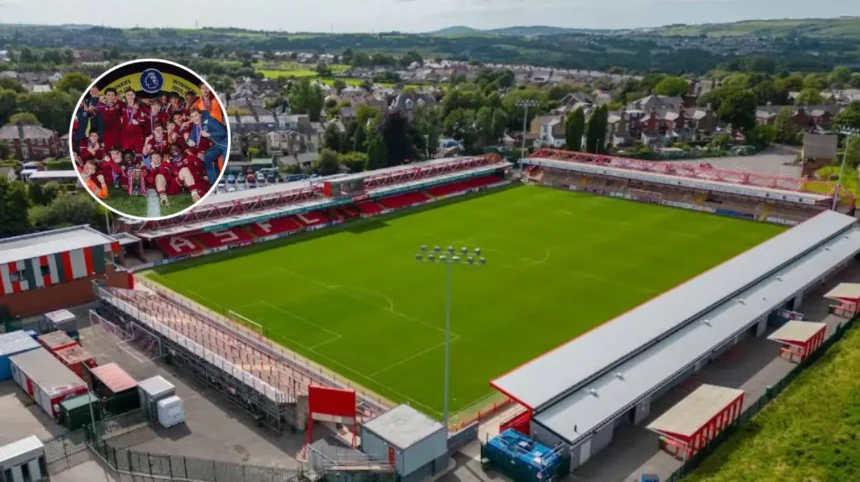
Accrington saw West Ham United’s Under‑17 side clinch the Under‑17 Premier League Cup on Wednesday night with a 3‑2 victory over Blackburn Rovers at the Wham Stadium, completing a unique trophy hat‑trick for the club’s youth setups across English football’s academy tiers.
How did West Ham’s Under‑17s win the cup?
West Ham’s Under‑17s edged past Blackburn Rovers in a back‑and‑forth encounter that ended 3‑2 at the Wham Stadium, as reported by writers covering the competition and club‑linked outlets. The match was framed as a tightly contested final, with the London‑based academy side holding their nerve in the closing stages to secure the trophy.
The victory was significant because it followed a difficult spell for the club’s senior academy side; Greg Lincoln’s Under‑21s had been beaten on penalties by National League outfit Boreham Wood in the National League Cup final one month earlier, having once led 2‑0 in that contest. Despite that senior‑level disappointment, the success of the Under‑17s ensured West Ham’s academy still finished the campaign with silverware.
Why is this a ‘hat‑trick’ of trophies?
The term “hat‑trick” in this context refers to West Ham becoming the only club in English football to win the Premier League Cup at three different age brackets. The Under‑17 Premier League Cup is the youngest age‑group version of the competition, originally launched as an Under‑16 Premier League Cup in 2017 and rebranded for the U17 category in 2020.
West Ham’s previous youth‑cup successes at older age groups – including triumphs at Under‑18 and Under‑21 level in recent years – have already been documented across club‑run and specialist academy coverage. Taken together, those results mean that, as of the 2025–26 season, the club can now claim victories in the Premier League Cup structure at U17, U18 and U21 level, a distinction that has been highlighted by academy‑focused publications.
Who was Jude Longman and what did he do?
Jude Longman, a 15‑year‑old in West Ham’s academy setup, was singled out in club‑linked reporting for his standout contribution in the final. He was described as “incredible” by authors covering the match, with his performance cited as a key reason the Under‑17s managed to see the game out despite Blackburn’s resistance.
Longman’s role underlined the emphasis placed on first‑year scholars at the Under‑17 level, a cohort that the Premier League says the competition was designed to serve when it was restructured in 2020. For West Ham, his impact in Accrington was presented as evidence of the club’s ability to bring younger players into high‑pressure knockout fixtures and ask them to perform.
How did the season roll out for West Ham’s academy?
Ahead of the final, previews on the Under‑17 Premier League Cup had already framed West Ham as serious contenders, noting their strong run through the group and knockout stages. The academy’s wider campaign included other notable results, including wins over teams such as Ipswich Town Under‑18s and Norwich City Under‑17s during the competition’s group phase.
That context was important because the club’s Under‑21s, led by Greg Lincoln, had exited the National League Cup at the final after a 2‑2 draw that Boreham Wood won 7‑6 on penalties. Boreham Wood’s manager, Luke Garrard, described his side’s comeback from a 2‑0 deficit as a highlight of their season, while club‑linked reporting on West Ham’s academy noted that the underage success helped soften the disappointment of the senior‑level loss.
What did the club‑linked coverage say about the bigger picture?
Commentary pieces surrounding the Under‑17 final positioned the win as a continuation of West Ham’s long‑running reputation for strong academy output. Writers pointed to past successes such as the Under‑18s’ dominance in the U18 Premier League South and the FA Youth Cup, including the 5‑1 victory over Arsenal in the youth final at the Emirates Stadium.
For the 2025–26 campaign, the Under‑17 Premier League Cup win was framed by club‑aligned outlets as a sign that the developmental conveyor belt remains intact, with younger players such as Longman able to step into decisive matches. That narrative was reinforced by the fact that the Premier League had expanded the U18 Premier League to include more Category One academies in recent seasons, raising the overall competitive standard.
Background to this development
West Ham’s academy has developed a national reputation over the past decade for producing first‑team regulars and loan‑market assets, with Under‑18 and Under‑21 sides regularly competing in the top‑tier youth leagues. The club’s Under‑21 side now plays in Premier League 2, which was restructured to cap the number of over‑21 players per match, tightening the focus on true youth development.
The introduction of the Under‑18 and Under‑17 Premier League Cups gave elite academies a mid‑week knockout platform alongside their regular league fixtures, designed to simulate the pressure of senior‑level cup football. West Ham’s ability to win versions of this competition at multiple age groups reflects both coaching continuity and the club’s scouting and recruitment at younger levels.
In parallel, the National League Cup – featuring Under‑21 teams from Premier League 2 clubs against first‑team sides from the National League – has created a crossover environment where senior non‑league clubs can test themselves against top‑level academy sides. West Ham’s 2026 campaign therefore saw their academy teams operating in both age‑group‑specific and mixed‑level competitions, with the U17 and U21 performances providing a dual‑pronged measure of progress.
Prediction: How this development could affect local fans and stakeholders
For West Ham supporters in east London and beyond, the Under‑17 Premier League Cup win provides a tangible on‑field success in a season where the senior‑age academy side came close but ultimately fell short in the National League Cup. That contrast may help maintain short‑term morale among a fanbase that has grown accustomed to the club’s youth teams supplying internationals and established Premier League players over the past decade.
Hammers fans who follow the academy closely could see the victory as validation of the club’s investment in infrastructure and youth recruitment, particularly if players such as Jude Longman are later promoted into higher‑age‑group squads or the first‑team training environment. For West Ham’s commercial and marketing departments, the “hat‑trick” of Premier League Cup successes at three age levels offers a compelling narrative to incorporate into academy‑focused campaigns and sponsorship‑driven content.
From a broader football‑development perspective, the result may encourage other Category One academies to treat the Under‑17 Premier League Cup as a serious benchmark rather than a secondary competition. If West Ham’s U17 model proves replicable – producing a financially sustainable pipeline of home‑grown talent without heavy reliance on overseas transfers – other clubs could look to emulate aspects of their coaching and competition‑selection strategy.