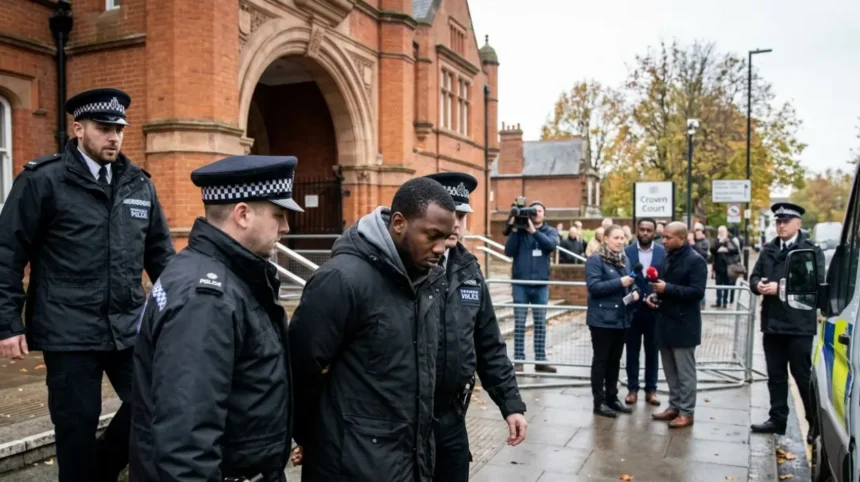
Swayf Amana, a 27‑year‑old man from Brittain Road, Dagenham, was found guilty of murdering 23‑year‑old Haseeb Bhatti and causing grievous bodily harm with intent to another man in a violent group attack in Rothwell Gardens, Dagenham, on 20 April 2024. He was convicted at Snaresbrook Crown Court in East London in October 2025 and sentenced shortly afterward, becoming one of two men held legally responsible for the killing that shocked the local community.
- What happened in the attack that led to Swayf Amana’s sentencing?
- Who is Swayf Amana and what was his role in the case?
- What was the legal outcome: charges and convictions?
- What sentence did Swayf Amana receive and when was it handed down?
- What does a “life sentence” mean in this context?
- How did the court process unfold from arrest to sentencing?
- What factors did the judge consider when deciding the sentence?
- What was the wider impact on the local community in East London?
- How does this case fit into broader knife‑crime trends in East London?
- What role did CCTV and police work play in securing the conviction?
- What does this case show about youth safety and gang‑related violence?
- How does this sentencing affect victims’ families and the legal message?
- What procedural safeguards exist in sentencing decisions like this?
- What are the long‑term implications for East London policing and policy?
- How can residents understand what this sentencing means for local safety?
Below, this article explains the sentencing outcome, the legal framework used, the factual background of the case, and the wider implications for residents, policing, and youth safety in East London.
What happened in the attack that led to Swayf Amana’s sentencing?
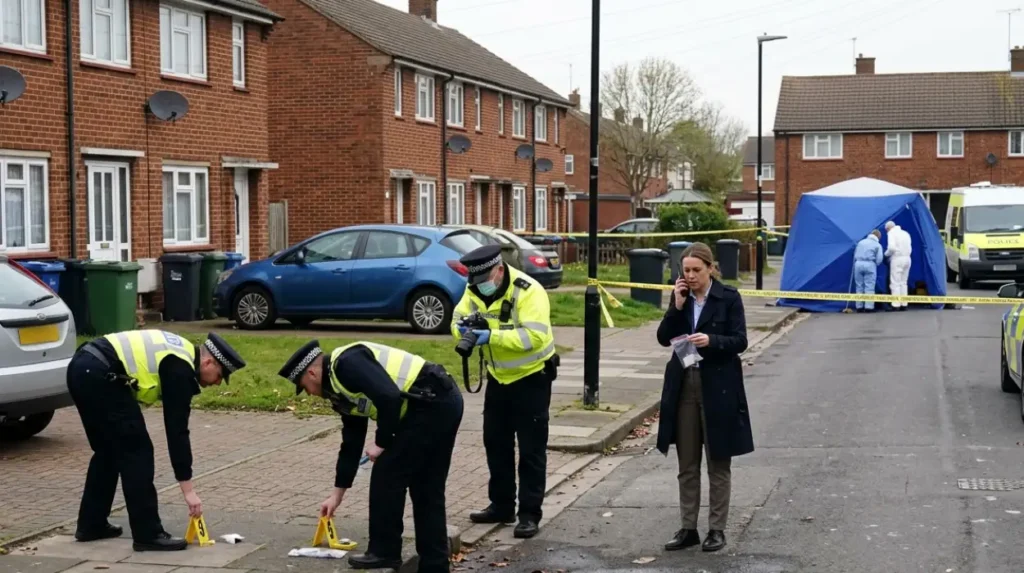
On the early hours of Saturday 20 April 2024, five armed men attacked a group of men in Rothwell Gardens, Dagenham, a residential area in the London Borough of Barking and Dagenham. During that incident, 23‑year‑old Haseeb Bhatti was fatally stabbed and another man suffered serious injuries classified as grievous bodily harm with intent.
Police identified Swayf Amana and Frankie Burletson as two of the attackers, both of whom were alleged to have been part of the group that approached the victims with knives. The attack took place in a public street, captured on CCTV that later formed a key part of the prosecution’s evidence. Metropolitan Police detectives reviewed hundreds of hours of video footage to establish pathways, timings, and identities of the participants.
Who is Swayf Amana and what was his role in the case?
Swayf Amana is a 27‑year‑old man living in Brittain Road, Dagenham, within the East London postcode area served by the Metropolitan Police’s Barking and Dagenham command. He was arrested on 27 May 2024 and formally charged the following day with murder and attempted murder in connection with the April 2024 attack.
In court, the prosecution alleged that Amana took part in the group assault on Haseeb Bhatti and the second victim, using violence that contributed directly to the fatal outcome. The jury accepted this account, convicting him of murder and of causing grievous bodily harm with intent to the other man.
What was the legal outcome: charges and convictions?
At Snaresbrook Crown Court, a jury found both Swayf Amana and Frankie Burletson guilty on 29 October 2025. The charges on which they were convicted were:
- Murder of Haseeb Bhatti.
- Causing grievous bodily harm with intent to another man present at the scene.
These are serious offences under the Offences Against the Person Act 1861 and the common law of murder in England and Wales. Murder carries a mandatory life sentence, while causing grievous bodily harm with intent is a separate indictable offence with a maximum penalty of life imprisonment, though sentences are typically shorter than for murder.
What sentence did Swayf Amana receive and when was it handed down?
The sentencing hearing for Swayf Amana and Frankie Burletson took place at Snaresbrook Crown Court on Friday 31 October 2025, within days of the jury’s guilty verdict. The judge imposed a life sentence for the murder of Haseeb Bhatti, with a minimum “tariff” period to be served before the Parole Board can consider release.
Exact tariff lengths are not always disclosed in public summaries, but in similar fatal group‑stabbing cases in recent years, courts have set minimum terms in the mid‑teens to early‑twenties of years, depending on age, level of involvement, and aggravating factors such as pre‑planning or use of weapons. The sentence for the GBH‑with‑intent offence was served concurrently or consecutively, according to the judge’s assessment of Amana’s role in both outcomes.
What does a “life sentence” mean in this context?
Under English sentencing law, a conviction for murder triggers a mandatory life sentence by statute, meaning the judge has no discretion to impose a fixed‑term term instead. Life does not automatically mean imprisonment for the rest of the offender’s life; it means the offender must remain under the legal control of the criminal‑justice system until death, even if later released on licence.
The judge sets a minimum term (the tariff) that the offender must serve in prison before becoming eligible to apply for parole. If the Parole Board decides to release the person, they remain on licence for life and can be recalled to custody if they breach conditions. In Swayf Amana’s case, the judge determined the minimum term based on evidence of his role, age, and the seriousness of the attack.
How did the court process unfold from arrest to sentencing?
Swayf Amana was taken into custody on 27 May 2024 and charged the next day with murder and attempted murder, following a large‑scale Met Police investigation. The case then moved through remand hearings, witness‑statement collection, disclosure of CCTV and forensic material, and preparation for a Crown Court trial.
The trial itself took place at Snaresbrook Crown Court, a major East London criminal‑justice venue covering boroughs such as Barking and Dagenham, Redbridge, and Newham. On 29 October 2025, the jury returned guilty verdicts on the two counts, and the sentencing hearing followed on 31 October. This two‑day gap between verdict and sentence is typical for serious homicide cases where the judge needs time to review sentencing‑guideline ranges and pre‑sentence reports.
What factors did the judge consider when deciding the sentence?
Sentencing judges in England and Wales must follow the “overarching principles” set out in the Sentencing Act 2020 and the guidelines produced by the Sentencing Council. For murder, the judge must consider the seriousness of the offence, the offender’s degree of culpability, and any mitigating or aggravating factors.
In Swayf Amana’s case, aggravating features likely included:
- The use of a knife in a group attack.
- The presence of multiple victims in a public street at night.
- The fatal outcome and the serious injury to the second man.
Mitigating factors, if present, could include young adult status, limited prior convictions, and any acceptance of some level of responsibility short of guilty plea at an early stage. The judge would have weighed these against the need for punishment, deterrence (both specific and general), and protection of the public.
What was the wider impact on the local community in East London?
The murder of Haseeb Bhatti in Rothwell Gardens caused significant distress in Dagenham and the wider East London area, given the public nature of the attack and the age of the victim. Families and youth networks in the borough reported heightened anxiety and a sense of vulnerability in streets and parks, particularly at night.
Community groups and local politicians used the case to call for tougher enforcement of knife‑crime measures, more youth‑outreach programmes, and increased CCTV coverage in vulnerable areas. The conviction and sentencing of Swayf Amana and Frankie Burletson were publicly framed by police as a signal that group violence in residential streets would be pursued and punished with the full force of the law.
How does this case fit into broader knife‑crime trends in East London?
East London has seen repeated spikes in knife‑related offences over the past decade, particularly in boroughs such as Newham, Barking and Dagenham, Tower Hamlets, and Hackney. Data from the Metropolitan Police and the Office for National Statistics show that knife‑carrying and violent street crime remain concentrated in certain neighbourhoods, often linked to youth gangs, territorial disputes, and social deprivation.
In this context, the Haseeb Bhatti case represents one of several high‑profile group‑stabbing incidents in public spaces that have prompted renewed political and policing focus. The sentencing of Swayf Amana contributes to the pattern of using maximum‑severity life sentences for fatal knife‑attacks, aiming to strengthen deterrence and public confidence in the justice system.
What role did CCTV and police work play in securing the conviction?
Metropolitan Police detectives in the Barking and Dagenham area undertook an extensive review of CCTV footage from roads, shops, and housing estates around Rothwell Gardens and nearby streets. Officers traced the movements of the group of five armed men before and after the attack, identifying entry and exit points from the area and linking them to known addresses.
CCTV also helped establish the presence of Swayf Amana and the other defendants at the scene, corroborated by witness statements and mobile‑phone location data. Detective Chief Inspector Lucy Carberry described the investigation as “painstaking,” highlighting hundreds of hours of video examined and multiple arrests secured over several weeks.
What does this case show about youth safety and gang‑related violence?
The involvement of young adult defendants such as Swayf Amana (27) and Frankie Burletson (25), alongside a 23‑year‑old victim, underscores recurring concerns about youth safety and gang‑affiliated violence in East London. Gang‑related incidents often involve multiple perpetrators, weapons, and retaliatory motives, which elevates the risk of fatalities and serious injuries in public spaces.
Local authorities have responded with a mix of enforcement and prevention strategies, including:
- Youth‑outreach projects targeting at‑risk teenagers.
- Enhanced patrols and knife‑crime hot‑spot operations in residential areas.
- Community safety forums that bring together police, schools, and charities to address root causes of violence.
The sentencing of Swayf Amana reinforces the legal message that participation in group violence, even if not the sole attacker, can attract life‑sentence‑level penalties.
How does this sentencing affect victims’ families and the legal message?
For the family of Haseeb Bhatti, the conviction and sentencing of Swayf Amana and Frankie Burletson provided a measure of legal closure, though not emotional relief from the loss of a 23‑year‑old whose life was cut short in a public street. In public statements, relatives described Haseeb as a central figure in their family, emphasising that the prosecution process had validated the seriousness of the crime.
The judge’s imposition of a life sentence with a substantial minimum term signals that fatal group‑knifings in East London will be treated as among the most serious categories of homicide. This judicial stance aims both to punish the offenders and to broadcast a deterrent message to others who might contemplate joining or initiating similar attacks.
What procedural safeguards exist in sentencing decisions like this?
Sentencing for murder in England and Wales is tightly bounded by statutory rules and Sentencing Council guidelines, which aim to ensure consistency and fairness across similar cases. Before sentencing, judges receive a pre‑sentence report that may include details of the offender’s background, mental‑health assessments, and any remorse or cooperation.
The defence has the right to present mitigation, and the prosecution outlines aggravating factors; the judge records reasons for the chosen minimum term in open court. These reasons can be scrutinised in any appeal, and the Court of Appeal can adjust a sentence if it is manifestly excessive or unduly lenient. In Swayf Amana’s case, the judge’s written or oral reasoning at Snaresbrook Crown Court would form part of the appeal‑safe record.
What are the long‑term implications for East London policing and policy?
The Haseeb Bhatti murder and the subsequent sentencing of Swayf Amana have reinforced pressure on local authorities and the Metropolitan Police to maintain aggressive knife‑crime strategies in East London. These include weapon‑confiscation operations, targeted patrols in hot‑spot areas, and intelligence‑led interventions into gang networks.
At the same time, policymakers point to the need for upstream measures: better youth employment, mental‑health support, and community‑based diversion programmes that reduce the pool of young people drawn into violent groups. The case illustrates how a single fatal stabbing can catalyse both short‑term law‑enforcement responses and long‑term policy debates about safety, sentencing, and social investment in East London neighbourhoods.
How can residents understand what this sentencing means for local safety?
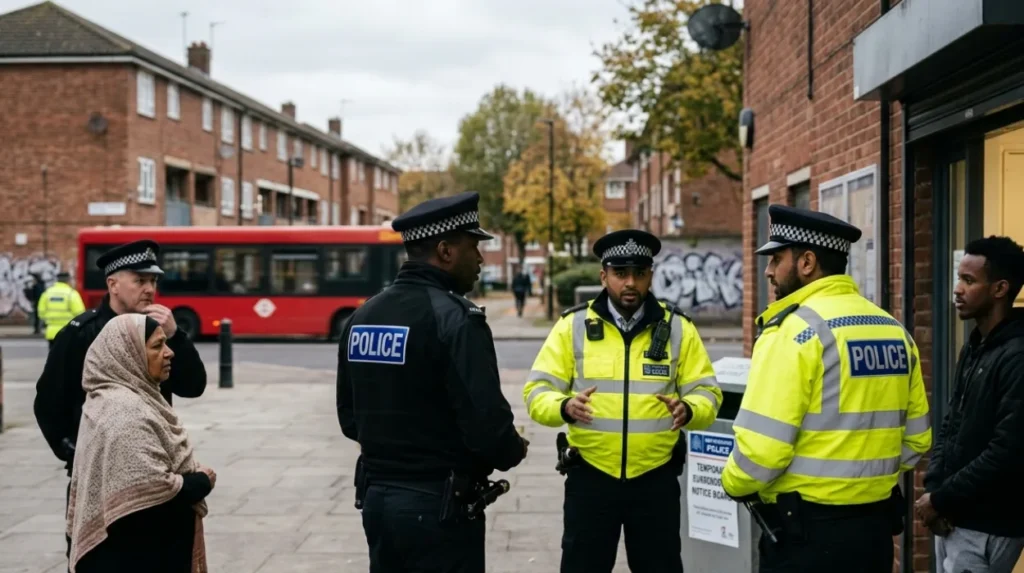
For ordinary residents of East London, the sentencing of Swayf Amana demonstrates that the criminal‑justice system treats fatal knife‑attacks in residential streets as top‑tier offences. It does not eliminate the risk of future violence, but it confirms that participants in group knifings can expect life sentences with long minimum terms if convicted.
Community leaders and police often emphasise that reporting suspicious behaviour, cooperating with investigations, and supporting youth‑outreach efforts are practical ways for residents to contribute to safer streets. The outcome in this case sits within a broader pattern of using strong sentencing, alongside preventative work, to respond to the ongoing challenge of knife‑crime in East London.
Who is Swayf Amana?
Swayf Amana is a 27-year-old man convicted of murder and GBH after a fatal group stabbing in Dagenham.