Key Points
- Workers’ Memorial Day observed globally on 28 April to remember those who died from work-related causes and campaign for improved working conditions.
- Local rally in Waltham Forest on Tuesday, 28 April at 12pm in Fellowship Square, outside Walthamstow Town Hall/Assembly Rooms, Forest Rd, E17.
- UK statistics reveal 182 daily work-related deaths, over seven per hour, mostly from diseases and ill health caused by work.
- Global data from International Trade Union Confederation indicates work kills more people than war, with most incidents predictable and preventable through better employer safety management.
- Presence of trade union health and safety representatives significantly reduces workplace injuries and ill-health.
- Rally agenda includes remembering Waltham Forest victims like Ekarmanjeet Singh (25), killed in a December 2023 roof collapse on Pevensey Rd, Leytonstone; a minute’s silence; and recommitment to “Remember the dead – and fight like hell for the living!”
- Focus on east London trade union disputes involving health and safety, such as teachers striking over workloads, hours, and management styles, and bus workers striking over driver fatigue and work patterns.
- Events occurring nationwide and worldwide.
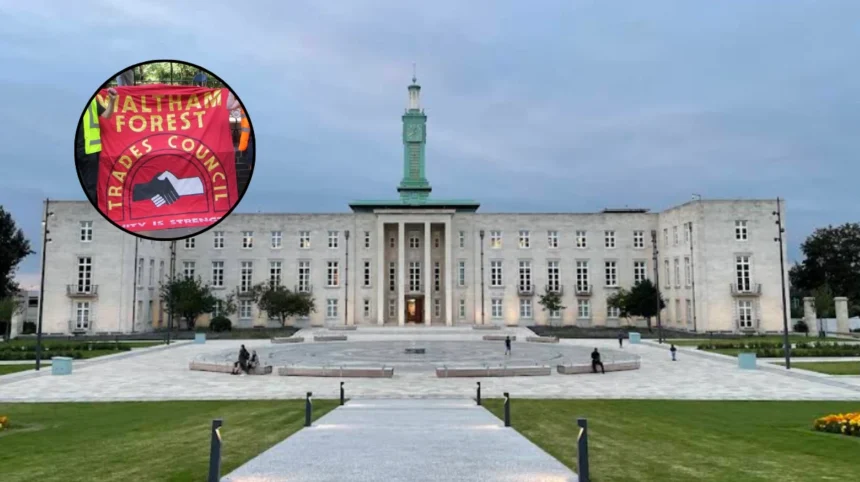
Waltham Forest (East London Times) April 24, 2026 –The event, scheduled for 12pm in Fellowship Square outside Walthamstow Town Hall/Assembly Rooms on Forest Rd, E17, underscores the global Workers’ Memorial Day observed annually on 28 April. This day remembers individuals who have died directly or indirectly due to their work and serves as a platform to advocate for enhanced working conditions and practices.
- Key Points
- What is Workers’ Memorial Day and Why Does It Matter?
- Who Was Ekarmanjeet Singh and What Happened in Leytonstone?
- What Local Disputes Will the Rally Address?
- Where and When is the Waltham Forest Rally Happening?
- How Do UK and Global Work Death Statistics Compare?
- Why Focus on Trade Union Health and Safety Reps?
- What Happens During the Waltham Forest Event?
- Background of the Development
- Prediction: Impact on Waltham Forest Workers and East London Communities
What is Workers’ Memorial Day and Why Does It Matter?
Workers’ Memorial Day carries the movement’s slogan:
“Remember the dead – and fight like hell for the living!”
as noted on the official site 28april.org. The rally in Waltham Forest will feature tributes to local victims, discussions on daily worker challenges, a minute’s silence, and a pledge to continue the fight for safer workplaces.
Behind official figures, calculations indicate that in the UK, 182 people die every day from work-related causes – more than seven every hour.
The greater proportion stems from diseases and ill health linked to employment. As reported across various sources covering the event, including trade union announcements, the International Trade Union Confederation states that globally, work kills more people than war.
It is acknowledged that the majority of these deaths are predictable and preventable if employers implement stronger safety management. Sources emphasise that workplaces with trade union health and safety representatives experience markedly lower rates of injury and ill-health.
Who Was Ekarmanjeet Singh and What Happened in Leytonstone?
Attendees at the Waltham Forest rally will specifically remember those killed while working locally, including Ekarmanjeet Singh, aged 25. Singh, a construction worker, died when a roof collapsed at a house under renovation on Pevensey Rd, Leytonstone, in December 2023.
This incident, detailed in local reporting on Waltham Forest workers’ memorials, highlights the persistent risks in construction and renovation sites. Organisers plan to use such cases to draw attention to preventable hazards in the borough.
What Local Disputes Will the Rally Address?
This year’s Waltham Forest event places particular emphasis on trade union disputes in east London where health and safety form the core issues.
Teachers at some local schools have engaged in strikes over excessive workloads, extended hours of work, and heavy-handed management approaches.
Bus workers have also been striking, citing driver fatigue and problematic work patterns as primary concerns.
These actions, as covered in union statements shared via platforms like The Canary’s workers’ rights topic page (thecanary.co/topics/workers-rights/), illustrate broader tensions affecting east London workers.
The rally aims to connect these disputes to the memorial theme, reinforcing calls for better protections.
Where and When is the Waltham Forest Rally Happening?
The gathering occurs at 12pm on Tuesday, 28 April 2026, in Fellowship Square, directly outside Walthamstow Town Hall/Assembly Rooms on Forest Rd, E17. This central location facilitates public participation and visibility.
Organisers note that similar events will take place around the country and worldwide, aligning with the international scope of Workers’ Memorial Day.
How Do UK and Global Work Death Statistics Compare?
UK data reveals a stark reality: 182 work-related deaths per day, predominantly from occupational diseases rather than immediate accidents. This equates to over seven fatalities hourly.
Globally, the International Trade Union Confederation’s figures position work-related deaths as exceeding those from warfare. Sources covering the day’s significance, such as union press releases, stress that enhanced employer measures could prevent most cases.
Trade union health and safety reps play a vital role, with data showing reduced injury and ill-health risks in their presence.
Why Focus on Trade Union Health and Safety Reps?
The presence of trade union representatives is linked to safer environments. Where these reps operate, the likelihood of workplace injury or ill-health drops considerably, according to analyses referenced in memorial event coverage.
The Waltham Forest rally will recommit participants to this principle following the minute’s silence, urging continued vigilance.
What Happens During the Waltham Forest Event?
The schedule includes gathering to remember Waltham Forest’s work-related fatalities, hearing accounts of daily worker issues, observing a respectful minute’s silence, and recommitting to the slogan
“Remember the dead – and fight like hell for the living!”
This structure mirrors global observances, blending remembrance with action.
The rally’s focus on east London disputes – teachers’ strikes over workloads, hours, and management, alongside bus workers’ actions on fatigue and patterns – ties local struggles to the international movement.
Background of the Development
Workers’ Memorial Day originated in Canada in 1984 following a major workplace disaster and spread internationally via trade unions. In the UK, it gained traction through events like those in Waltham Forest, which have commemorated local victims since at least the early 2000s.
The 2026 Waltham Forest rally builds on this tradition amid rising awareness of post-pandemic workplace pressures, including east London’s education and transport sector disputes. Official statistics from the Health and Safety Executive underpin the 182 daily UK deaths figure, while the International Trade Union Confederation’s global reports date back to annual assessments since 2000. Local cases like Ekarmanjeet Singh’s 2023 death have been documented in coroner’s reports and council safety reviews, prompting sustained union organising in the borough.
Prediction: Impact on Waltham Forest Workers and East London Communities
This development can affect Waltham Forest workers and east London communities by increasing visibility of local health and safety disputes, potentially leading to greater public and employer awareness of issues like construction hazards, teacher workloads, and bus driver fatigue. Attendance at the rally may strengthen trade union presence, correlating with data showing reduced workplace risks where reps are active. For communities in Walthamstow, Leytonstone, and surrounding areas, it could prompt more scrutiny of renovation sites and school management practices, influencing local council responses. Bus passengers and families of education workers stand to benefit from safer patterns if disputes gain momentum. Broader east London trade union actions might see heightened participation, fostering preventive measures without altering employment laws directly.