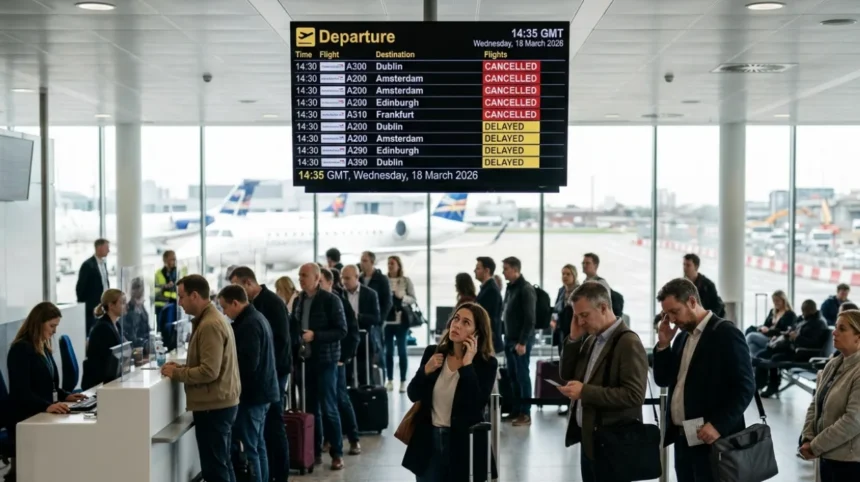
Airlines cancel flights because sharply higher jet‑fuel costs make some routes unprofitable or impossible to operate, and East London residents feel this through thinner schedules, higher fares, and more last‑minute changes at nearby airports. In 2026, a geopolitical shock around the Strait of Hormuz has pushed jet‑fuel prices up by roughly 100 percent in a few weeks, triggering hundreds of cancellations and schedule cuts across Europe, including routes that connect East London to regional and long‑haul destinations.
- What does “airlines cancelling flights due to fuel” mean for East London?
- Why have airlines started cancelling flights over fuel in East London routes?
- How do fuel prices trigger cancellations on East London‑linked flights?
- Which airlines are cancelling East London‑related flights due to fuel?
- How large is the current wave of cancellations affecting East London?
- How does fuel shape East London‑linked airline networks?
- What happens inside airlines when they cancel East London‑linked flights?
- How do fuel shortages differ from price spikes for East London flyers?
- How do East London passengers notice fuel‑linked cancellations?
- Are all East London‑linked airlines cancelling flights when fuel prices rise?
- How do fuel‑linked cancellations affect East London ticket prices?
- What data and statistics show the impact on East London routes?
- How might fuel‑linked cancellations evolve in East London‑facing networks?
What does “airlines cancelling flights due to fuel” mean for East London?
For East London, airlines cancelling flights due to fuel means fewer flights from nearby airports such as London City, Gatwick, Stansted, and Heathrow, higher fares on regional routes, and more schedule changes that affect East London commuters and travellers. “Fuel” in this context refers to Jet A or Jet A‑1, a kerosene‑based aviation fuel that typically accounts for 20–40 percent of an airline’s operating expenses and directly shapes which routes from London stay open.
When fuel prices spike, airlines apply a triage logic around London hubs:
- They keep flying strong East‑London–linked routes, such as busy commuter and business corridors, where ticket revenue can absorb higher fuel costs.
- They cut or cancel weaker links, especially short‑haul and regional services that feed into London City, Gatwick, and Stansted, which are often the first to be trimmed.

Why have airlines started cancelling flights over fuel in East London routes?
Airlines began cancelling flights on East London‑linked routes in 2026 because jet‑fuel prices almost doubled in a few weeks, driven by the US–Iran conflict and disruption to 10 million barrels per day of global oil supply via the Strait of Hormuz. This forces airlines to cut capacity on marginal airport pairs, including thin regional routes that connect to London City and other East‑London‑facing airports, where fuel‑linked losses would quickly drag down the whole network.
Key drivers in the East London context:
- War‑related supply disruption: Attacks and naval tensions in the Persian Gulf and Strait of Hormuz remove crude from global markets, tightening refined‑product flows including jet fuel delivered to UK airports.
- Rising benchmarks: Jet CIF NWE and Jet Kero 54 USGC benchmarks rose by roughly 80–120 percent between late February and April 2026, far outpacing crude itself and hitting London‑based operations hard.
- Squeezed margins: Fuel already represented 20–40 percent of airline costs; when that share doubles, many short‑haul and regional routes feeding East London stop meeting internal profitability thresholds.
How do fuel prices trigger cancellations on East London‑linked flights?
When fuel prices rise sharply, airlines first try to push through higher fares and surcharges on East London‑linked routes; if demand falls or cannot cover the fuel gap, they cancel flights on the weakest airport pairs, often regional services to and from London City. The mechanism is the same as for any route, but East London travellers feel it most on thin regional and short‑haul sectors into London City, Stansted, and Gatwick.
Typical steps around East London:
- Cost‑pass‑through: Airlines raise base fares and add fuel surcharges on routes such as London City to regional business hubs, and on short‑haul leisure routes that East London passengers often use for weekend trips.
- Capacity pruning: If higher prices scare off passengers on certain regional or commuter routes, airlines cut frequencies or cancel flights entirely instead of flying half‑empty planes into East London‑facing airports.
- Route‑level kill switch: A route where a single flight into or out of London City now burns more fuel revenue than it collects is often the first to be axed, affecting East London business and leisure travellers.
Which airlines are cancelling East London‑related flights due to fuel?
By mid‑2026, major carriers serving East London such as British Airways, easyJet, Lufthansa, Scandinavian Airlines, and regional operators have all announced route cuts or cancellations linked directly to jet‑fuel costs at London City, Heathrow, and Gatwick. Many of these actions focus on short‑haul and regional services that feed into East London gateways, where even small fuel‑cost increases flip the route into negative territory.
Notable East London‑relevant examples:
- British Airways and regional partners: Adjusted or cut regional feeder services into Heathrow and Gatwick, tightening links that East London passengers rely on for long‑haul connections.
- easyJet: Trimmed some short‑haul frequencies from London Stansted and Gatwick, which East London residents often use for low‑cost breaks.
- Scandinavian Airlines: Cancelled approximately 1,000 flights in April, mainly short‑haul Nordic routes, some of which connect via London hubs used by East London business travellers.
- Lufthansa and other legacy carriers: Prepared contingency plans to reduce short‑haul capacity into London, which can affect East London‑linked business and VFR (visiting friends and relatives) traffic.
How large is the current wave of cancellations affecting East London?
As of April 2026, airlines have scrapped more than 1,000 flights globally in a single month, and East London‑facing airports such as London City, Stansted, and Gatwick have seen a noticeable thinning of regional and short‑haul schedules. The cancellations are concentrated on short‑haul and regional services, but long‑haul networks via Heathrow and Gatwick are also being trimmed, which East London travellers feel when they try to book onward flights.
Specific figures relevant to East London:
- Scandinavian Airlines cancelled about 1,000 flights in April, some of which alter East London‑linked connecting options via London hubs.
- Lufthansa and others signalled up to 20,000 short‑haul cancellations across Europe, including services that feed into London, which can indirectly affect East London connectivity.
- Regional routes feeding into London City and Gatwick have seen significant frequency reductions, making East London‑based bookings more fragile.
How does fuel shape East London‑linked airline networks?
Fuel prices shape East London‑linked airline networks because fuel is the largest variable cost, and airlines structure their routes around the most profitable load‑factor and fuel‑burn combinations into and out of London City, Stansted, and Gatwick. When fuel is cheap, airlines can pad the schedule with thinner regional routes or extra frequencies; when fuel is expensive, they tighten the map to core, high‑yield corridors, often trimming East London‑facing services first.
Mechanisms affecting East London:
- Route‑profitability models: Each route feeding London City or Stansted is modelled with assumptions on fuel burn per hour, distance, load factor, and yield; if fuel doubles, the required load factor rises sharply, and East London‑linked regional routes fall out of the model.
- Short‑haul vs long‑haul: Short‑haul and regional routes from East London‑facing airports often have higher fuel costs per available seat kilometre than long‑haul, making them more vulnerable to cuts.
- Hub‑feeding logic: Airlines may cancel regional feeds into Heathrow or Gatwick even if hub‑to‑hub flights remain, because East London‑linked passengers lose seamless connections when feeder legs are axed.
What happens inside airlines when they cancel East London‑linked flights?
When fuel spikes, revenue management and operations teams run rapid network simulations that include East London‑linked routes, then senior management approves a schedule reduction plan that removes specific departures into or out of London City, Stansted, and Gatwick. These decisions are based on contribution‑margin models that show which East London‑facing flights sink the network into loss and which can still cover their fuel and other costs.
Typical internal process around East London:
- Data‑driven triage: Analysts flag routes such as London City to regional UK airports or short‑haul East London‑linked leisure routes where fuel‑linked costs now exceed or barely trail expected revenue, using dynamic pricing data and historical load factors.
- Stakeholder alignment: Finance, operations, and customer‑experience teams negotiate which East London‑relevant routes to cut, how far in advance to cancel, and how to re‑accommodate passengers via alternative airports or days.
- Regulatory and contractual checks: Airlines must comply with passenger‑rights rules (such as EU‑261/2004 or UK equivalents) when cancelling East London‑linked flights, including rebooking, refunds, and compensation where applicable.
How do fuel shortages differ from price spikes for East London flyers?
For East London flyers, a fuel shortage refers to a physical lack of jet fuel at an airport such as London City or Stansted, while a fuel price spike means fuel is available but costs much more than before. Both can lead to cancellations, but the underlying problem is different: one is a supply‑chain bottleneck, the other is a financial‑viability constraint, and East London passengers experience both through last‑minute schedule changes.
In practice around East London:
- Shortage‑driven cancellations: If a refinery or pipeline cannot deliver enough jet fuel to London City or Stansted, the airline cannot physically refuel planes, forcing it to cancel East London‑linked scheduled flights, often at short notice.
- Price‑spike‑driven cuts: Even when fuel is available at Gatwick or Heathrow, the airline may judge that flying a thin regional route that serves East London is no longer financially viable, so it pro‑actively cancels flights or reduces frequencies.
How do East London passengers notice fuel‑linked cancellations?
East London passengers see fuel‑linked cancellations as last‑minute schedule changes, fewer flights on certain routes, and higher fares or surcharges on short‑haul and regional services into London City, Stansted, and Gatwick. In some cases, airlines explicitly state that East London‑relevant routes are “no longer financially viable” due to kerosene prices, which is a direct signal that fuel is the main driver.
Common passenger‑facing signs in East London:
- Schedule thinning: Fewer daily flights on thin regional routes such as London City to smaller UK airports, and fewer peak‑time options for East London commuters.
- Last‑minute cancellations: Airlines may cancel East London‑linked flights on short‑notice days or hours before departure if fuel costs or supply constraints tighten unexpectedly at London airports.
- Higher fares and surcharges: Fuel surcharges that were 3–5 percent of ticket price in early 2026 have risen to 12–18 percent on some long‑haul routes accessed via East London‑facing hubs, reflecting how much fuel is eating into margins.
Are all East London‑linked airlines cancelling flights when fuel prices rise?
No, not all airlines serving East London cancel flights when fuel prices rise; legacy carriers with hedging contracts and strong balance sheets may only raise fares or cut capacity gradually, while weaker or unhedged regional carriers are more likely to cancel East London‑linked routes outright. Hedging allows some airlines to lock in fuel prices months or even years in advance, shielding East London‑linked operations from short‑term spikes.
Strategic differences around East London:
- Hedged airlines: Carriers that have hedged a large share of their fuel needs can absorb higher spot prices by maintaining East London‑linked schedules and selectively raising fares, limiting cancellations.
- Unhedged or low‑cost carriers: Airlines without hedges or with thin margins may cut frequencies or cancel regional routes from London City or Stansted quickly when fuel costs double, especially on short‑haul junket‑type routes popular with East London residents.
- Hybrid responses: Many airlines combine partial cancellations, added fuel surcharges, and dynamic pricing on East London‑relevant routes rather than taking a fully “cancel‑everything” or “do‑nothing” approach.
How do fuel‑linked cancellations affect East London ticket prices?
Fuel‑linked cancellations push up ticket prices on East London‑linked routes because airlines shrink capacity while keeping those routes open only if they can charge higher fares that cover the fuel burden. With fewer regional and short‑haul flights into London City, Stansted, and Gatwick, the market becomes tighter, and airlines raise base fares and fuel surcharges to avoid running empty planes at a loss.
Magnitude of fare changes for East London:
- On some routes accessed via East London airports, overall fares have risen by 31–40 percent in early 2026, partly driven by fuel‑linked cost pressures.
- Fuel surcharges that were 3–5 percent of ticket price in February 2026 have climbed to 12–18 percent on certain long‑haul itineraries from East London‑facing hubs.
- Short‑haul and regional routes from London City or Stansted may see steeper relative increases, since fuel costs per seat kilometre are higher and airlines have fewer options to spread the load for East London passengers.
What data and statistics show the impact on East London routes?
Data from 2026 show that jet‑fuel benchmarks have risen by 80–120 percent since late February, airlines have cut more than 1,000 flights in April alone, and several carriers have announced tens of thousands of potential schedule reductions, which tighten connectivity for East London‑linked passengers. Analysts also estimate that fuel now represents 20–40 percent of airline operating costs, up from single‑digit percentages in the 1990s and early 2000s, which hits thin regional routes serving East London particularly hard.
Key figures for East London‑relevant impacts:
- Jet‑fuel price jump: From around 85–90 dollars per barrel to 150–200 dollars per barrel in early 2026, applying upward pressure on all London‑based operations.
- Per‑gallon benchmark: Jet fuel reached about 4.88 dollars per gallon in April 2026, nearly double levels from six months earlier, affecting departures from East London‑facing airports.
- Cancellations: Scandinavian Airlines alone cancelled about 1,000 flights in April; Lufthansa and others signalled up to 20,000 short‑haul cancellations, including routes that feed into London hubs used by East London travellers.

How might fuel‑linked cancellations evolve in East London‑facing networks?
Fuel‑linked cancellations will likely recur whenever geopolitical shocks, supply‑chain disruptions, or sharp price spikes push jet‑fuel costs up, especially if airlines serving East London hedge less or rely more on short‑haul and thin‑route networks. In the longer term, airlines may respond by leaning more heavily on fuel hedging, fleet‑efficiency upgrades, and structural network simplification, which could change how stable East London‑linked routes feel.
What does it mean when airlines cancel flights due to fuel?
It means airlines stop operating certain routes because high jet-fuel costs make those flights unprofitable, leading to fewer flights and higher fares for passengers.