Key Points
- Hackney’s Grade II-listed municipal disinfecting station at Millfields Road in Clapton has topped the Victorian Society’s annual Top 10 Endangered Buildings list for 2026.
- The building, commissioned in 1899 and designed by Gordon and Gunton, is believed to be the last surviving purpose-built municipal disinfecting station in England.
- It was constructed to disinfect residents’ clothing and belongings amid outbreaks of diseases like smallpox, scarlet fever, and measles; in 1899, 115 children died from measles in Hackney alone.
- The station closed in 1984 and was added to Historic England’s Heritage at Risk register in 1995.
- The Victorian Society highlights its firm walls and stable foundation, making it suitable for adaptation to modern uses without major structural issues.
- Calls have been made for a new community-focused use to preserve the site, which set a national benchmark for public health infrastructure.
- A spokesperson for Hackney Council noted budget constraints limit costly restorations but stated the council maintains the site and is exploring self-sustaining options.
- The Victorian Society’s president, Griff Rhys Jones, described it as a “ground-breaking” project and a “monument to Victorian foresight.”
Hackney (East London Times) April 29, 2026 – A disused public health building in Hackney has been named England’s most endangered structure from neglect and decay, topping the Victorian Society’s annual Top 10 list and sparking urgent calls for repurposing.
- Key Points
- Why Has Hackney’s Disinfecting Station Topped the Endangered List?
- What Was the Role of the Millfields Road Disinfecting Station?
- How Does the Building’s Condition Support Reuse?
- What Are the Other Buildings on the 2026 List?
- Why Is This Building Considered Exceptionally Rare?
- Background of the Development
- Prediction: Impact on Hackney Residents and Heritage Enthusiasts
Why Has Hackney’s Disinfecting Station Topped the Endangered List?
The Grade II-listed municipal disinfecting station at Millfields Road in Clapton secured the top position on the Victorian Society’s 2026 Top 10 Endangered Buildings list, as announced on April 28, 2026.
Described as “exceptionally rare,” it is the sole surviving example of its kind in England, according to the charity. The list aims to spotlight Victorian and Edwardian buildings at risk from decay or neglect across England and Wales.
As reported by staff writer Phoebe Loomes of MyLondon, the building was commissioned in 1899 when diseases such as smallpox, scarlet fever, and measles were rife in Hackney.
That year alone, 115 children died from measles in the borough. The station supported the local council in disinfecting contaminated clothing and belongings at scale.
The Victorian Society’s official entry emphasises the site’s extraordinary survival of its original layout, including separate “Infected” and “Disinfected” zones, boiler rooms, laundries, and drying rooms. As noted by East London Times, this layout represents a tangible link between Victorian sanitary reforms and the development of the modern National Health Service.
What Was the Role of the Millfields Road Disinfecting Station?
Built following the Local Government Act of 1899, which empowered councils to enter homes and sanitise items using steam methods, the station processed over 24,000 items and treated more than 2,800 rooms in its first year, according to the Victorian Society.
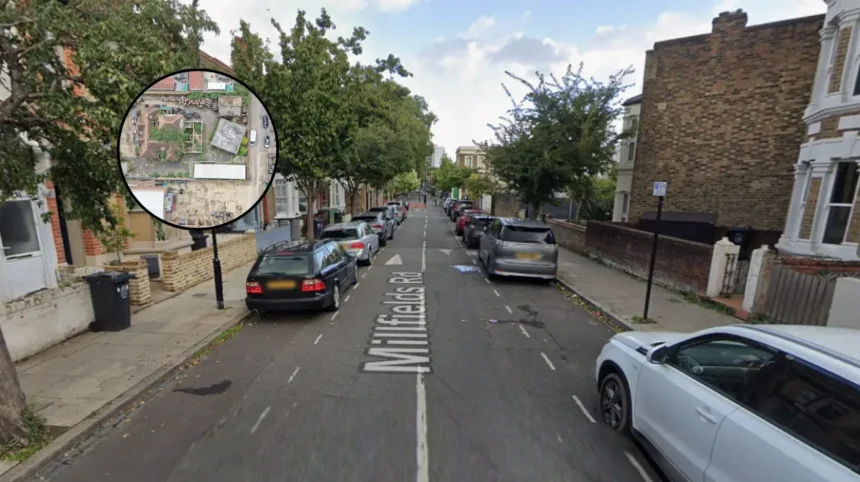
Architect Gordon and Gunton designed the civic infrastructure on the eastern boundary of Millfields Park.
As detailed by Hackney Citizen, the facility was part of a network established across London to combat infectious diseases prevalent at the time. It operated until 1984, when advances in public health reduced the need for such specialised sites.
The structure’s main building has stood empty since 2020, contributing to its current vulnerability. Historic England placed it on its Heritage at Risk register in 1995, recognising ongoing threats from disuse.
How Does the Building’s Condition Support Reuse?
The Victorian Society points out that the station’s firm walls and stable foundations make it more adaptable for contemporary purposes than many other listed buildings facing demolition risks.
Unlike fragile Victorian structures often lost during the 1980s, this site’s robust construction offers a viable path to preservation.
Griff Rhys Jones, president of the Victorian Society, stated that the facility was a “ground-breaking” project that
“set a national benchmark for public health infrastructure”
and deserves to stand as a “monument to Victorian foresight.”
A spokesperson for Hackney Council told Hackney Citizen: budget constraints make it difficult for the local authority to carry out “costly” restorations of heritage buildings, but it continues to maintain the Millfields Road depot and is
What Are the Other Buildings on the 2026 List?
The Victorian Society’s full Top 10 Endangered Buildings 2026 list includes the Hackney Borough Disinfecting Station at number one, followed by the Tees Transporter Bridge in Middlesbrough at number two, Barrow-in-Furness Working Men’s Club in Cumbria, and others such as St Michael’s RC Cemetery Chapel in Sheffield. Time Out London highlighted the list’s range from industrial bridges to secluded mausolea and country houses with painted interiors.
As reported by The Guardian, the annual round-up draws attention to sites vulnerable to decay or neglect, urging stakeholders to act. BBC News noted additional entries like a school and cemetery chapel among the Victorian-era structures at risk.
The charity has published similar lists annually since 2010, with archives available on its website, though the 2026 edition specifically elevates the Hackney site.
Why Is This Building Considered Exceptionally Rare?
Its rarity stems from being the last purpose-built municipal disinfecting station in England, with much of its architectural detailing intact. MyLondon described it as one of the most endangered listed sites in the country.
The Victorian Society urges finding a “viable new use” that keeps it in community hands without harming its historic character. This approach aligns with successful adaptations seen elsewhere, such as restored Victorian railway stations in Hackney, though no direct plans for Millfields Road have been confirmed.
Background of the Development
The Victorian Society’s Top 10 Endangered Buildings list originated in 2010 to highlight at-risk Victorian and Edwardian architecture in England and Wales. Each year, it selects structures based on threats from neglect, decay, or inappropriate development, drawing from nominations and expert assessments.
The Hackney disinfecting station’s inclusion follows its 1984 closure amid shifting public health practices and its 1995 listing on Historic England’s register. Local context includes Hackney’s history of infectious disease challenges, with 115 measles deaths in 1899 underscoring the station’s original purpose. Recent measles rises in the borough, including 133 confirmed cases in 2025, revive awareness of such infrastructure’s legacy.
Prediction: Impact on Hackney Residents and Heritage Enthusiasts
Repurposing the station could provide Hackney residents with a community space, such as a health education centre or cultural venue, generating local employment and tourism while reducing maintenance burdens on the council.
For heritage enthusiasts, successful adaptation might inspire similar projects, preserving East London’s Victorian legacy and educating on public health history amid ongoing disease concerns. Failure to act risks permanent loss, diminishing the borough’s historical assets and setting a precedent for other at-risk sites. Local stakeholders, including residents near Millfields Park, would face changes to the area’s character depending on the chosen use.