Key points
- West Ham United may be able to renegotiate their long‑term London Stadium lease after the departure of former vice‑chair Karren Brady, according to reports and sources close to the Mayor of London’s office.
- London Mayor Sadiq Khan is now open to fresh talks over the stadium arrangement, with suggestions that the two sides’ previously strained relationship was a key barrier to progress.
- A new deal could resemble long‑standing Premier League stadium models, giving West Ham greater operational control over the venue, including commercial revenue from non‑football events, sponsorships and potentially naming rights.
- The current arrangement limits the club’s ability to fully monetise the stadium, with separate operators and agreements governing catering, events and other income streams.
- Supporters and media commentators view any such shift as potentially transformative for West Ham’s finances and long‑term planning, but stress that no formal agreement has yet been reached.
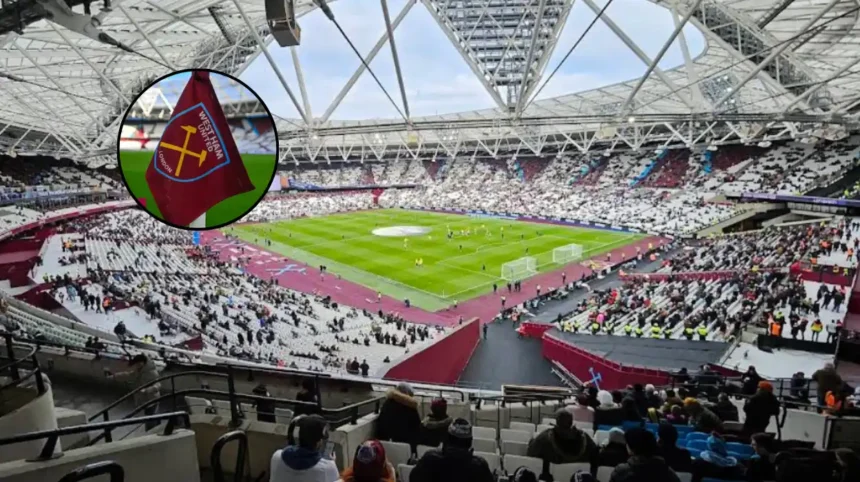
West Ham United (East London Times) April 29, 2026 now have a fresh opportunity to secure a new long‑term deal at the London Stadium, following the departure of former vice‑chair Karren Brady, Claret and Hugh has reported. Sean Whetstone of Claret and Hugh writes that it has long been an open secret in London political circles that Mayor Sadiq Khan and Baroness Brady “didn’t get on”, with one source describing the relationship as so strained that the Mayor “couldn’t stand to be in the same room as Brady”.
As reported by Sean Whetstone of Claret and Hugh, the removal of that personal friction has created what sources describe as a “clean slate” for negotiations, with intimations from the Mayor’s office that a different approach could now be taken. Videos and commentary pieces circulating since late April 2026, including one by presenter Martin61, likewise suggest that Khan’s reported willingness to reopen discussions marks a “huge twist” for the club, given how long‑standing the clashes over the stadium have been.
How could a new London Stadium lease reshape West Ham’s operations?
According to Claret and Hugh, the central idea under discussion is a new long‑term lease that would give West Ham
“full control of the former London Olympics centre piece”,
similar to the way Manchester City operate the Etihad Stadium. Under such a scenario, the club – and its owners, David Sullivan and Daniel Kretinsky – would not only oversee matchday operations but also capture revenue from catering, non‑football events, sponsorship, and any potential naming‑rights agreement.
As outlined by Claret and Hugh, the current model leaves key commercial streams outside the club’s direct control; for example, the catering contract is understood to be locked in for a 25‑year term, and wider stadium management is shared with other parties.
Commentators such as Claret and Hugh’s readers and contributors note that adjusting these arrangements could allow West Ham to invest more heavily into the stadium fabric, including bringing fans closer to the pitch and improving the matchday atmosphere, provided the rent and obligations remain within realistic financial limits.
What do West Ham’s current stadium arrangements look like?
West Ham moved into the former Olympic Stadium on a 99‑year lease beginning with the 2016–17 season, after a drawn‑out process that saw other clubs, including Tottenham Hotspur and Leyton Orient, drop earlier legal challenges to the use of the site.
Stadium‑guide outlets note that the original agreement involved an index‑linked annual rent starting at around £2.5 million, with the club not required to fund the major Olympic legacy conversion works, but agreeing to subsequent enhancements.
Later reports indicate that the stadium now has a capacity of 68,000, though it is licensed to use only 62,500 seats on matchdays; the club has reportedly planned relatively minor works to bring those extra seats into use, accepting an additional £200,000 per year in rent, bringing the total to roughly £3.7 million annually, subject to index‑linked increases. Supporters’ commentators such as those on Claret and Hugh’s platform argue that the present structure is “legally watertight” and has been a major achievement for the club, but also acknowledge that it constrains full commercial autonomy.
What do Hammers’ supporters make of the prospect of a new deal?
Fan‑owned outlets covering West Ham have split on the merits of revisiting the current lease. Some supporters writing on Claret and Hugh’s site warn that the existing contract is strong and question why the club would risk renegotiating for a deal that might simply push more financial risk onto the club, especially if City Hall demands higher rent or onerous conditions.
Others, however, suggest that if the new terms are structured sensibly, with manageable rental commitments and clear rights over commercial revenue, such a deal could become “a deal of the century” that finally realigns the stadium with West Ham’s long‑term ambitions.
Campaigners and advisory‑board members frequently recall the emotional transition from the Boleyn Ground at Upton Park, emphasising that the London Stadium has always felt like a compromise: a large, multi‑purpose venue with untapped potential, but without the same level of fan‑centred control and intimate atmosphere that characterised Upton Park. For those fans, the possibility of a new lease that allows the club to reshape the stadium experience – from seating configuration to matchday services – is seen as a chance to complete the post‑Upton Park transition.
Background of the London Stadium development
The London Stadium, originally the Olympic Stadium for the 2012 London Games, was intended as a legacy venue for athletics and wider community use. After the Olympics, authorities explored options for a permanent tenant, with West Ham eventually emerging as the only viable club partner after rival bidders and legal challenges fell away.
The agreed 99‑year lease allowed West Ham to occupy the stadium from 2016, with the club paying a relatively modest index‑linked rent while the public sector retained the bulk of the conversion costs. Over time, the stadium has hosted not only Premier League football but also major concerts, rugby fixtures and international events, creating a complex ecosystem of stakeholders beyond the club itself.
From the outset, the multi‑stakeholder arrangement has led to friction. The presence of UK Athletics and other event operators has required careful scheduling, while the club’s own prior rights over matchdays have occasionally clashed with broader city‑level ambitions, such as the bid to host the 2029 World Athletics Championships.
In that context, West Ham has repeatedly cited its contractual “priority clause” to protect home fixtures, even as City Hall and bid organisers press for flexibility.
Within that broader picture, the personal and political tensions between Karren Brady and Mayor Khan have been widely discussed among political observers and club‑focused commentators, who argue that the interplay between football‑club interests and municipal priorities has made any renegotiation particularly sensitive.
Prediction: what could a new London Stadium deal mean?
If London City Hall and West Ham United are able to agree on a long‑term lease that gives the club greater operational and commercial control, the main impact would likely be at the economic level: increased latitude to generate non‑football matchday revenue, attract sponsorship and potentially reconfigure the stadium layout to enhance atmosphere and fan comfort.
For the club, this could translate into a more stable revenue base and reduced dependence on transfer‑market performance, while allowing owners greater freedom to invest in infrastructure and facilities over time.