Key Points
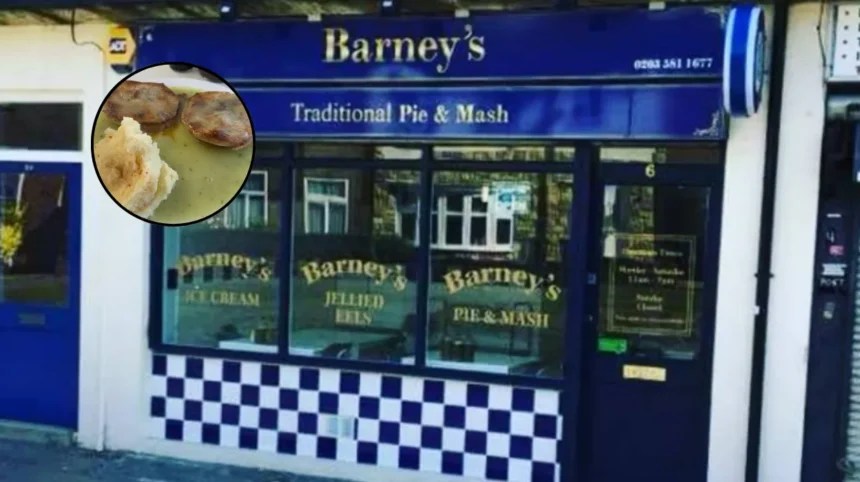
- Walthamstow’s Barney’s pie and mash shop in Garnett Way, opened in 2018 by owner Tommy Barnard, a former plumber, represents a new effort to preserve the traditional cockney staple amid closures of historic shops.
- Local residents Brenda Griffiths, 73, and Steve Windsor, 68, prefer Barney’s for its authentic experience, highlighting nostalgia for traditional eateries.
- Historic pie and mash shops like Manze’s in Deptford and F. Cooke in Harold Hill have closed in recent years due to rent increases and declining working-class identity in East London.
- Tommy Barnard states pie and mash shops can survive by relocating from high streets and markets to neighbourhood parades, as fewer people visit markets now.
- Walthamstow maintains a ‘half and half’ balance, allowing born-and-bred locals to enjoy new creative businesses while some miss the old character.
Walthamstow (East London Times) May 4, 2026 – Walthamstow, a trendy East London neighbourhood, is witnessing its cockney roots fade as young families fuel gentrification, with traditional pie and mash shops struggling to survive amid rising costs and changing demographics. Barney’s in Garnett Way stands as Walthamstow’s last remaining pie and mash shop, opened in 2018 by owner Tommy Barnard to fulfil his dream after working as a plumber.
Why is Walthamstow Losing its Cockney Identity?
As reported by the MyLondon News team, Brenda Griffiths, 73, told her partner Steve Windsor, 68, on his birthday:
“It’s his birthday today, I said I’d take him for an Italian and listed all these different restaurants but he said ‘no, I wanna go Barney’s’.”
The couple were enjoying their “cockney elevenses” at the shop, where bright sunlight illuminated its blue and white tiles amid quiet cutlery scrapes and the dishwasher hum.
Owner Tommy Barnard raised his arm to shield the sun and said:
“I’ll put that birthday cake on for him now, Brenda. It should be ready when you’re finished.”
Visitors entering Barney’s for the first time might be surprised it only opened in 2018, as Barnard took the plunge to run the business.
This comes as several historic pie and mash shops have shut. Manze’s in Deptford, a 100-year-old establishment, closed due to rent increases and the decline of East London’s working-class identity, according to MyLondon News. F. Cooke in Harold Hill faced a similar fate, as noted in multiple reports.
Tommy Barnard told MyLondon: “Who goes to markets now?”
He believes pie and mash shops will only survive if they leave high streets and market areas for neighbourhood parades.
What is Driving the Closure of Traditional Pie Shops?
Gentrification and economic pressures are key factors. In Islington, M Manze pie and mash shop closed after 106 years, with owner Tim Nicholls blaming increasing business rates, as reported by The London Economic. The shop traded until Christmas before the space was taken over.
AJ Goddard in Deptford shut after 128 years, with the owner attributing it to gentrification and newcomers preferring vegan, vegetarian, or fad diets, according to Reaction Life citing a Metro article.
Broader trends affect East London eateries. Leila’s Shop in Shoreditch battles a substantial rent increase from Tower Hamlets Council, with owner Leila McAlister warning it could force closure after over 20 years, per East London Times.
A 2018 survey found 90% of London restaurant operators believed rents would make businesses unmanageable, forcing 84% to close or move, as covered by The Drinks Business.
How Does Barney’s Differ from Historic Shops?
Unlike century-old establishments, Barney’s is a recent venture. Tommy Barnard, pictured with his son Tobias in social media posts by The Pie and Mash Club on Facebook, poses by prepped pies, showing commitment to the tradition.
The shop retains authentic features like blue and white tiles. TripAdvisor reviews praise it, with owner Tommy Barnard responding: “Thank you for leaving a review on Barney’s pie&mash it means a lot to us,” dated 26 Feb 2024.
In contrast, L. Manze in Walthamstow, operational since 1929, received Grade II listing in 2013 for its intact interior, as reported by The Guardian. However, Walthamstow Market traders struggle, with average house prices over half a million pounds, per Waltham Forest Echo.
Which Other Pie Shops Have Closed Recently?
Manze’s Deptford, a Grade-II listed shop unchanged since 1914, closed in March 2025 after 120 years, with owner George Mascall, a descendant of Italian migrants, stating after 45 years: “I’m looking forward to retiring I’m not gonna lie about that,” according to Southwark News and From the Murky Depths.
Nearby Goddard’s closed in 2018 after 120 years.
An Islington Manze’s relocated to Essex due to business rates, as BBC London’s Nicola Ford reported in 2017 on the end of an era.
Noted Eel & Pie House in East London persists as one of the oldest, run by the fifth generation using a 100-year-old recipe, per a YouTube video.
What Balance Exists in Walthamstow Today?
The neighbourhood maintains a ‘half and half’ balance, where those born and bred can enjoy new creative businesses, though some miss the old Walthamstow.
Waltham Forest Echo’s editor Victoria Munro noted in 2023 that articles pitching Leyton as trendy signal gentrification looming, with L. Manze reopening as an up-market chain.
Young families drive changes, bringing trendy spots but eroding cockney staples like pie and mash.
Ongoing pressures include business rates hikes. David Moore of Pied à Terre saw his bill rise from £43,120 to £56,572 annually, with rent from £48,000 to £135,000 since 1991, as Evening Standard reported in 2026.
Background of the Development
Pie and mash shops originated in the 19th century as affordable food for East London’s working class, often paired with jellied eels from the Thames. They symbolised cockney culture, with tiled interiors and marble tables preserved in survivors like Walthamstow’s L. Manze, listed in 2013. Closures accelerated post-2000s due to property booms, with around 30 shops left mainly in East and Southeast London. Barney’s 2018 opening by Tommy Barnard reflects adaptation attempts amid gentrification, which has raised house prices and rents, displacing traditional businesses.
Prediction
This development can affect long-time Walthamstow residents by reducing access to affordable, nostalgic eateries like pie and mash shops, potentially weakening community ties to cockney heritage as creative businesses and higher costs dominate. Newcomers and young families may gain from trendy options, but the ‘half and half’ balance could tip, leading to further loss of historic venues if economic pressures persist.