Tower Hamlets faces intense housing pressure as one of London’s most densely populated boroughs, managing a waiting list of approximately 24,500 households. The council’s Housing Strategy 2026–2036 aims to address this via a commitment to build, improve, and secure homes for local residents.
- What is the current status of the Tower Hamlets social housing waiting list?
- Understanding priority bands
- Factors influencing waiting times
- How does the 2026–2036 Housing Strategy impact new builds?
- Key delivery components
- Strategic site developments
- What is the historical context of social housing in Tower Hamlets?
- Past development milestones
- Stock management and distribution
- What mechanisms govern the allocation of new and existing social homes?
- The choice-based lettings process
- Ensuring equitable access
- How does the borough plan to ensure future housing quality and safety?
- Improving existing stock
- Safety and structural integrity
- What is the timeline for upcoming developments and regeneration?
- Near-term development schedule
- Managing the pipeline
What is the current status of the Tower Hamlets social housing waiting list?
The Tower Hamlets housing register currently contains approximately 24,500 households, reflecting extreme demand for limited social stock. Wait times vary significantly based on priority banding and property size, with high-need applicants often waiting years for suitable accommodation.
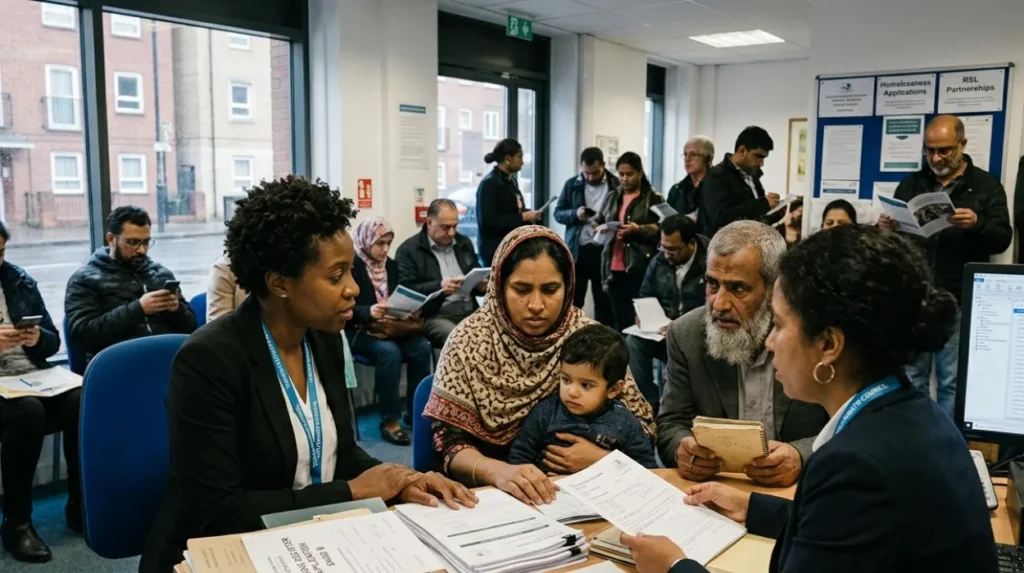
The housing register serves as the formal mechanism for allocating social housing, operated by the council in partnership with registered social landlords (RSLs). Eligibility depends on local connection criteria, residency requirements, and documented housing needs.
Understanding priority bands
Applicants are categorized into three distinct priority bands based on their specific circumstances. Band 1 represents the highest priority, reserved for emergency cases, medical or disability requirements, and urgent relocation needs. Band 2 includes households experiencing overcrowding or homelessness. Band 3 covers general housing applicants who do not meet the criteria for the higher bands.
Factors influencing waiting times
Waiting times are not uniform and depend heavily on the intersection of priority and unit size. Data from the 2023/2024 financial year indicates that applicants in Band 1 may wait between 2 and 11 years depending on the size of the property required. For example, a five-bedroom property for a Band 1 applicant has an average wait of 11 years, while a studio for the same band may take 2 years. The imbalance between supply and demand ensures that for many applicants, social housing remains inaccessible despite being on the register.
How does the 2026–2036 Housing Strategy impact new builds?
The Housing Strategy 2026–2036, approved in February 2026, initiates a comprehensive framework to accelerate housing delivery through three core commitments: more homes, better homes, and safer homes. This includes direct council-led acquisition and partnerships with private developers.
The 10-year plan targets the systemic issues causing the housing shortage in the borough. By streamlining planning and development, the council intends to maximize the utility of available land and increase the output of affordable, family-sized units.
Key delivery components
The strategy employs several mechanisms to boost housing supply. First, the Mayor’s Accelerated Housing Programme aims to deliver up to 3,332 new homes by 2036. Second, the council is actively purchasing former council properties and acquiring new stock to increase available inventory. Third, the local plan has been strengthened to mandate a higher percentage of affordable and family-sized units in new private developments.
Strategic site developments
Specific regeneration sites are central to this strategy. For instance, the Billingsgate Fish Market site has been identified for potential delivery of up to 10,000 new homes. Additionally, the council has finalized deals at sites like Heron Wharf to accelerate the delivery of 223 social rent homes, prioritizing family-sized accommodation to alleviate overcrowding.
What is the historical context of social housing in Tower Hamlets?
Tower Hamlets has consistently maintained one of the most active social housing construction programs in London, delivering more new units than any other borough for over a decade. This legacy informs current strategies to manage the extreme density of the local population.
The borough’s historical approach has focused on high-density urban regeneration to accommodate its growing population, which currently sits at approximately 17,257 residents per square kilometer.
Past development milestones
Between 2014 and 2018, council-led programs successfully delivered 1,000 units, including specific projects such as the 12 homes at Bradwell Street in 2016 and 40 units at Dame Colet House. More recently, the borough saw the completion of 219 homes at Heron Wharf and 33 units in Bethnal Green by 2025. These projects established the delivery models currently being scaled up under the 2026–2036 strategy.
Stock management and distribution
Tower Hamlets manages the fourth-highest number of social homes in London, totaling 44,953 properties. A significant portion of this stock—33,108 properties—is managed by private registered providers, which is the highest number managed by such entities in any London borough. This diverse management structure necessitates the close coordination outlined in the latest 10-year housing strategy to ensure consistent allocation policies across different providers.
What mechanisms govern the allocation of new and existing social homes?
Social housing allocation is managed via the housing register, where properties are advertised through a choice-based lettings (CBL) system. This system allows eligible applicants to express interest in specific available properties that match their assessed housing needs.
The process is strictly regulated to ensure transparency and priority for those with the most acute needs. The council and its partner landlords provide the framework for these listings.
The choice-based lettings process
Properties are advertised weekly through the dedicated housing register platform. Once a home is advertised, eligible applicants can “bid” or express interest if the property meets their size and eligibility criteria. Examples of listed properties include 3-bedroom flats in areas like Shadwell, offered at social rent rates determined by the council. Successful applicants are then selected based on their priority band and their time on the register.
Ensuring equitable access
To protect the integrity of the system, the council maintains strict rules regarding eligibility and documentation. Applicants must demonstrate a local connection, typically through residency or employment within the borough. The council also advises against any unofficial approaches or requests for payments to secure housing, emphasizing that the register is the only legitimate route for obtaining a tenancy. This structure is designed to mitigate the risks associated with the high demand for housing in London’s most densely populated borough.
How does the borough plan to ensure future housing quality and safety?
The “Safer Homes” commitment within the 2026–2036 Housing Strategy mandates rigorous maintenance, fire safety upgrades, and environmental efficiency improvements across the existing social housing stock. This strategy runs parallel to the construction of new high-quality housing.
The focus on safety and quality ensures that existing residents benefit from the housing strategy alongside those waiting for new builds. This is essential in a borough where high-density living makes fire safety and building integrity critical concerns.
Improving existing stock
The strategy focuses on upgrading older properties to meet modern energy efficiency standards, which helps lower utility costs for tenants while improving living conditions. This includes retrofitting insulation, upgrading heating systems, and conducting regular structural assessments. By investing in “better homes,” the council aims to reduce the rate of disrepair and improve the overall sustainability of the social housing portfolio.
Safety and structural integrity
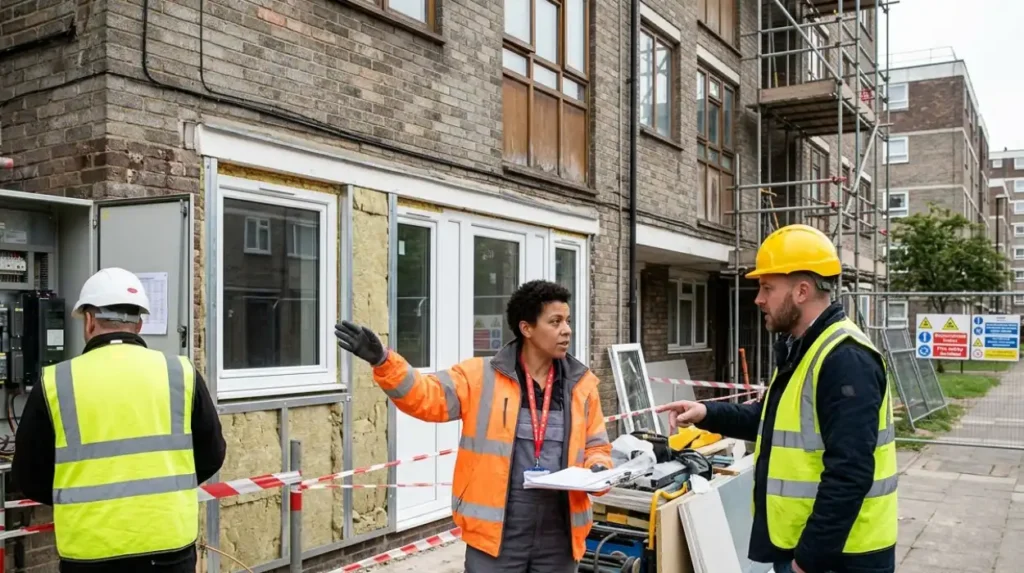
Fire safety is a primary component of the safer homes commitment. This involves installing advanced fire detection systems, replacing cladding where necessary, and ensuring all common areas meet current fire safety regulations. These measures are integrated into the broader 10-year plan to ensure that every social housing unit in Tower Hamlets provides a secure and healthy environment for residents, regardless of the building’s age.
What is the timeline for upcoming developments and regeneration?
Major development projects are scheduled throughout the 2026–2036 planning period, with specific milestones for site clearance, construction, and delivery. These timelines are designed to manage the flow of new housing into the market consistently.
Strategic planning ensures that large-scale regeneration projects proceed in phases, minimizing disruption while maximizing the number of completed units.
Near-term development schedule
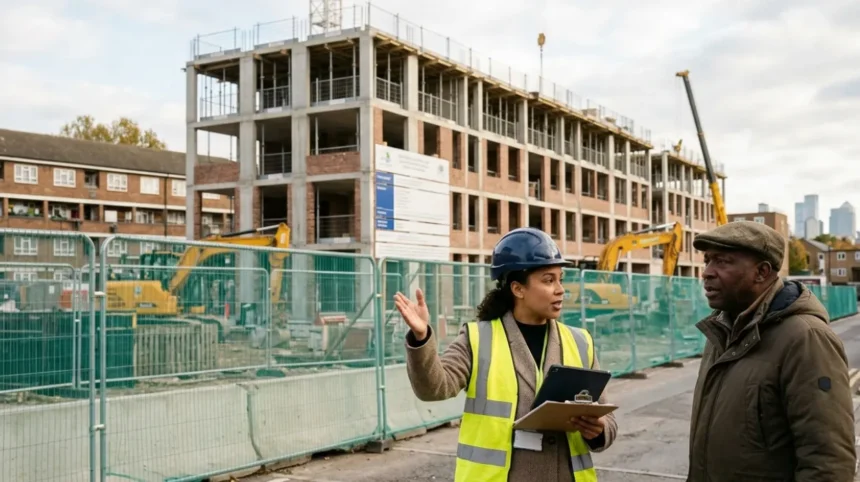
Several key projects are currently active or in the final stages of planning. Demolition at the Albert Jacob site began in April 2026, with construction of the new units slated to commence in December 2026. Additionally, the partnership at the 20-acre Heron Wharf regeneration site is seeing rapid progress, with phase two completion expected by 2029. Other projects, such as the initial phases of the Billingsgate Fish Market regeneration, are moving through the feasibility and planning stages to accommodate potential future housing stock.
Managing the pipeline
The council monitors the progress of over 1,000 units currently in the development pipeline to ensure they meet the criteria for social rent and family-sized accommodation. By maintaining a clear timeline for these projects, the council can provide more accurate information to residents about when new housing may become available for bidding through the register. This programmatic approach is central to the goal of delivering 3,332 new homes by 2036.
How long is the waiting list for social housing in Tower Hamlets?
The waiting list is extremely long, with around 24,500 households. Depending on your priority band and the size of the home you need, you could wait anywhere from a couple of years to over a decade.