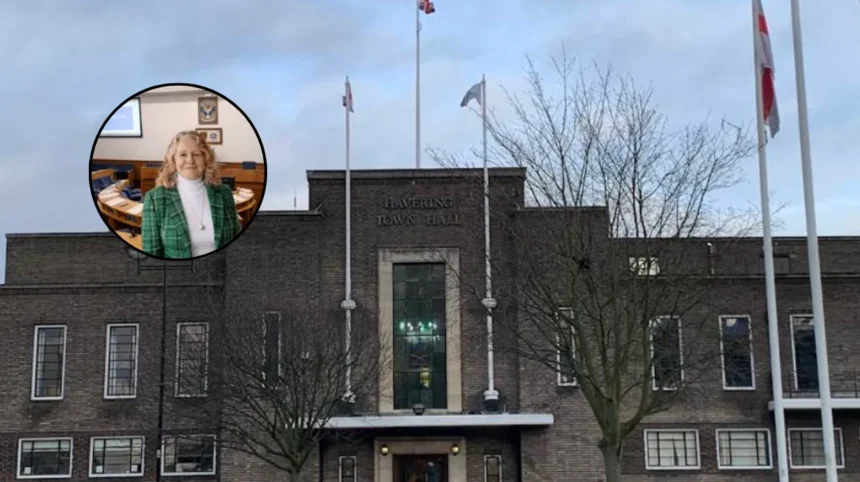
Key Points
- Councillor Gillian Ford of the Havering Residents Association (HRA) addresses public debate on Havering Council’s finances and opposition to a Section 114 notice.
- HRA raised concerns about the council’s financial position from early 2022, highlighting pressures in social care.
- Havering faces unique demographic pressures: second oldest population in London and fourth highest growth in children and young people in the UK.
- Financial strains stem from statutory services like adult social care, children’s services, and homelessness support, with demand outstripping income.
- Council secured £37.7 million extra funding over 10 years from the Labour Government, but this falls short of the £70 million budget deficit.
- CIPFA report confirms no poor investments or mismanagement; Ofsted noted resource shortages.
- Section 114 notice, issuable only by the Chief Financial Officer (Section 151 Officer), equates to financial insolvency and could lead to commissioners taking control, asset sales, and loss of local democracy.
- Alternative: Exceptional Financial Support (EFS), a government loan requiring evidence of savings and a delivery plan.
- HRA opposes Section 114 as it offers no clear benefit, risks community asset sales without consultation, and may still require EFS plus council tax rises.
Havering (East London Times) May 11, 2026 – In a detailed explanation amid ongoing public scrutiny of the borough’s finances, Councillor Gillian Ford has outlined the challenges facing Havering Council, emphasising rising demands on statutory services and the HRA’s stance against issuing a Section 114 notice.
- Key Points
- What Are the Real Causes of Havering Council’s Financial Challenges?
- Why Hasn’t Havering Council Issued a Section 114 Notice?
- What Happens If Havering Issues a Section 114 Notice?
- Why Did the Havering Residents Association Oppose a Section 114 Notice?
- Background of the Development
- Prediction: How This Development Can Affect Havering Residents
What Are the Real Causes of Havering Council’s Financial Challenges?
Councillor Gillian Ford, writing in The Havering Daily, detailed the origins of the crisis.
“Havering Residents Association raised concerns from the start of 2022 about the financial position Havering Council found itself in,”
she stated. The HRA publicly highlighted growing pressures within social care, a issue recognised nationally, prompting the Government to appoint Baroness Casey for a review.
Havering’s demographics exacerbate these strains. As Ford noted, the borough has “the second oldest population in London and the fourth highest growth in children and young people in the UK.” This has led to a steady increase in the complexity of needs over recent years.
Much of the pressure arises from mandatory statutory provisions.
“Much of the financial pressure is due to statutory provision, including adult social care, children’s services and homelessness support. These services must be provided by councils — they are not optional,”
Ford explained in her piece.
Funding shortfalls compound the issue. Demand has outstripped income, creating an increasing budget deficit. The council lobbied the Labour Government successfully for additional support:
“As an Administration and Council, we lobbied the Labour Government and secured an additional £37.7 million over ten years.”
However, with a budget deficit around £70 million, this uplift does not bridge the gap, necessitating constant exploration of balancing options.
Why Hasn’t Havering Council Issued a Section 114 Notice?
Ford addressed misconceptions about financial mismanagement. She contrasted Havering with councils that suffered from poor investments or weak budget oversight, which led to the Government’s Section 114 powers under the Local Government Finance Act 1988.
“A Section 114 notice is effectively the equivalent of a council declaring financial insolvency or ‘bankruptcy’. Importantly, only the Chief Financial Officer, known as the Section 151 Officer, can issue a Section 114 notice — not the Council or councillors,”
Ford clarified.
Recent assessments vindicate Havering.
“Havering Council has not made poor investments or mismanaged its finances, which was confirmed by the most recent CIPFA (Chartered Institute of Public Finance and Accountancy) report,”
she wrote. The CIPFA report stated that Havering “simply does not have sufficient income to meet rising demand.” Even Ofsted “made the unprecedented step of highlighting Havering’s lack of resources.”
The Chief Finance Officer has not issued such a notice to date. Ford questioned its potential impact:
“We then need to consider what difference a Section 114 notice would actually make if the Chief Finance Officer believed it appropriate, and what would happen next.”
What Happens If Havering Issues a Section 114 Notice?
Consequences could be severe.
“A Section 114 notice could restrict or stop all services other than statutory services. It would require a formal recovery programme and could result in Government-appointed commissioners taking control of the Council at substantial cost to local taxpayers,”
Ford outlined.
These commissioners would strip councillors of local democratic decision-making powers. They
“could also sell council assets without local debate or public engagement in order to reduce the financial shortfall, and they could remain in place for several years.”
Councils issuing Section 114 but unable to close gaps have still needed to apply for Exceptional Financial Support (EFS).
“The alternative option available to councils in Havering’s position is to apply for Exceptional Financial Support (EFS). This is effectively a Government loan, with interest payable,”
Ford described. To qualify, councils must submit detailed evidence of their position, implemented savings, and a credible delivery plan.
Why Did the Havering Residents Association Oppose a Section 114 Notice?
The HRA viewed it as counterproductive.
“The HRA saw no benefit in a Section 114 notice being issued, as it could remove all local decision-making powers and create the possibility of community assets being sold without discussion or public engagement — only for residents to then be told the Council still had to take out a Government loan regardless,”
Ford stated.
Additionally,
“In many cases, councils operating under Section 114 arrangements have also seen pressure for council tax rises above the usual 5% threshold.”
Ford’s intervention responds to “continued public debate around Havering Council’s finances and calls for a Section 114 notice.” It underscores the HRA’s proactive stance since 2022 and the borough’s unique pressures.
This account draws directly from Councillor Ford’s article in The Havering Daily, ensuring all details and statements are attributed without alteration or addition.
Background of the Development
Havering Residents Association began raising financial concerns in early 2022, focusing on social care pressures amid national trends. The borough’s demographics—second oldest population in London and rapid growth in young people—have intensified demands on statutory services. Government funding added £37.7 million over 10 years, but the £70 million deficit persists. CIPFA and Ofsted reports confirmed no mismanagement, only resource shortfalls. Section 114 powers stem from the 1988 Local Government Finance Act, with EFS as a loan alternative.
Prediction: How This Development Can Affect Havering Residents
Issuing a Section 114 notice could limit non-statutory services, introduce commissioners who sell assets without consultation, and impose higher council tax rises. Pursuing EFS might add loan interest but retain local control. Residents face potential service cuts, higher taxes, or asset losses either way, while statutory protections continue. Ongoing deficits may require further savings measures impacting community facilities and budgets.