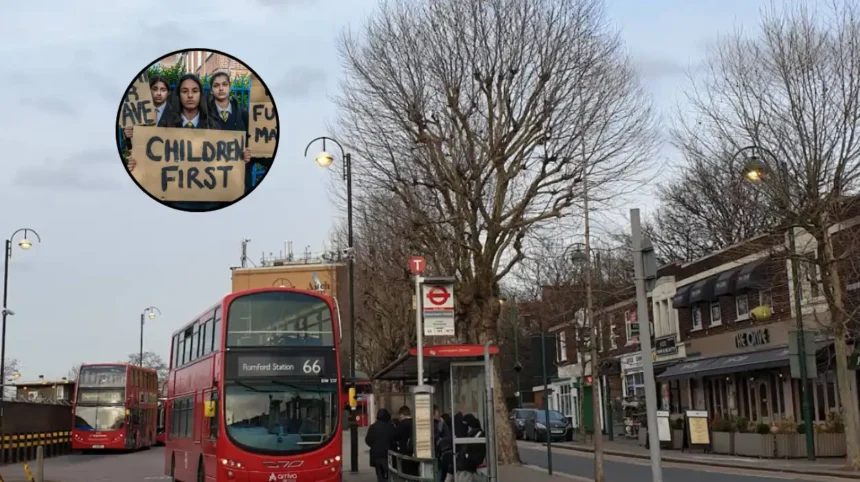
Key Points
- Pupils and parents at Connaught School for Girls in Leytonstone, east London, have staged counter-protests against striking teachers during the GCSE and mock exam period.
- The action has been linked to a dispute over workload, restructuring, planned redundancies, and changes to pay and conditions.
- Reports say the strike began on April 21 and continued for around three weeks before ending on May 8.
- The protests have focused on calls for teaching to resume during an important exam period, with signs and chants urging staff to return to classrooms.
- Parent frustration has grown over repeated disruption to schooling, with some reports describing this as a recurring strike dispute at the school.
Leytonstone (East London Times) May 13, 2026 – Pupils and parents at Connaught School for Girls have mounted counter-demonstrations against striking teachers, amid a dispute that has disrupted lessons during exam season.
Why are pupils and parents protesting?
As reported by the Express, the strike has been driven by concerns raised by teachers over “unjust management practices,” a “heightened workload,” and fears of being singled out for possible lay-offs. Another report said the dispute also involved planned redundancies, the downgrading of posts, cuts to pay and conditions, and workload pressures linked to restructuring.
Parents and pupils, however, have focused on the timing of the strike rather than the internal employment dispute.
The reports say the walkouts coincided with GCSE and mock exams, which intensified frustration among families who felt pupils were losing teaching time when they needed it most.
How long has the strike lasted?
According to the Express report, the teachers’ strike began on April 21 and lasted for around three weeks, ending on May 8.
The same report said the industrial action overlapped with GCSE and mock exam schedules, which is why the protests from pupils and parents gained attention.
A separate social media post also described the action as the school’s “third week” of strikes and claimed it had been a recurring issue in recent years.
That account is not an official source, but it matches the wider reports that disruption had become a major concern for families.
Explore More Local East London News
East London Labour MPs Urge Starmer Resignation After Losses, West Ham 2026
Gort Scott, Maccreanor OK for Pudding Mill Lane – 2026
What have pupils and parents been saying?
The reports say some students and parents began holding daily counter-protests outside the school gates to press for lessons to resume.
One headline captured the central demand as “teach us or quit,” reflecting the anger over repeated interruptions to study time.
Another report said pupils staged a protest urging striking teachers to return to classrooms during GCSE exam season.
The Telegraph said about 130 pupils and parents were involved in the counter-protests at Connaught School for Girls in Leytonstone.
What is the teachers’ side of the dispute?
The teachers’ position, as reported, centres on workplace concerns rather than pupil issues. The Express said staff were striking over management practices, workload and concerns about possible job losses, while the Waltham Forest Echo reported a separate but related dispute at other schools over performance-related pay.
This means the dispute sits in a familiar pattern seen in school industrial action: staff focus on contracts, workload and restructuring, while families focus on the impact on children’s education.
The reporting available here does not show the dispute being fully resolved through a public agreement, although one source said the strikes ended on May 8.
Why has the story attracted attention?
The story has drawn attention because it places pupils, rather than just parents or outside campaigners, at the centre of the response to industrial action.
The image of children protesting against adults at the gates of their own school has made the dispute stand out beyond a routine strike story.
It has also become a wider debate about education, workload and accountability. The reports mention the emotional language used by frustrated families, but the core issue remains straightforward: lessons were interrupted during the period when GCSE candidates and younger pupils needed continuity most.
What is the wider school context?
A related report from the Waltham Forest Echo showed that school strike disputes in the area have been linked to concerns over pay structures and school management.
That piece said teachers at Leytonstone and Willowfield schools voted to suspend strike action after reaching agreement with schools and the council over pay concerns.
That background suggests Connaught School for Girls is part of a broader local pattern of tension between school staff and management over employment terms.
The available reports do not provide a full statement from the school trust in the material gathered here, so the precise status of any settlement should be treated carefully.
Background of the development
Connaught School for Girls in Leytonstone has previously featured in reporting about teacher industrial disputes across Waltham Forest, where staff concerns have included pay, workload and management decisions.
The current protests emerged after teachers walked out during exam season, prompting pupils and parents to respond directly at the school gates.
The reporting also fits a wider pattern seen in school disputes, where parent groups may support teacher concerns in principle but still oppose strike timing if it affects exams or revision. In this case, the central tension is between staff grievances over working conditions and families’ insistence that children’s education should not be interrupted at a critical point.
Prediction
For pupils, especially those taking GCSEs, the main effect is likely to be anxiety about lost teaching time and pressure to catch up after disruption. For parents, this kind of dispute may increase demands for clearer contingency plans from school leaders and quicker resolution of industrial action.