Key Points
- The Waltham Forest Green Party has proposed a unique “rotating” leadership model to govern the council.
- Councillor Paul Perkins and Councillor Eva Tabbasam were selected as joint leaders via a secret ballot.
- Due to constitutional requirements for a single leader, the pair will swap roles annually.
- Cllr Perkins is slated to serve as Leader until May 2027, with Cllr Tabbasam serving as Deputy, before swapping for the 2027/28 term.
- The arrangement is subject to a formal vote at the full council meeting on Thursday, 21st May.
- The Greens secured a majority with 31 out of 60 seats, ending 16 years of Labour control.
- The leadership duo brings backgrounds in charity CEO leadership and international policy advocacy.
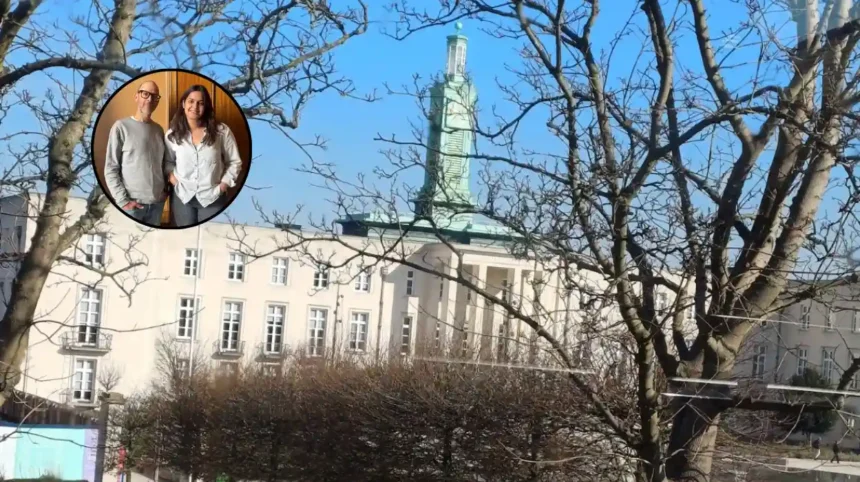
Waltham Forest (East London Times) May 15, 2026 — Following a seismic shift in the local political landscape, the newly elected Green Party administration at Waltham Forest Town Hall has officially unveiled a “rotating” leadership structure designed to challenge traditional models of local governance. As reported by the Waltham Forest Echo, the 31-strong Green group of councillors convened on Thursday, 14th May, to select Paul Perkins and Eva Tabbasam as joint leaders through a secret ballot process.
- Key Points
- Who Are the New Leaders Appointed to Steer Waltham Forest?
- Is a Rotating Leadership Model Common in UK Local Government?
- What Happened to the Previous Labour Administration?
- Background of the Waltham Forest Political Shift
- Prediction: How Will This Rotating Leadership Affect Residents and Stakeholders?
The move comes as the party seeks to reconcile its internal ideology of horizontal power-sharing with the rigid legal requirements of the council’s constitution. Under current local government law, the council must appoint a single individual to the office of Leader. To navigate this, the Green group has determined that Cllr Perkins and Cllr Tabbasam will alternate the top position on a yearly basis.
Who Are the New Leaders Appointed to Steer Waltham Forest?
The two figures chosen to lead this new era bring distinct professional backgrounds to the Town Hall. Councillor Eva Tabbasam, who was elected to represent the Cann Hall ward with 1,970 votes, currently leads a national network of 17 major organisations, including ActionAid, Oxfam, and Amnesty International UK.
Her professional focus involves co-ordinating policy advocacy and systems change with the national government.
In a statement released by the Waltham Forest Greens, Cllr Tabbasam is described as possessing
“lived experience of the inequalities that shape life in Waltham Forest.”
Regarding her new role, Cllr Tabbasam stated:
“Leadership must be collaborative and rooted in the lived realities of communities. I want to build a confident, values-led Green group that is genuinely ambitious for Waltham Forest.”
Her counterpart, Councillor Paul Perkins, secured his seat in the Forest ward with 2,332 votes. Cllr Perkins previously served as the co-chair of the Waltham Forest Green Party and has extensive experience as a youth and community worker and a charity CEO.
The Green Party highlighted his “senior leadership experience across local government and the voluntary sector” as a key asset for the incoming administration.
Commenting on the transition of power, Cllr Perkins noted:
“Residents have chosen hope over complacency, and a fresh start. We now have a responsibility to rebuild trust, stabilise the council and show what a genuinely community-led Green administration can achieve.”
Is a Rotating Leadership Model Common in UK Local Government?
The Greens have acknowledged that this dual-leadership approach is “uncommon in local government.” According to reports from the Waltham Forest Echo, the party views this as a practical application of their core tenets. In an official statement, the Waltham Forest Greens explained that:
“The decision reflects the Green Party’s commitment to shared, democratic leadership. This approach… puts into practice the Green Party’s belief that leadership should be shared, accountable, and not concentrated in a single person.”
Under the proposed schedule, Cllr Perkins will hold the official title of Council Leader until May 2027, during which time Cllr Tabbasam will serve as Deputy Leader.
In May 2027, the roles will reverse for the 2027/28 municipal year. This arrangement is not yet set in stone; it remains subject to a majority vote by the full assembly of councillors during the upcoming meeting scheduled for Thursday, 21st May.
What Happened to the Previous Labour Administration?
The rise of the Green Party in Waltham Forest represents one of the most significant upsets in recent London political history. Before the election on 7th May 2026, the Green Party did not hold a single seat on the council. In a swift reversal of fortune, they captured 31 of the 60 available seats, achieving an outright majority.
This victory ended 16 years of Labour dominance. The Labour Party had held sole power at the Town Hall since 2010. Under the leadership of Grace Williams, who had been at the helm since September 2021, the Labour vote plummeted.
The party lost 32 of the seats they had secured in the 2022 local elections, leaving them with just 15 councillors—a narrow one-seat lead over the Conservatives, who currently hold 14 seats.
Explore More Waltham Forest News
Green Party Wins Waltham Forest Council Control — Waltham Forest 2026
Green Party threatens Labour control in Waltham Forest 2026
Background of the Waltham Forest Political Shift
The transition to a Green-led council in Waltham Forest is the culmination of shifting voter sentiment regarding local urban development, environmental policies, and a perceived “complacency” within the long-standing Labour cabinet.
Historically, Waltham Forest was a reliable “Red Wall” borough within London. However, friction points such as the expansion of Low Traffic Neighbourhoods (LTNs), concerns over high-rise housing developments, and the cost-of-living crisis created a vacuum that the Green Party successfully filled with a hyper-localised campaign.
The Greens’ victory here mirrors a broader national trend where the party has moved from being a “protest vote” to a viable party of local government, following similar successes in councils like Mid Suffolk and Bristol. The introduction of the “rotating” leadership is a signature Green Party trait, often seen in their national leadership (which frequently uses a co-leader model), but its implementation at a borough level marks a significant experiment in administrative stability.
Prediction: How Will This Rotating Leadership Affect Residents and Stakeholders?
The success or failure of this “rotating” model will likely determine the political stability of Waltham Forest for the next four years. For residents, this model may provide a more diverse range of perspectives at the executive level, as both Perkins and Tabbasam bring different expertise—community grassroots and international policy, respectively.
However, there are potential risks for council staff and external partners. The annual change in the top office could lead to a “lame duck” period every spring as the transition occurs, potentially slowing down long-term infrastructure projects or contract negotiations. If the two leaders maintain a unified policy front, the transition may be seamless; but if internal ideological rifts emerge within the Green group, the rotation could lead to inconsistent governance.