Key Points
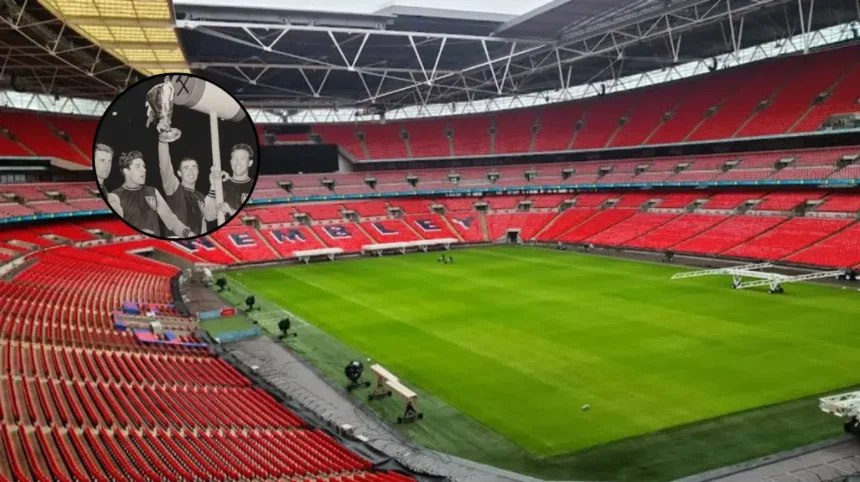
- West Ham United won the European Cup Winners’ Cup on this day in 1965 at Wembley Stadium.
- The final ended with a 2-0 victory over 1860 Munich, with both goals scored by Alan Sealey.
- Ron Greenwood said, “The match exceeded my wildest hopes,” after the win.
- West Ham had reached the final after beating La Gantoise, Sparta Prague, Lausanne and Real Zaragoza.
- The match stayed goalless until 20 minutes from time, when Ronnie Boyce’s pass set up Sealey’s first goal.
- Sealey scored again two minutes later after Bobby Moore’s cross caused confusion in the Munich defence.
- The victory was described as West Ham’s greatest-ever win and put the club firmly on the European stage.
West Ham United’s (East London Times) 19, May 2026, triumph came after a tight, goalless contest that opened up only in the final 20 minutes, according to the match account. As reported by the match report, Ronnie Boyce split the German defence with a precise pass that allowed Alan Sealey to score from a tight angle. Two minutes later, Sealey struck again when Bobby Moore’s cross was not dealt with by goalkeeper Petar Radenkovic. The two late goals settled the final and secured the trophy for West Ham.
Why was the victory so significant?
The win mattered because it came at Wembley in front of 100,000 spectators and against a strong European opponent, giving West Ham major continental recognition.
The article says the team had already beaten La Gantoise, Sparta Prague, Lausanne and Real Zaragoza on the way to the final, which underlined the scale of their run. Ron Greenwood’s reaction reflected that importance, with the manager saying the match had “exceeded my wildest hopes”.
The result also added to a remarkable period for the club, coming only 12 months after their maiden FA Cup triumph over Preston North End.
Who were the key figures?
Alan Sealey was the decisive figure on the night, scoring both goals despite having only three goals all season before the final.
Ronnie Boyce provided the opening moment of quality with the pass that unlocked the defence for the first goal. Bobby Moore, the captain, played a role in the second goal through his cross and later lifted the trophy for the club.
The account also highlights Ron Greenwood as the manager who guided West Ham through the competition to the final.
What does this moment mean in club history?
The match is remembered as West Ham’s greatest-ever victory because it gave the club its first major European trophy. It also marked the moment when West Ham “put themselves on the footballing map in front of a watching Europe,” as the story describes it.
The win strengthened the reputation of a team that had already begun to build momentum in domestic and European football. For supporters, it became a defining reference point in the club’s history.
Background of the development
West Ham’s European Cup Winners’ Cup campaign built steadily before the final, with wins over La Gantoise, Sparta Prague, Lausanne and Real Zaragoza. That route made the Wembley final the peak of a successful run rather than a standalone upset.
The final itself came a year after the club’s first FA Cup success, so the squad was already part of a growing period of achievement under Greenwood. The report also notes that Bobby Moore, who was skipper that day, would later lead England and West Ham to even greater success.
Prediction
For West Ham supporters, this kind of historic victory continues to shape how the club is remembered and discussed, especially around anniversaries and club heritage. It reinforces the value of cup runs and landmark European nights as part of a club’s identity, which can influence how fans, media and younger audiences view West Ham’s past. Moments like this also tend to remain central to matchday storytelling, anniversary coverage and club documentaries.