Key Points
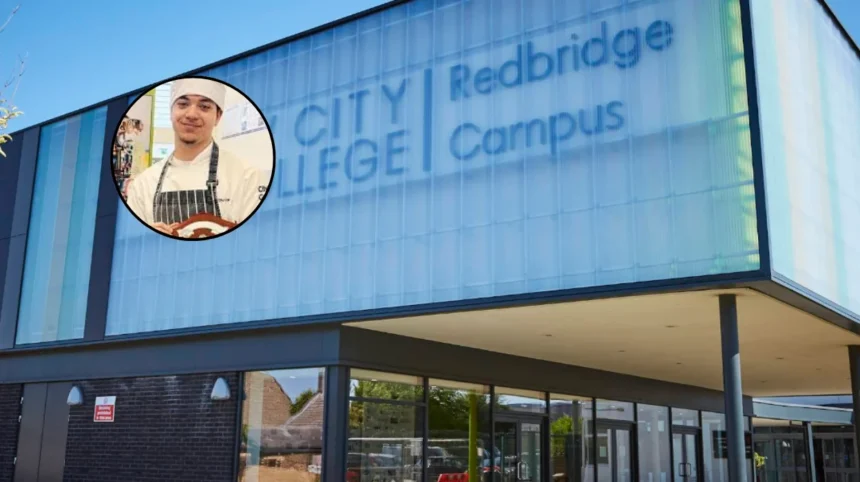
- Casian Burdusel, a 17‑year‑old student from Romford, is studying for a diploma in culinary skills at New City College’s Redbridge campus in Chadwell Heath.
- He finished second in the Rotary Young Chef of the Year 2026 competition at the national final in Northwich, Cheshire.
- Following that, he went on to win third place at the international CombiGuru final in Padova, Italy.
- At the CombiGuru final, he was one of 11 top‑performing UK students and had three hours to cook dishes using secret ingredients revealed on the day: peas and sage.
- His menu included a Mediterranean chicken dish and a French pastry dessert, earning him a bronze medal from the judging panel at The International School of Italian Cuisine.
- At the Rotary National final, he prepared stuffed red mullet “canoe” and a dark chocolate Chantilly mousse, which helped him secure second place among roughly 6,000 young entrants nationwide.
- Casian trains at Rouge Restaurant on campus and is now preparing for the WorldSkills UK regional heats in June, aiming for another podium finish and a place in the national stage.
- Daniel Campos, senior curriculum manager for hospitality and catering at NCC Redbridge, said that such competitions expose students to high‑level standards, pressure and professional expectations beyond the classroom.
Romford (East London Times) May 20, 2026A 17‑year‑old from Romford has cooked his way to the top of national and international student‑chef rankings, clinching second place in the Rotary Young Chef of the Year 2026 and later taking third at the CombiGuru final in Padova, Italy. As reported by the college and competition organisers, Casian Burdusel, a diploma‑level culinary‑skills student at New City College’s Redbridge campus in Chadwell Heath, has drawn attention for his precision, creativity and composure under time‑sensitive conditions. His dual‑podium run has been framed by staff as evidence of how structured training and competitive experience can accelerate a young chef’s development.
- Key Points
- How did Casian perform in the Rotary Young Chef of the Year 2026?
- What happened at the CombiGuru international final in Padova?
- How has training at Rouge Restaurant influenced his performance?
- What does this streak mean for vocational catering education in the area?
- Background: How did this competition pathway develop?
- Prediction: How might this development affect young caterers and vocational learners?
How did Casian perform in the Rotary Young Chef of the Year 2026?
At the Rotary National Young Chef of the Year final in Northwich, Cheshire, Casian contended against around 6,000 young entrants from across the UK. In the national final, he presented a composed menu that combined seafood and pastry, featuring stuffed red mullet “canoe” and a dark chocolate Chantilly mousse. Judges placed him second, highlighting the technical control and balance of flavours in his dishes. Daniel Campos, senior curriculum manager for hospitality and catering at NCC Redbridge, said, as reported by the college,
“These competitions are so important for our students… Competing nationally and internationally exposes them to high‑level standards, pressure, and professional expectations beyond the classroom.”
He added that New City College’s backing of such events through time and resources has been critical in helping students reach this level.
What happened at the CombiGuru international final in Padova?
From the Rotary final, Casian earned a place among 11 top‑performing UK students invited to the international CombiGuru final in Padova, Italy. At that event, finalists were given three hours to prepare two dishes using secret ingredients revealed on the day: peas and sage.
As relayed by the college’s coverage, Casian delivered a Mediterranean‑style chicken dish and a French‑pastry dessert, which the panel at The International School of Italian Cuisine judged “impressive” enough to warrant a bronze medal.
Organisers described the constraints—short time window, unfamiliar ingredients and an international judging table—as a rigorous test of kitchen discipline and adaptability. Casian’s success, therefore, was noted as a demonstration of how structured training at Rouge Restaurant on campus had helped him thrive under those conditions.
How has training at Rouge Restaurant influenced his performance?
Casian trains at Rouge Restaurant, the on‑campus training kitchen at NCC Redbridge, where students experience a live‑service environment that mirrors a professional kitchen.
College representatives have indicated that the restaurant exposes learners to mise en place routines, timing, hygiene and customer‑focused plating, all of which are directly transferable to staged competitions. Casian himself has been quoted as saying that the process helped him build confidence:
“It was an amazing experience. Getting to the national final and finishing second has given me a lot of confidence. It has made me want to keep pushing myself and aim for a career in professional kitchens after college.”
His current focus is on preparing for the WorldSkills UK regional heats in June, with the aim of securing another podium finish and a place in the national championship. That next step would bring his work in front of a broader UK‑level industry panel and could further open doors to apprenticeships or structured kitchen careers.
Explore More Romford News
Rush Green Primary School Tes Awards Nominee Romford 2026
Romford: Eurobeam LTD £8K Waste Fine (2026)
What does this streak mean for vocational catering education in the area?
Staff at NCC Redbridge have used Casian’s results to underline the value of embedding competition‑style challenges into the curriculum.
Daniel Campos, speaking through the college’s communications, emphasised that national and international competitions are not just “showcases” but training tools that simulate real‑world pressure, time limits and high‑level expectations.
By investing in coaching, equipment and competition fees, the college seeks to give students a platform beyond the classroom, where they can test their progress against peers and receive feedback from external judges. For other students in the hospitality and catering pathway, Casian’s trajectory provides a concrete example of how sustained practice, competition entries and industry‑linked training can coalesce into a nationally recognised profile.
Background: How did this competition pathway develop?
The Rotary Young Chef of the Year is an annual UK‑wide competition for students aged 16–25 studying in hospitality or catering.
It is organised with the support of Rotary Clubs and industry partners, and is designed to promote culinary excellence, mentorship and career progression into professional kitchens. First rounds are run locally or regionally, with successful candidates progressing to a national final, which in 2026 was held in Northwich, Cheshire.
The CombiGuru competition, run in partnership with appliance manufacturer Rational and hosted at The International School of Italian Cuisine in Padova, targets vocational catering students and aims to test their ability to create high‑quality dishes using combi‑oven technology and short preparation windows.
New City College’s Redbridge campus has increasingly integrated such competitions into its hospitality and catering offer, positioning them as milestones on a student’s progression rather than one‑off events.
The college’s partnership with Rouge Restaurant, its on‑site training restaurant, allows students to rehearse competition‑style timed services, refine menus and receive feedback under supervision.
In recent years, similar events—Rotary Young Chef, WorldSkills UK trials and other industry‑linked contests—have been used by colleges and colleges‑in‑further‑education across England to validate training standards and showcase student talent to employers.
Prediction: How might this development affect young caterers and vocational learners?
For Romford and wider East London students considering vocational paths in hospitality and catering, Casian’s success offers a clear, locally‑grounded example of how college‑based training can translate into national and international recognition. His trajectory suggests that learners who combine structured coursework, regular practice in a live‑kitchen environment and entry into staged competitions can build a competitive profile that stands out to employers and apprenticeship providers.
For colleges and training providers, this pattern reinforces the case for investing in competition‑linked training, as medals and podium finishes can act as visible markers of course quality and student capability. For employers in the hospitality sector, a pipeline of competition‑tested students may reduce onboarding time and increase confidence in recruits’ technical readiness, particularly in high‑pressure kitchen roles. Overall, Casian’s run in 2026 is likely to be cited by education and industry stakeholders as evidence that well‑supported vocational catering routes can produce job‑ready talent with both practical skill and contest‑proven resilience.