Key Points
- The 130-year-old Mary Ward Centre is expected to merge with Newham College following severe financial instability.
- Former CEO and “Warden” Therese Reinheimer-Jones has left the organisation after approximately two years in the role.
- The college is currently under Department for Education (DfE) intervention after receiving an emergency funding facility.
- Financial pressures are attributed to a costly campus relocation to Stratford, rising operational costs, and depleted reserves.
- Deputy CEO Sue Craggs has taken interim leadership of the institution during the merger negotiations.
Newham (East London Times) May 22, 2026 – An historic adult learning institution in East London is moving toward a formal merger with Newham College in a bid to secure its future following a period of deep financial turmoil. As reported by Josh Mellor of FE Week, the Mary Ward Centre—a 130-year-old pillar of the community also known as the Mary Ward Settlement—is currently navigating government intervention after struggling with the costs associated with its recent relocation to Stratford. The development comes as the college’s principal and Chief Executive, Therese Reinheimer-Jones, “quietly” vacated her position, leaving the institution under the interim stewardship of Deputy CEO Sue Craggs.
- Key Points
- What caused the financial intervention at Mary Ward Centre?
- Why did the Warden Therese Reinheimer-Jones leave the college?
- How did the Stratford campus relocation impact the budget?
- What are the conditions of the government’s “Notice to Improve”?
- How will the merger with Newham College function?
- Background of the particular development
- Prediction: How this development will affect the local community
What caused the financial intervention at Mary Ward Centre?
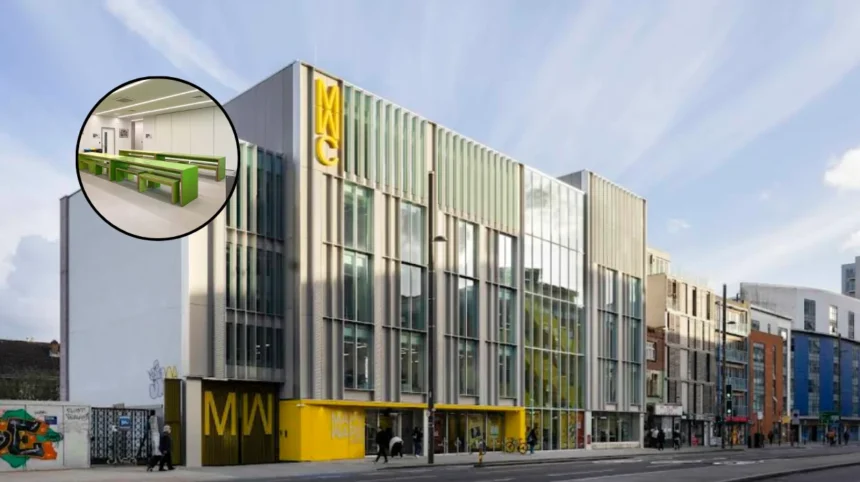
The institution’s financial health deteriorated significantly following its move from its long-term home in Holborn to a new £14 million bespoke campus at Queensway House in Stratford. While the move was intended to modernise the college’s facilities, it coincided with a period of intense economic pressure.
According to official documents from the Department for Education (DfE), a “Financial Notice to Improve” was issued to the Mary Ward Settlement on 1 May 2025. The notice detailed “serious cashflow pressures” that necessitated the provision of an Emergency Funding facility from the government.
The DfE stated that the intervention was triggered in accordance with published policy, which dictates that such measures are usually taken when emergency funding is provided to prevent a total collapse of services.
Why did the Warden Therese Reinheimer-Jones leave the college?
The departure of Therese Reinheimer-Jones, who held the traditional title of “Warden,” has been described as a quiet exit amidst the escalating merger talks. Reinheimer-Jones joined the Mary Ward Settlement in March 2023, succeeding Suzanna Jackson.
Her tenure was marked by the final stages of the Stratford relocation, which suffered from multiple construction delays.
As reported by FE Week, the leadership transition occurs at a critical juncture for the college. With the principal gone, Sue Craggs is now leading the discussions with Newham College. The DfE’s intervention notice explicitly requires the college to work with the Further Education (FE) Commissioner’s team to
“undertake an independent assessment of the college’s capability and capacity to make the required changes.”
How did the Stratford campus relocation impact the budget?
The transition to the Stratford site was meant to be a landmark achievement for the 130-year-old charity, but the timing and execution led to a “perfect storm” of financial variables. In the Mary Ward Centre’s Report and Financial Statements for the year ended 31 July 2023, the Board of Trustees noted that construction work did not meet revised timetables.
“The completion date was pushed back beyond July 2023 and the Centre eventually took occupation in September… construction was not substantially complete until September 2023,” the report stated.
The delays were attributed to:
- Slow planning decisions from local authorities.
- High inflation within the construction sector.
- Uncertainty over final project funding.
- Reduced tuition fee income during the transition period.
The fallout from these delays, combined with depleted reserves and rising utility costs at the new site, forced the Board to seek a “structural solution”—a term often used in the sector to describe a merger with a larger, more stable partner.
Explore More Newham News
Billions Flow Through Canary Wharf. A Mile Away, Newham is Drowning
Gort Scott, Maccreanor OK for Pudding Mill Lane – 2026
What are the conditions of the government’s “Notice to Improve”?
The DfE has placed strict conditions on the Mary Ward Settlement to ensure the emergency funds are used effectively while a merger is being finalised. According to the Financial Notice to Improve, the college must:
- Submit a 13-week rolling short-term cashflow forecast to the DfE every month.
- Review all potential staff savings for the 2025/26 academic year.
- Attend regular “case conferences” with the FE Commissioner’s team to monitor progress.
- Develop a Strategic Improvement Plan (SIP) that details “measurable, achievable, realistic and timely” activities to restore stability.
The DfE warning was clear: if the settlement does not comply with these conditions, the government reserves the right to pursue further options, which could include the withdrawal of funding entirely.
How will the merger with Newham College function?
Newham College is a much larger general further education college with multiple campuses across the borough. Integrating the Mary Ward Centre into its structure is viewed by analysts as a logical move to protect the adult education provision in East London.
By merging, the Mary Ward Centre can leverage Newham College’s larger administrative infrastructure and financial reserves, while Newham College gains a specialised adult education and community hub with a long-standing reputation for creative and liberal arts.
Background of the particular development
The Mary Ward Settlement was founded in 1895 by Mary Augusta Ward, a novelist and social reformer who was inspired by the “Settlement Movement.”
Its original goal was to provide education and social services to the poor of Victorian London. Over more than a century, it became one of the “big four” adult education colleges in London, alongside Morley College, City Lit, and the Working Men’s College.
In 2018, the Mary Ward Settlement expanded by merging with the Blackfriars Settlement. However, the decision to leave its historic Bloomsbury roots for Stratford in 2023 was a major strategic gamble. The move was partially funded by the sale of its previous buildings, but the rising costs of the London property market and the complexities of building a new educational facility in the post-pandemic era proved more taxing than the charity’s reserves could handle.
Prediction: How this development will affect the local community
The merger will likely have a twofold impact on the students and staff of Newham and the wider East London area.
In the short term, students are unlikely to see major changes to their courses. The “Mary Ward” brand is incredibly strong in the adult education sector, and Newham College will likely wish to preserve the specific creative atmosphere that attracts thousands of adult learners annually. However, in the long term, there may be a “rationalisation” of course offerings to ensure there is no overlap between the two institutions, potentially leading to fewer choices in some niche subjects.
The “Notice to Improve” already demands a review of staff savings. A merger often results in the consolidation of “back-office” roles such as HR, Finance, and Marketing. While this protects the frontline teaching staff, it often leads to redundancies in administrative departments. For the local community, the merger is ultimately a positive: it prevents the total closure of a 130-year-old institution, ensuring that the new Stratford campus remains a functional asset for adult learning rather than becoming another empty casualty of the current economic climate.