Key Points
- Gants Hill station, located on the Central line in East London (Zone 4), is nicknamed “Moscow Hall” due to its striking resemblance to Moscow Metro stations
- The station features barrel-vaulted ceilings and an elegant central concourse inspired by Moscow’s Elektrozavodskaya and Mayakovskaya stations
- Designed by modernist architect Charles Holden in the 1930s, the station opened on 14 December 1947 after WWII delays
- During construction, the station was repurposed as an air raid shelter before finally opening to passengers
- Gants Hill is the only Charles Holden-designed Underground station with no surface-level buildings
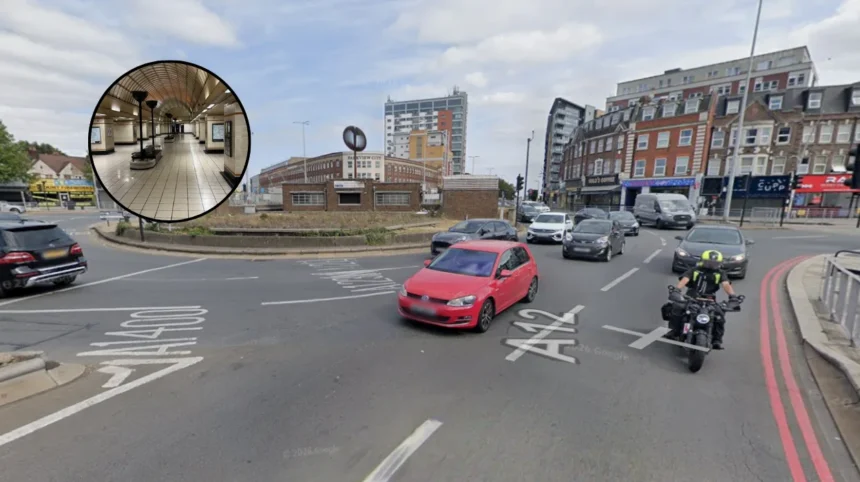
- The station sits beneath a busy roundabout just north of Valentines Park in Redbridge, making its exterior inconspicuous
- Despite its distinctive architecture, Gants Hill is not Grade II listed, though there has been public support for listing it
- Architectural writer Joshua Abbott noted Gants Hill is “unique among Holden’s stations due to its Moscow Metro-influenced platform design and lack of surface buildings”
- The station is between Redbridge and Newbury Park on the Central line’s Hainault loop, approximately 40 minutes from Oxford Circus
- Transport enthusiasts and locals have dubbed it “London’s hidden Soviet treasure”
Redbridge (East London Times) May 30, 2026 — Gants Hill, an East London stop on the Central line, bears a striking resemblance to stations found on the Moscow metro, yet most London commuters will never see its hidden architectural beauty. The station’s exterior, nestled just north of Valentines Park in Redbridge, is fairly inconspicuous, tucked beneath a busy roundabout in Zone 4.
- Key Points
- Why Does Gants Hill Look Like a Moscow Metro Station?
- When Did Gants Hill Station Open and Why Was It Delayed?
- Who Designed Gants Hill Station?
- Why Does Gants Hill Have No Surface Buildings?
- Is Gants Hill Station Listed for Protection?
- How Can Commuters Visit Gants Hill Station?
- What Do Transport Enthusiasts Call Gants Hill?
- What Is the Background of Gants Hill Station’s Development?
- How Will This Development Affect East London Commuters and Architecture Enthusiasts?
Why Does Gants Hill Look Like a Moscow Metro Station?
As reported by the team at Secret LDN, Gants Hill’s interiors could
“easily fool you into thinking you’ve wandered into Moscow’s grand Elektrozavodskaya Metro station, the Soviet-era masterpiece known for its soaring art deco arches”.
The station drew inspiration from the Moscow Metro after architect Charles Holden visited the Russian capital as a consultant.
Its barrel-vaulted ceilings bear a striking resemblance to those found at the Elektrozavodskaya station in Moscow, and the central concourse is affectionately referred to as “Moscow Hall”. Londonist reported that while Holden likely took cues from several ornate Moscow stations,
“it’s said he took particular inspiration from Mayakovskaya, a stunning art deco/futurist design named after the poet Mayakovsky”.
When Did Gants Hill Station Open and Why Was It Delayed?
Originally starting works in the 1930s as part of London Underground’s New Works Programme, Gants Hill station wasn’t able to open until 1947 due to delays caused by World War II. As The Sun reported,
“During this time, it was repurposed as an air raid shelter before finally opening to passengers in 1947”.
The station officially opened on 14 December 1947 as an extension of the Central line to form the new phase of the Hainault loop. Wikipedia confirmed that
“Gants Hill station opened on 14 December 1947 as part of an extension to Newbury Park”.
Who Designed Gants Hill Station?
Yet, its interiors were crafted by the modernist designer Charles Holden, who is credited with the majority of the London Underground system’s creation. Londonist described Gants Hill as “one of Holden’s last commissions — and what a sign-off it was”.
Architectural writer Joshua Abbott, author of Modernism in Metroland, once noted that Gants Hill is
“unique among Holden’s stations due to its Moscow Metro-influenced platform design and lack of surface buildings”.
Why Does Gants Hill Have No Surface Buildings?
Unlike many of Holden’s other designs, Gants Hill’s platform hall has no surface-level buildings. Wikipedia confirmed that
“Gants Hill is the only Underground station with a concourse designed by Holden that has no surface buildings”.
Instead, a smooth series of tiled passageways draw you into an elegant central concourse framed by those now-famous curved ceilings. From street level, Gants Hill is modest — tucked beneath a roundabout on the Central line in Zone 4.
Explore More Redbridge News
Labour Faces Bigger Redbridge Losses in 2026 Redbridge
Chaat N Grill Fined £3,845 for Ilford Fly-Tipping Ilford 2026
Is Gants Hill Station Listed for Protection?
Despite its distinctive architectural qualities, the station is not Grade II listed, although its distinctive architectural qualities have gained public support for listing the station. Unlike Redbridge station (its neighbour), Gants Hill remains unprotected despite transport enthusiasts campaigning for it to be officially listed.
Modernism in Metroland confirmed the station’s listing status as “none” despite its architectural significance.
How Can Commuters Visit Gants Hill Station?
And if you’re planning a visit, it couldn’t be easier – simply hop on the Central Line heading east towards Essex, and you’ll find Gants Hill between Redbridge and Newbury Park. A Londoner who created a YouTube video about the station noted that
“Gants Hill is on the central line on the tube and is only 40 minutes from Oxford Circus which is right in the heart of London, so it’s really not difficult to get to”.
The station has earned the nickname “Moscow Hall” because its design is “just like in the Moscow Metro,” according to the same YouTube creator who said they had lived in London most of their life and didn’t even know the place existed until recently.
What Do Transport Enthusiasts Call Gants Hill?
It’s little wonder that locals and transport buffs alike have dubbed it London’s hidden Soviet treasure. The Reddit community r/london described Gants Hill as having a “MARVELLOUS barrel-vaulted concourse” and noted that
“Architect Charles Holden took inspiration from the Moscow Metro when the station was built as part of the New Works Programme in the 1930s”.
Instagram users have also shared photos of “Gants Hill stations’ ‘Moscow Hall’, designed by Charles Holden, modelled on Elektrozavodskaya station, a nice bit of Soviet style in East London”.
What Is the Background of Gants Hill Station’s Development?
Gants Hill tube station is located in the largely residential Gants Hill district of Ilford, in east London, England. The station sits on the Hainault loop of the Central line and is in Zone 4.
The station was designed by architect Charles Holden in the 1930s, like the other two new stations on the branch. Holden’s visit to Moscow as a consultant was pivotal — he saw the striking marble corridors and domed ceilings of the Russian Metro and brought a touch of that grandeur back to London.
The station’s distinctive architecture features barrel-vaulted halls at platform level designed and created by Charles Holden.
Sleek symmetry, glowing barrel vault ceilings, and a stately sense of calm make this unsuspecting stop feel more like a cathedral than a commuter hub.
During World War II, construction halted and the station was repurposed as an air raid shelter before finally opening to passengers in 1947. The station used to be considered Essex but is now part of the capital.
How Will This Development Affect East London Commuters and Architecture Enthusiasts?
For East London commuters, Gants Hill represents a hidden architectural gem that most pass through daily without noticing. The station’s location on the Central line means it serves residents in Redbridge, Ilford, and surrounding areas, providing a 40-minute connection to central London.
For architecture enthusiasts and transport buffs, Gants Hill offers a unique opportunity to experience Soviet-inspired design without leaving London. The station’s lack of Grade II listing status means its future protection remains uncertain, which could affect preservation efforts.
The campaign to list Gants Hill reflects growing public recognition of its architectural significance. If listed, the station could receive legal protection against alterations or demolition, preserving its Moscow Metro-inspired design for future generations.
For local residents in Redbridge and Ilford, the station’s distinctive architecture adds cultural value to the neighbourhood, transforming an otherwise ordinary transport hub into a point of local pride. The station’s nickname “Moscow Hall” has become part of local identity, with residents and visitors alike sharing photos and stories on social media platforms.
Tourism could also benefit from increased awareness of Gants Hill, as transport enthusiasts and architecture lovers seek out London’s hidden treasures. The station’s proximity to Valentines Park makes it part of a broader local attraction ecosystem that could support community tourism initiatives.