Key Points
- Labour councillors Matt Stanton and Trevor McKeever joined trade unions and community groups outside Havering Town Hall on Monday 1 June 2026 to protest the cancellation of the borough’s annual Pride flag-raising ceremony
- The incoming Reform UK-led administration cancelled the official civic event despite the Pride flag’s established presence at Havering Town Hall
- UNISON condemned the decision as “a cynical attempt to ignite culture wars in the borough” with members given less than 74 working hours’ notice
- Local residents, UNISON representatives, and activists held a solidarity gathering to ensure the occasion was still marked despite the cancellation
- The Pride flag’s presence at Havering Town Hall resulted from sustained local campaigning beginning in 2018 by Labour and Trade Union activists
- In 2018, activists including Fay Hough, Nick West, and Trevor McKeever successfully pushed the council to reverse an initial refusal to fly the flag
- The solidarity gathering took place at 11:50am on Monday 1 June outside Havering Town Hall
- UNISON members, councillors, and campaign groups gathered to demonstrate solidarity with LGBT+ residents, workers, and families during Pride month
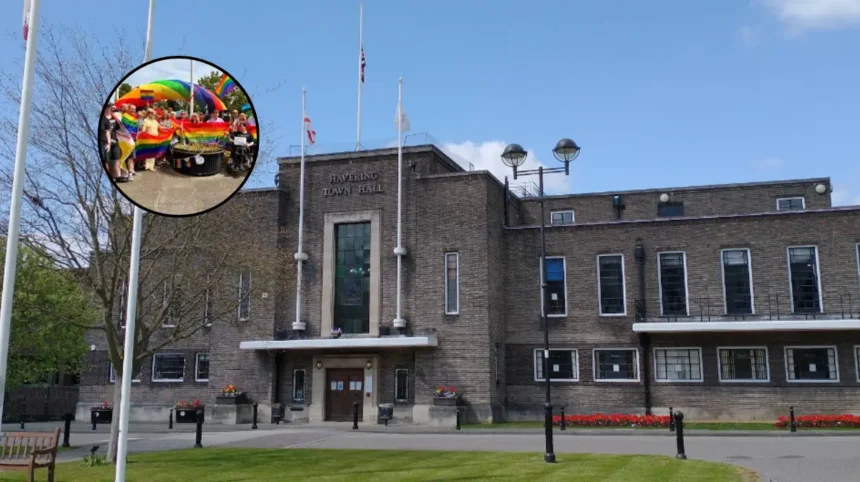
Romford (East London Times) June 2, 2026 – Labour councillors Matt Stanton and Trevor McKeever joined trade unions and local community groups outside Havering Town Hall on Monday 1 June to protest the new Reform UK-led administration’s decision to cancel the borough’s annual Pride flag-raising ceremony. The official civic event was cancelled by the incoming leadership, but local residents, UNISON representatives and activists held a solidarity gathering to ensure the occasion was still marked.
- Key Points
- Why Did Reform UK Cancel the Pride Flag Ceremony at Havering Town Hall?
- Who Joined the Protest Outside Havering Town Hall?
- How Did the Community Respond to the Flag-Raising Cancellation?
- What Is the History Behind Havering’s Pride Flag Policy?
- What Policy Change Did the Reform UK Administration Introduce?
- Why Does This Matter for Havering’s LGBT+ Community?
- Background: The Development of Havering’s Pride Flag Policy
- What Was the Council’s Previous Flag Policy?
- How Did Reform UK’s Election Change the Policy?
- Prediction: How This Development Can Affect Havering’s LGBT+ Community and Broader Residents
- How Will This Affect Trade Union Members and Workers?
- What Are the Broader Implications for Community Relations?
- Could This Affect Other Council Policies?
Why Did Reform UK Cancel the Pride Flag Ceremony at Havering Town Hall?
The cancellation comes despite the Pride flag’s presence at Havering Town Hall being the result of sustained local campaigning. In 2018, Labour and Trade Union activists including Fay Hough, Nick West and Trevor McKeever successfully pushed the council to reverse an initial refusal to fly the flag, securing its recognition as a civic symbol of support for the borough’s LGBT+ community.
As reported by UNISON London, the union condemned Havering Council’s decision to cancel this year’s Pride Month flag-raising ceremony and prevent the Pride flag from being flown outside Havering Town Hall, describing the move as “a cynical attempt to ignite culture wars in the borough”.
The union said members were informed with less than 74 working hours’ notice that the planned ceremony would no longer go ahead following a policy change introduced by the borough’s new Reform UK-led administration.
Who Joined the Protest Outside Havering Town Hall?
Despite the cancellation of the official event, UNISON members, councillors and campaign groups gathered outside Havering Town Hall at 11:50am on Monday to demonstrate solidarity with LGBT+ residents, workers and families during Pride month.
The solidarity gathering included Labour councillors Matt Stanton and Trevor McKeever from Beam Park, representing the community’s response to the Reform UK administration’s decision.
Trade unions present included UNISON representatives, with the public service union’s Havering branch stating “Unity Is Strength” and emphasizing that “Romford Has Pride”. Additional trade union support came from GMB and Unite, with post-event reports noting “a fabulous turnout for inclusivity”.
How Did the Community Respond to the Flag-Raising Cancellation?
As reported on social media by Margaret Mullane MP, Beam Park councillors attended the LGBTQ+ celebration following the flag raising cancellation by the Reform lead Council. She emphasized that “It’s so important that” the community came together despite the official cancellation.
Facebook posts from the event described the gathering as
“PRIDE Havering 2026 Can’t Cancel Solidarity no matter how Reform UK try!”.
The posts thanked Unison, GMB refuse workers and Unite for their participation, noting the strong community turnout.
Instagram coverage from June 1, 2026 confirmed that “The Pride flag wasn’t raised at Havering Town Hall today for the first” time in recent years. The coverage highlighted the presence of UNISON the public service union Havering Branch and their message of unity.
What Is the History Behind Havering’s Pride Flag Policy?
The Pride flag’s presence at Havering Town Hall represents years of local activism and campaigning. As reported in the original development, in 2018, Labour and Trade Union activists including Fay Hough, Nick West and Trevor McKeever successfully pushed the council to reverse an initial refusal to fly the flag. Their efforts secured the flag’s recognition as a civic symbol of support for the borough’s LGBT+ community.
Trevor McKeever, now a Beam Park councillor, was directly involved in the original 2018 campaign that established the Pride flag as a permanent civic symbol at Havering Town Hall.
This historical context makes the 2026 cancellation particularly significant, as it reverses a policy that took sustained community activism to establish.
Previously, Havering Council had continued the practice of raising Pride flags, as evidenced by their February 2026 announcement raising the Progress Pride Flag to mark LGBT+ History Month 2026. The flag raising on 2 February 2026 took place outside Havering Town Hall, Romford, and signaled the start of a month of activities celebrating LGBT+ history.
What Policy Change Did the Reform UK Administration Introduce?
The cancellation follows a policy change introduced by the borough’s new Reform UK-led administration. While specific details of the new flag policy were not fully disclosed in initial reports, the change resulted in the cancellation of the planned Pride Month ceremony with minimal notice to stakeholders.
The Reform UK party had campaigned on getting “Labour out by voting Reform UK” with messaging about having
“pride in our country, pride in the future of this country”.
Reform UK won full control of Havering London Borough, which enabled the policy change regarding flag-raising ceremonies.
Why Does This Matter for Havering’s LGBT+ Community?
The cancellation has significant implications for the borough’s LGBT+ residents, workers, and families during Pride month. UNISON described the decision as an attempt to stoke division, suggesting the move has broader political motivations beyond simple administrative policy.
The solidarity gathering demonstrated that community support for LGBT+ residents remains strong despite the official cancellation.
The presence of trade unions, councillors, and community groups showed cross-sector support for maintaining Havering’s tradition of Pride month recognition.
Beam Park councillors have advised of community support networks, including faith groups like the ‘Rainham Muslim Trust’ who hold Friday activities, demonstrating the borough’s diverse community infrastructure.
Background: The Development of Havering’s Pride Flag Policy
The Pride flag’s established presence at Havering Town Hall resulted from a multi-year campaign beginning before 2018. As documented in council records, the flag’s installation was not initially automatic but required sustained advocacy from local activists.
In 2018, a coalition of Labour and Trade Union activists successfully challenged the council’s initial refusal to fly the Pride flag. Key figures in this campaign included Fay Hough, Nick West, and Trevor McKeever, who persistently advocated for the flag’s recognition as a civic symbol.
Their successful campaign resulted in the council reversing its initial position and officially recognizing the Pride flag as a symbol of support for the borough’s LGBT+ community. This established a precedent that the flag would be raised annually during Pride month as part of the council’s civic duties.
What Was the Council’s Previous Flag Policy?
Prior to the Reform UK administration’s changes, the chief executive was in charge of determining which flags could be flown on council properties. This administrative approach allowed for the Pride flag to be raised as part of standard civic practice during relevant commemorative periods.
The council had demonstrated continued commitment to LGBT+ recognition through 2026, raising the Progress Pride Flag on 2 February 2026 to mark LGBT+ History Month. This flag includes all the colours of the traditional Pride flag with additional stripes representing trans communities and people of colour, showing the council’s inclusive approach.
How Did Reform UK’s Election Change the Policy?
Reform UK won full control of Havering London Borough in the May 2026 elections, enabling the party to implement their policy agenda without opposition votes.
The party’s campaign messaging emphasized national pride and promised to remove Labour leadership from the borough.
Following their election victory, the new administration introduced a policy change affecting flag-raising ceremonies. The change resulted in the cancellation of the Pride Month flag-raising with less than 74 working hours’ notice to union members and stakeholders.
The swift policy change and minimal notice period drew immediate criticism from UNISON and community groups, who viewed it as politically motivated rather than administratively necessary.
Prediction: How This Development Can Affect Havering’s LGBT+ Community and Broader Residents
The cancellation of the official Pride flag-raising ceremony can affect Havering’s LGBT+ community by removing a visible symbol of civic support during Pride month. The flag’s absence from Town Hall represents the first time in recent years that the official civic building has not displayed the Pride flag during June.
LGBT+ residents may perceive the cancellation as a signal that the new administration does not prioritize their inclusion or recognition.
The less than 74 hours’ notice given to stakeholders suggests the decision was made without significant community consultation, potentially fostering feelings of exclusion among LGBT+ residents and their allies.
However, the strong community response—with trade unions, councillors, and community groups organizing a solidarity gathering—demonstrates that support for LGBT+ residents remains robust at the grassroots level. This community solidarity may partially offset the impact of the official cancellation by ensuring that Pride month is still visibly marked in the borough.
How Will This Affect Trade Union Members and Workers?
UNISON members and public service workers in Havering may experience increased tension between their union and the new council administration.
The union’s characterization of the decision as “a cynical attempt to ignite culture wars” suggests potential for ongoing conflict between union members and council leadership.
The involvement of multiple trade unions (UNISON, GMB, Unite) in the solidarity gathering indicates broader labour movement concern about the policy change.
This could lead to increased union activism on LGBT+ rights issues and potentially affect labour relations with the council throughout the administration’s term.
What Are the Broader Implications for Community Relations?
The polarization around this issue can affect community cohesion in Havering by creating visible divisions between the new administration and LGBT+ advocates and their allies. The “culture wars” framing used by UNISON suggests this issue may become a focal point for broader political conflict in the borough.
The strong turnout at the solidarity gathering indicates that many residents oppose the cancellation, which could influence future council elections and community organizing efforts.
Beam Park councillors’ participation demonstrates that opposition Labour representatives remain active and engaged with community concerns despite losing control of the council.
The involvement of faith groups like Rainham Muslim Trust in the borough’s community infrastructure suggests potential for cross-community coalition building around inclusion issues, though this remains to be seen in practice.
Could This Affect Other Council Policies?
The flag policy change may signal broader administrative shifts under the Reform UK leadership, potentially affecting other diversity and inclusion initiatives. If the administration continues to reverse previous Labour policies, residents and community groups may anticipate further changes to council services and programming.
The success of the 2018 campaign to establish the Pride flag demonstrates that sustained community activism can influence council policy. LGBT+ advocates and alliance groups may employ similar strategies to attempt reversing the flag policy or protecting other inclusion initiatives in the future.