Key Points
- Mayor Lutfur Rahman secured a decisive victory in the May 7, 2026, Tower Hamlets mayoral election, with his party Aspire winning 33 of 45 council seats, up from 22 in 2022 .
- Rahman, banned from public office for five years in 2015 after a judge ruled he committed electoral fraud, has consolidated power despite audits raising concerns and fresh government intervention in March 2026 .
- Tower Hamlets generates approximately £40 billion in GDP and £12 billion in tax revenues, housing Canary Wharf and the Tower of London, yet 43 percent of its children live in poverty .
- Residents of Bangladeshi origin comprise one-third of the borough’s population, with 14 percent born in Bangladesh; nearly three-quarters of current councilors are now Bengali Muslims .
- Aspire’s populist campaign focused on generous welfare policies including free home care for the elderly, free school meals, uniform grants, undergraduate bursaries, free swimming, and pledges for subsidized transport and laptops .
- Peter Golds, a Conservative councilor, stated Rahman succeeded by mobilizing Bangladeshi community votes to Aspire, taking over from Labour .
- Election Commissioner Richard Mawrey’s 2015 judgment noted Bengali-language media outlets were “strongly, vehemently and occasionally intemperately supportive of Mr. Rahman” .
- The borough now hosts eight Bengali television channels and a large active Bangladeshi media ecosystem publishing in both English and Bengali .
- The 2022 Aspire councilors were all male and Bengali; the 2023 intake includes five women among the 33 councilors .
- A 20,000-square-foot Chinese “super-embassy” is planned for the borough, adding to its economic and geopolitical significance .
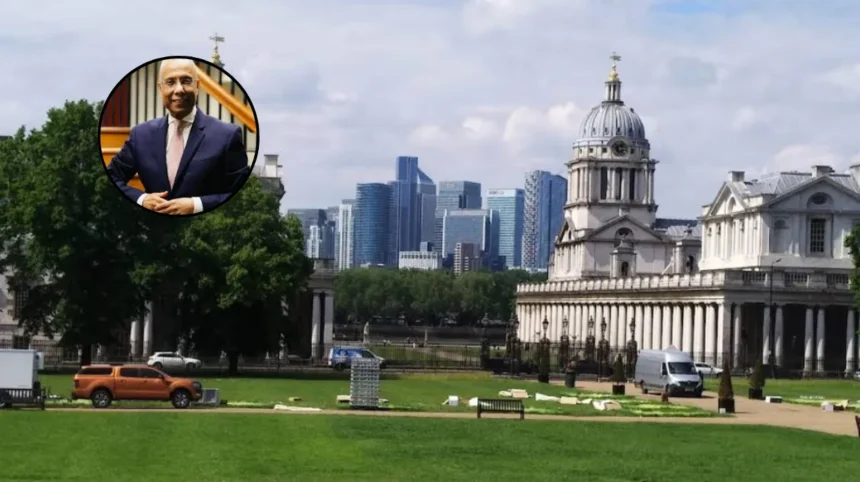
Tower Hamlets (East London Times) June 2, 2026 – In the heart of East London, where the financial skyscrapers of Canary Wharf pierce the skyline and the historic Tower of London stands as a sentinel of centuries past, Mayor Lutfur Rahman has defied expectations once again. On May 7, 2026, Rahman secured his position as mayor of Tower Hamlets, with his party Aspire expanding its control of the borough council to 33 of 45 seats, a significant increase from the 22 seats it held following the 2022 election . This victory marks a remarkable political resurgence for a figure whose career was once deemed over after a landmark 2015 court ruling found him guilty of electoral fraud and banned him from holding public office for five years .
- Key Points
- How Did Lutfur Rahman Return to Power After Electoral Fraud Conviction?
- Why Is Tower Hamlets Considered a Sectarian Political Fiefdom?
- What Welfare Policies Drive Aspire’s Populist Campaign Success?
- How Does Demographic Change Influence UK Democracy Challenges?
- Background: The Development of Lutfur Rahman’s Political Career and Tower Hamlets’ Transformation
- Prediction: How This Development Can Affect Tower Hamlets Residents and UK Democracy
How Did Lutfur Rahman Return to Power After Electoral Fraud Conviction?
The path to Rahman’s 2026 victory was fraught with legal challenges, governmental scrutiny, and public controversy. In 2015, Justice Peter Gibson ruled that Rahman had committed electoral fraud during his 2014 reelection campaign, resulting in his removal as mayor and a five-year ban from running for office . Following this judgment, Rahman faced years of investigations, multiple court rulings, and government intervention aimed at curbing his political influence .
Proposed electoral reforms were also introduced to prevent similar situations in the future. Yet, none of these obstacles stopped Rahman from winning the 2022 mayoral election, and recent audits raising concerns about governance, coupled with fresh government intervention in March 2026, failed to prevent his consolidation of power in the May 2026 election .
As reported by the investigative team covering local politics, Rahman’s ability to return to power reflects a deeper transformation within Tower Hamlets’ political landscape.
“A five-year ban from public office, years of investigations, court rulings, and government intervention, and proposed electoral reforms failed to stop Rahman from winning the 2022 mayoral election,”
the report noted . The 2026 election results demonstrate that Rahman’s political machine has not only survived but thrived, expanding Aspire’s control significantly.
Why Is Tower Hamlets Considered a Sectarian Political Fiefdom?
Tower Hamlets presents a unique case study in modern British politics. The borough, which generates around £40 billion in GDP and contributes £12 billion in tax revenues annually, houses some of London’s most valuable real estate and iconic landmarks .
Despite this economic prosperity, approximately 43 percent of the borough’s children live in poverty, creating a stark contrast between wealth and deprivation .
The demographic composition of Tower Hamlets plays a crucial role in its political dynamics. Residents of Bangladeshi origin make up about one-third of the borough’s total population, with 14 percent born in Bangladesh . Rahman’s political base has long been concentrated within this Bangladeshi community. As Peter Golds, a Conservative councilor for the Island Gardens ward of Tower Hamlets, observed,
“Lutfur Rahman has succeeded by mobilizing votes from Tower Hamlets’ Bangladeshi community to his Aspire Party, taking over from the Labour Party” .
This shift has fundamentally transformed local politics; nearly three-quarters of the current councilors are now Bengali Muslims .
Election Commissioner Richard Mawrey’s 2015 electoral fraud judgment against Rahman provides further insight into this dynamic. Mawrey observed that Tower Hamlets’ Bengali-language media outlets were “all strongly, vehemently and occasionally intemperately supportive of Mr.
Rahman and hostile to his political opponents” . Today, Rahman continues to benefit from a robust Bangladeshi media ecosystem in the borough, where local outlets publish in both English and Bengali, and eight television channels broadcast exclusively in Bengali .
What Welfare Policies Drive Aspire’s Populist Campaign Success?
Favorable media coverage represents only one element of Rahman’s political success. Aspire achieved electoral dominance through a populist campaign heavily focused on generous local welfare policies.
As reported by political analysts covering the election, these policies include free home care for the elderly, free school meals, school uniform grants, undergraduate bursaries and grants, free swimming, and new pledges of subsidized transport and laptops for low-income residents .
In October 2023, Rahman wrote in Jacobin, a socialist magazine,
“What we’re attempting in our borough is not only to meet people’s everyday needs … but to transform power asymmetries in the longer term” .
With 73 percent of councilors now Bengali Muslims, Rahman has certainly reversed the power asymmetry in his community’s favor . However, other asymmetries remain. While the 22 Aspire candidates elected in 2022 were all male and Bengali, the 33 Aspire councilors elected in 2026 now include five women, marking a step toward greater gender representation .
How Does Demographic Change Influence UK Democracy Challenges?
Aspire’s victory exposes an ongoing challenge to democracy in the United Kingdom: highly organized sectarian and patronage-based political structures fueled by demographic changes resulting from years of large-scale immigration .
The concentration of political power within a specific ethnic and religious community raises questions about representation, accountability, and the broader health of democratic institutions.
The borough’s economic significance cannot be overstated. Tower Hamlets houses the financial hub of Canary Wharf, the Tower of London, and soon, a 20,000-square-foot Chinese “super-embassy” . This geopolitical development adds another layer of complexity to the borough’s political landscape, as international interests intersect with local demographic realities.
Background: The Development of Lutfur Rahman’s Political Career and Tower Hamlets’ Transformation
Lutfur Rahman’s political journey began with his election as mayor of Tower Hamlets in 2010, followed by reelection in 2014 . His tenure ended dramatically in 2015 when a judge ruled he had committed electoral fraud, resulting in his removal and a five-year ban from public office .
This judgment by Election Commissioner Richard Mawrey highlighted systematic issues including the influence of Bengali-language media and the mobilization of specific community votes .
Despite this setback, Rahman returned to politics, winning the 2022 mayoral election . His party, Aspire, has since grown from 22 seats in 2022 to 33 seats in 2026, consolidating control over the borough council . The transformation of Tower Hamlets’ political landscape reflects broader demographic shifts, with Bengali Muslims now comprising nearly three-quarters of councilors .
The establishment of a extensive Bangladeshi media ecosystem, including eight television channels, has played a crucial role in sustaining Rahman’s political influence .
Government interventions, including audits raising concerns and fresh intervention in March 2026, have failed to curb Rahman’s power .
The proposed electoral reforms intended to prevent similar situations have also proven ineffective . This pattern raises questions about the resilience of sectarian political structures in the face of institutional challenges.
Prediction: How This Development Can Affect Tower Hamlets Residents and UK Democracy
The consolidation of power by Mayor Lutfur Rahman and his Aspire party will likely have significant implications for Tower Hamlets residents and the broader UK democratic landscape. For the borough’s Bangladeshi community, Rahman’s continued dominance means continued access to generous welfare policies including free home care, free school meals, and educational grants . These policies have directly addressed the needs of the 43 percent of children living in poverty .
However, the sectarian nature of Aspire’s political base raises concerns about representation for non-Bengali residents. With nearly three-quarters of councilors now Bengali Muslims, other communities may feel marginalized in local decision-making processes .
The influence of Bengali-language media, described as “strongly, vehemently and occasionally intemperately supportive” of Rahman, may further entrench this divide .
For UK democracy more broadly, Rahman’s success demonstrates the resilience of highly organized sectarian political structures despite legal challenges and government intervention . This trend suggests that demographic changes resulting from large-scale immigration can fundamentally alter local political landscapes in ways that challenge traditional democratic norms . The upcoming Chinese “super-embassy” adds international dimension to these local dynamics, potentially creating new alliances and tensions .