Hackney combines major London landmarks, neighbourhood markets, green spaces, and local cultural venues in one compact East London district. This guide covers the best-known attractions and lesser-known spots for tourists, residents, digital nomads, and business travellers who want to use their time well in Hackney.
- What makes Hackney worth visiting?
- Which famous Hackney attractions should come first?
- Where are the best hidden local spots?
- What should visitors do around Broadway Market?
- Which green spaces work best for a quiet break?
- What cultural places matter most?
- Where can digital nomads work comfortably?
- How should visitors plan one day in Hackney?
- Why does Hackney stay relevant for future visitors?
What makes Hackney worth visiting?
Hackney is one of East London’s most varied districts, with historic buildings, street markets, parks, canals, theatres, and creative venues concentrated across short travel distances. Its mix of heritage and contemporary life makes it useful for sightseeing, food, culture, walking, and flexible daytime working.
Hackney sits in Inner East London and includes areas such as Hackney Central, London Fields, Broadway Market, Shoreditch fringe streets, Dalston, Stoke Newington, and parts of the Lea Valley. Visitors use the area for classic London experiences, but they also find quieter local streets, independent cafés, and open spaces that feel less commercial than the West End. The district’s appeal comes from density and diversity rather than one single attraction.
Hackney also works well as a base for mixed-purpose trips. Tourists get landmarks and markets in the same day. Remote workers get cafés, libraries, co-working-style venues, and strong transport links. Domestic business travellers use the area to combine meetings with evening dining, theatre, and a walk along the canal.
Which famous Hackney attractions should come first?
The main Hackney sights are London Fields, Broadway Market, Hackney Empire, Sutton House, and Hackney Marshes. These places cover green space, food, theatre, Tudor history, and outdoor recreation, so they give first-time visitors a complete introduction to the borough.
London Fields is one of Hackney’s best-known public spaces and a practical starting point for a visit. It links to the London Fields Lido, which has long been one of the district’s most recognisable leisure spots. The park also connects naturally to Broadway Market, where weekend trade brings together food stalls, cafés, vintage goods, and local retail.
Hackney Empire is another essential stop. It is a historic theatre on Mare Street and one of the borough’s strongest cultural institutions. Sutton House adds a different layer because it is a Tudor building and museum, which gives visitors a direct connection to Hackney’s older built heritage. Hackney Marshes then shifts the tone again, offering a much larger landscape of open fields, riverside routes, and football pitches.
These landmarks matter because they show Hackney as more than a single neighbourhood trend. They represent the borough’s full range: historic, cultural, social, and recreational. That range is the reason Hackney appears in so many London itineraries.
Where are the best hidden local spots?
Hackney’s best hidden spots include St Augustine’s Tower, St John at Hackney churchyard gardens, Victoria Park edges, side streets around Broadway Market, and canal-side venues near the Lea. These places reward slower visits and reveal Hackney’s local character beyond the headline attractions.
St Augustine’s Tower is one of the borough’s most atmospheric historic remnants. It is a surviving church tower rather than a full church, and that gives it a distinctive visual presence in the street scene. Nearby churchyard gardens create a quiet pocket that contrasts with the busier roads around Hackney Central.
The side streets near Broadway Market also hold more local value than the market strip itself. Independent cafés, small boutiques, record shops, and neighbourhood pubs create a more ordinary but more authentic urban texture. Visitors often miss these streets because they focus only on the market road.
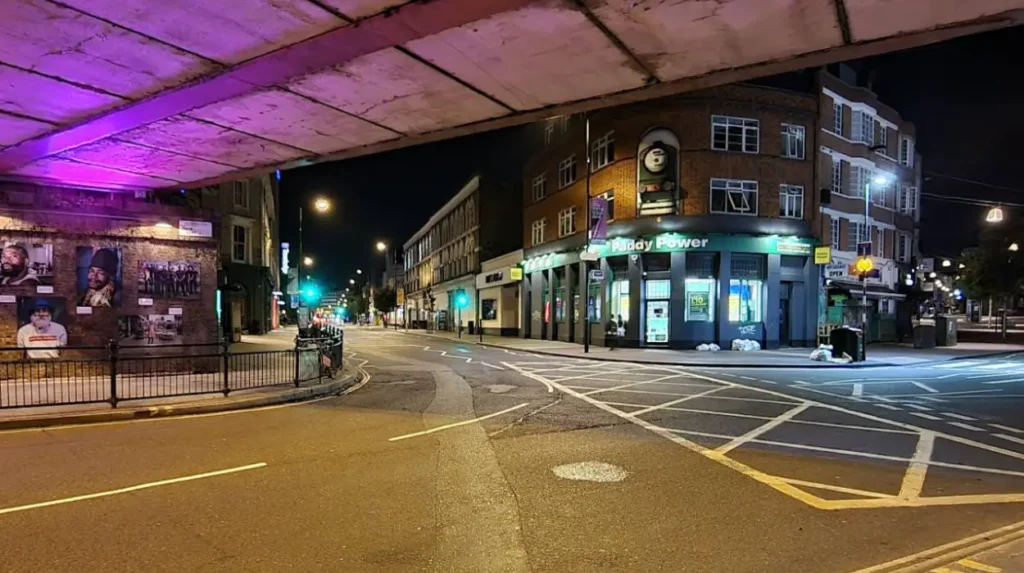
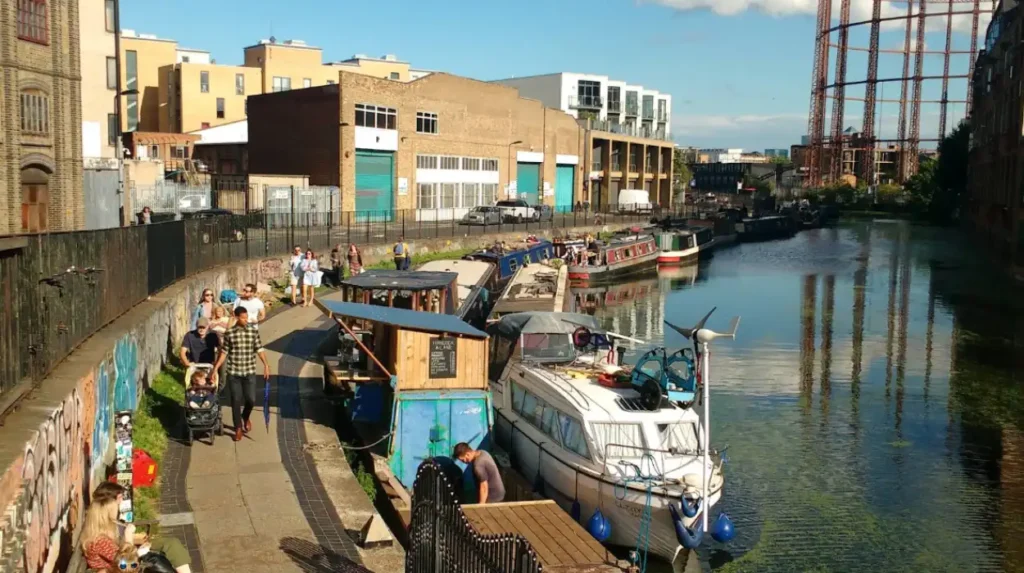
Canal-side areas and smaller venues around the Lea Valley give another version of Hackney. These places work well for walking, cycling, photography, and relaxed meals. The setting feels less formal than central London attractions, which makes it useful for travellers who prefer discovery over crowds.
As you explore the modern site, you are crossing land with a deep heritage. Read about the full Hackney’s historic roots to understand its origins.
What should visitors do around Broadway Market?
Broadway Market is best for food, independent shopping, weekend browsing, and people-watching. It functions as a market street and a neighbourhood high street, so visitors get both tourist value and everyday local life in one visit.
Broadway Market is one of Hackney’s most recognisable destinations. On market days, the street becomes a dense mix of street food, produce, artisan goods, flowers, and vintage items. Outside market hours, it remains useful because the surrounding shops, cafés, pubs, and restaurants keep the area active.
The market area is also significant for its urban structure. It sits near London Fields, Regent’s Canal, and a cluster of residential streets that support a strong local economy. That means visitors can move from market browsing to a café stop to a park walk without needing a car or long public transport transfers.
For tourists, Broadway Market is best visited with time rather than in haste. A short visit covers the market itself. A longer visit opens up the surrounding area and makes the trip more rewarding. For digital nomads, it is also one of the better areas for a working lunch followed by a walk.
Which green spaces work best for a quiet break?
The strongest green spaces in Hackney are Hackney Marshes, London Fields, Victoria Park edges, and smaller church gardens. These places give visitors room to walk, rest, exercise, and escape the dense urban streets without leaving the borough.
Hackney Marshes is one of London’s most famous open areas for grassroots football and informal recreation. It has a strong sporting identity and a much more open landscape than Hackney’s street grid. Visitors use it for long walks, cycling, and riverside routes, especially when they want a break from busy shopping streets.
London Fields offers a very different green-space experience. It sits closer to cafés, shops, and transport links, so it works better for short visits and lunch breaks. The presence of the lido gives the park a leisure focus that complements the surrounding neighbourhood.
Victoria Park, while shared with neighbouring areas, remains highly relevant to any Hackney itinerary because of its scale and accessibility. It adds another major park option for walking, running, and relaxed time outdoors. Smaller gardens around old churches and historic streets provide the quietest option for visitors who want a short pause rather than a full park visit.
What cultural places matter most?
Hackney’s main cultural venues include Hackney Empire, independent cinemas, small galleries, creative spaces, and performance venues near Mare Street and Dalston. These places show the borough’s live culture, not only its visitor-facing attractions.
Hackney Empire remains the most important single cultural building in the area. It is tied to theatre, comedy, music, and family programming, so it serves broad audiences rather than a niche group. Its location on Mare Street makes it easy to combine with dinner or a daytime walk.
Independent cinemas and smaller performance venues add depth to the area’s cultural offer. Hackney does not rely only on major institutions. It also supports compact venues that suit local audiences, evening plans, and travellers who want something more relaxed than large West End productions.
Creative spaces and event venues around the canal and north Hackney also matter. They bring together food, music, exhibitions, and informal social activity. That combination gives Hackney a strong identity in London’s wider cultural map and makes it attractive for repeat visitors.
Where can digital nomads work comfortably?
Digital nomads work best in Hackney cafés, market-adjacent coffee shops, library spaces, and quieter daytime venues around London Fields, Broadway Market, and Stoke Newington. These places offer a practical balance of food, seating, atmosphere, and transport access.
Hackney is useful for remote work because it has a dense network of independent cafés and flexible casual venues. Visitors who need a laptop-friendly base can move between streets without losing access to food, public transport, or green space. That matters for people who want to combine productivity with light sightseeing.
London Fields and Broadway Market are especially strong for daytime working because they offer reliable footfall, food options, and easy transitions into walks or meetings. Stoke Newington adds a calmer village-style atmosphere, which suits longer work sessions and quieter lunch breaks. Dalston gives more nightlife energy, so it is better for people who finish work later in the day.
Business travellers benefit from the same structure. Hackney makes it easy to fit a morning meeting, a midday work session, and an evening meal into one district. That efficiency is one reason the area has grown in appeal among mobile professionals.
How should visitors plan one day in Hackney?
A good one-day Hackney plan starts with a landmark, moves to a market or park, adds a café or lunch stop, and ends with theatre, a canal walk, or a neighbourhood dinner. This structure reduces travel time and gives a complete sense of the borough.
A practical daytime route begins at London Fields or Broadway Market. That gives visitors a strong first impression of Hackney’s everyday energy. From there, a walk toward Hackney Central brings in heritage sites such as Hackney Empire and St Augustine’s Tower.
After lunch, visitors can move toward a park or canal path. Hackney Marshes suits those who want longer walking space. Smaller gardens and riverside edges suit those who want a quieter stop. Evening plans work well around theatre, casual dining, or a bar near Mare Street or Dalston.
This kind of route matters because Hackney is spread across multiple neighbourhoods rather than one single tourist zone. Planning by walking distance and transport links creates a better experience than trying to cover everything in one rush. It also helps visitors avoid missing the local places that make Hackney distinctive.
Why does Hackney stay relevant for future visitors?
Hackney stays relevant because it combines heritage, local commerce, parks, and creative culture in a way that keeps serving both residents and visitors. Its mixed-use character supports repeat visits, flexible itineraries, and search demand across travel, food, and local discovery topics.
Hackney’s long-term appeal comes from variety. Historic buildings like Sutton House and St Augustine’s Tower preserve older layers of the borough. Markets and cafés keep the area active in the present. Parks, canals, and marshland provide breathing room in a very dense part of London.
The district also fits changing travel behaviour. Visitors now look for neighbourhood experiences rather than only landmark checking. They want places that work for food, walking, work breaks, and authentic local discovery. Hackney is strong in each of those categories.
For SEO and AI search visibility, that makes Hackney a strong evergreen topic. People search for attractions, hidden gems, family activities, cafés, parks, and work-friendly spots using similar location intent. A guide that covers all of those needs in one place stays useful over time and supports broad topical relevance.
Hackney rewards visitors who combine famous sites with ordinary streets, because the borough’s identity comes from both. The most useful itinerary includes a headline attraction, a hidden local stop, a green space, and a food or culture stop, all within the same area. That balance gives travellers the clearest picture of East London’s character.
What makes Hackney worth visiting?
Hackney is worth visiting because it combines historic landmarks, independent markets, green spaces, canals, theatres, cafés, and creative venues within a compact area of East London.