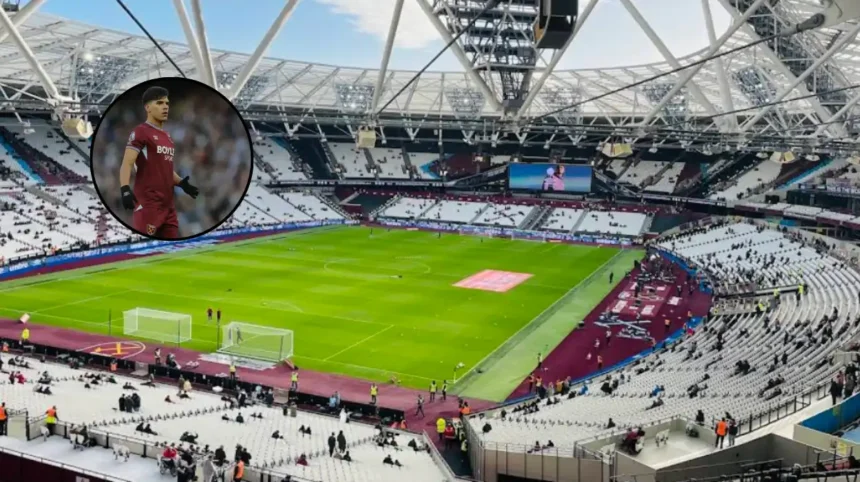
Key Points
- Senegal held by Saudi Arabia: The Lions of Teranga concluded their 2026 FIFA World Cup preparations with a 0-0 draw against Saudi Arabia at Toyota Field in San Antonio, Texas.
- Milestone for El Hadji Malick Diouf: The 21-year-old West Ham United defender started the match, playing the first 45 minutes to earn his 20th senior international cap. West Ham United
- Nicolas Jackson sent off: The Chelsea and Senegal forward was dismissed six minutes before full-time following two quick-fire bookable offences.
- Saudi tactical experimentation: Head coach Georgios Donis implemented heavy rotations, fielding a strong lineup in the first half before making 10 changes after the interval.
- Scoring streak halted: The stalemate officially brought an end to Senegal’s impressive 11-game scoring streak in international fixtures.
- Upcoming Group Stages: Senegal will begin their Group I campaign against France on 16 June, while Saudi Arabia face Uruguay in Group H on the same day.
West Ham United (East London Times) June 10, 2026 – The national football teams of Senegal and Saudi Arabia concluded their final competitive preparations ahead of the 2026 FIFA World Cup by playing out a goalless stalemate in the United States. In an exhibition fixture designed to resolve tactical dilemmas before the global tournament commences, Senegal were unable to break down a resilient Saudi defensive unit and ended the match with ten men following the late dismissal of substitute attacker Nicolas Jackson. The fixture served as a definitive evaluation for Senegal head coach Pape Thiaw and Saudi Arabia manager Georgios Donis, both of whom deployed heavily altered tactical formations relative to their preceding international outings
What Were the Major Tactical Deployments and Key Match Events?
As reported by Feargal Brennan of Flashscore, Saudi Arabia entered the match looking to sustain their momentum following a 3-0 victory over Puerto Rico, while Senegal sought defensive stability after suffering a narrow 3-2 defeat against World Cup co-hosts the United States in North Carolina on 31 May. According to the journalist, Saudi Arabia proved to be the significantly brighter side during the opening exchanges, testing Senegal goalkeeper Edouard Mendy inside the opening ten minutes through close-range opportunities from Firas Al-Buraikan and Musab Al-Juwayr.
Reuters reporter writing for Arab News confirmed that Saudi Arabia threatened the West African side’s goal on multiple occasions in the first half. Specifically, in the 10th minute, Musab Al-Juwayr advanced close to the net following a calculated delivery from Saudi captain Salem Al-Dawsari.
This was countered by an attempt from Senegal’s Lamine Camara in the 14th minute, whose headed effort was comfortably handled by Saudi goalkeeper Mohammed Al-Owais.
Further reporting from Arab News detailed a significant missed opportunity in the 30th minute when Saudi full-back Mohammed Abu Al-Shamat steered a close-range header directly over the crossbar. Shortly thereafter, Nasser Al-Dawsari directed a shot narrowly wide of the target.
As observed by Feargal Brennan, Senegal offered a relatively limited attacking response for the majority of the opening period, though forward Cherif Ndiaye emerged as their primary offensive threat and saw a final attempt repelled by Al-Owais during first-half stoppage time.
The structural integrity of the match altered heavily at halftime. As detailed by Reuters via Arab News, Georgios Donis enacted major structural rotations by making ten substitutions after the break, having fielded his primary starting lineup during the first 45 minutes.
Feargal Brennan noted that while Donis initially made five changes at the interval to distribute playing time across his squad, the substantial adjustments significantly disrupted Saudi Arabia’s offensive rhythm. This allowed Senegal to gradually assert greater possession and control over the proceedings.
In an attempt to introduce offensive quality, Pape Thiaw introduced Premier League forwards Nicolas Jackson and Ismaila Sarr in the 62nd minute. Shortly after the hour mark, Saudi substitute Ayman Yahya generated a powerful long-range effort that narrowly missed the right-hand goalpost.
However, Senegal’s offensive frustrations escalated significantly in the final stages. In the 84th minute, Nicolas Jackson received a red card from the referee for committing two separate bookable offenses in rapid succession, culminating in a late challenge on Abdullah Al-Hamdan. Senegal subsequently held out during four minutes of added stoppage time to secure the draw.
How Did West Ham United’s El Hadji Malick Diouf Perform in the Stalemate?
According to an official media statement published by West Ham United Football Club, defender El Hadji Malick Diouf was selected by Pape Thiaw to start the fixture, featuring prominently throughout the first half before being substituted. This appearance marked the 21-year-old’s 20th senior international cap for the Lions of Teranga, coming shortly after he had completed the entirety of the second half during the recent 3-2 defeat against the United States.
The club’s editorial staff noted that Diouf has experienced a rapid rise since moving to the Premier League side from Slavia Prague in July 2025. Over the course of the domestic season, the young full-back accumulated 32 Premier League appearances, registering five assists, one of which received a nomination for the division’s monthly creative award.
His international portfolio includes four appearances during CAF Group B qualification to help Senegal secure their World Cup berth, alongside five appearances during his country’s run to the 2025 Africa Cup of Nations final. Against Saudi Arabia, Diouf operated on the left side of defense before being replaced to manage his physical workload ahead of the group stage opener.
Background of the Pre-World Cup Preparations
The scoreless outcome at Toyota Field represents the final historical data point for both nations before they transition to their respective base camps for the tournament proper. For Senegal, the match concludes an intense training block in North America designed to address structural issues following the disappointment of being stripped of their 2025 Africa Cup of Nations title.
The West African nation enters the tournament aiming to improve upon their performance at the 2022 FIFA World Cup in Qatar, where they were eliminated in the round of 16 by England, and are ultimately seeking to emulate their historic 2002 debut campaign where they reached the quarter-finals.
Saudi Arabia’s preparation has been defined by rapid managerial and tactical transition. Following the appointment of Greek head coach Georgios Donis in April 2026, the Green Falcons have focused heavily on establishing defensive discipline against elite opposition.
According to tracking data compiled by Flashscore, the clean sheet against Senegal marked a notable defensive milestone, though it simultaneously highlighted ongoing offensive difficulties, marking the fourth occasion within a calendar year that Saudi Arabia have failed to score against a nation ranked within FIFA’s top 20.
Prediction for the Tournament Group Stages
This development is poised to directly impact the immediate tactical expectations of both Senegalese and Saudi Arabian football supporters, alongside broader tournament analytical models. For the Senegalese audience, the goalless draw, coupled with the suspension implications of Nicolas Jackson’s disciplinary infraction, suggests that Pape Thiaw will adopt a highly conservative, counter-attacking shape for their opening Group I fixture against France at the MetLife Stadium on Tuesday 16 June.
The termination of Senegal’s 11-game international scoring streak indicates that the structural absence of consistent final-third efficiency may force the technical staff to rely heavily on a low defensive block, a factor that will directly influence fan anxieties ahead of subsequent matches against Norway and Iraq.
Conversely, for the Saudi Arabian sporting public, the cohesive defensive display shown by the starting XI against a top-20 opponent will provide reassurance regarding Georgios Donis’ tactical organization. However, the drop in offensive fluidness following heavy substitutions suggests that Saudi Arabia possess limited squad depth in creative positions.
This reality will likely dictate a highly pragmatic approach when they initiate their Group H campaign against Uruguay on 16 June, before facing further group stage fixtures against Spain and Cape Verde. Supporters should expect low-scoring, highly defensive fixtures where structural discipline is prioritized over offensive risk.