Key Points
- Misdiagnosis Ordeal: A pregnant mother from Rainham was repeatedly told by medical staff at Queen’s Hospital that she was experiencing a suspected miscarriage, only for a subsequent scan to reveal her baby was healthy with a strong heartbeat.
- Lack of Weekend Scanning: The patient was initially informed that the hospital does not perform diagnostic scans during weekends, a claim she later disputed after spotting promotional posters inside the facility indicating weekend services were active.
- Repeated Treatment Offers: Multiple doctors allegedly advised the expectant mother to “let nature take its course” or ingest termination tablets to expedite the suspected miscarriage before any visual confirmation via ultrasound had occurred.
- Administrative Failures: Upon returning for a scheduled ultrasound on 2 June, the patient was informed that her booking had not been recorded in the hospital system, necessitating further formal complaints before staff facilitated the procedure.
- NHS Trust Response: Barking, Havering and Redbridge University Hospitals NHS Trust issued an apology regarding the patient’s poor experience, asserting that she had been reviewed by an obstetrician and would have been admitted immediately if an acute risk had been identified.
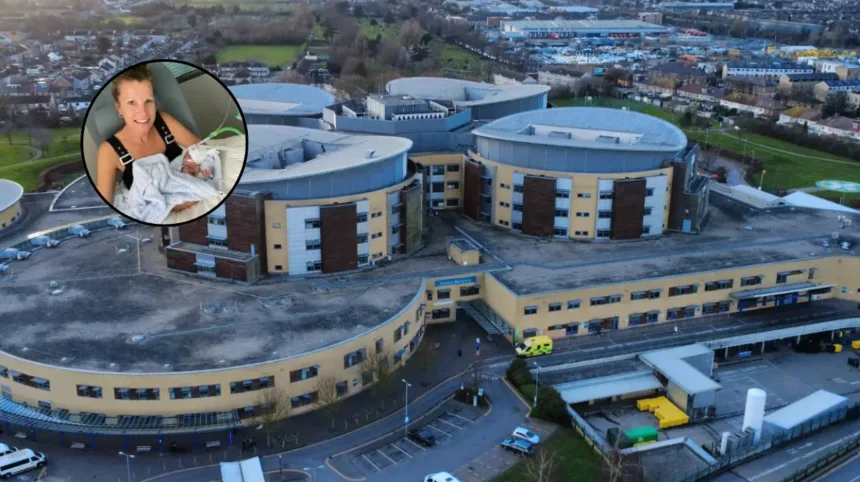
Rainham (East London Times) June 11, 2026 — An expectant mother from Rainham has launched an exclusive, scathing complaint via local media regarding her clinical treatment at Queen’s Hospital in Romford, asserting that medical practitioners repeatedly diagnosed her with an inevitable miscarriage and offered medical interventions to clear her womb, despite later discovering via an ultrasound scan that her fetus possessed a strong, healthy heartbeat.
- Key Points
- How Did the Rainham Mother’s Distressing Medical Journey Unfold?
- Was the Clinical and Interpersonal Treatment Appropriate?
- Why Did the Patient Have to Fight for an Ultrasound Scan?
- How Was the Error Discovered at the Early Pregnancy Unit?
- What Contradictions Did the Patient Discover Regarding Hospital Policy?
- How Has the NHS Trust Responded to the Allegations?
- Background of the Early Pregnancy Triage Controversy
- Prediction: How This Development Can Affect Expectant Mothers and Local Communities
How Did the Rainham Mother’s Distressing Medical Journey Unfold?
The incident initiated on Saturday 30 May, when the pregnant patient began suffering from acute physical pain and vaginal bleeding.
Seeking urgent clinical assessment, she self-presented at Queen’s Hospital, where emergency staff redirected her to the specialized Early Pregnancy Unit (EPU). After providing a urine sample and waiting for an initial triage assessment, she was seen by an on-duty clinician.
According to an exclusive firsthand report published by journalist Francesca Lillighan of The Havering Daily, the Rainham mother stated that:
“I was told it was a suspected miscarriage and had to repeatedly demand a scan, only to then be told my baby had a strong heartbeat. How many other mothers-to-be do they do this to?”
The patient alleged that despite her explicit, repeated requests for diagnostic ultrasound imaging to verify the status of her pregnancy, the attending practitioner denied the request. The physician reportedly stated that the hospital was not authorized to operate its scanning equipment during weekend shifts.
Was the Clinical and Interpersonal Treatment Appropriate?
As the medical assessment progressed on 30 May, the patient’s interactions with the clinical staff reportedly grew increasingly strained. The mother-to-be noted that the physical examinations conducted in the absence of imaging technology caused her severe discomfort.
As documented by Francesca Lillighan of The Havering Daily, the patient recounted:
“The doctor then said she had to do an internal examination and tried to use a speculum, but the pain was awful. I asked her to stop, after which she became stroppy and said, ‘How am I supposed to check?’ I then asked again for a scan and they said no.”
The patient characterized the attending doctor’s demeanor as rude and entirely devoid of professional kindness or empathy. Following the aborted speculum examination, the clinician performed a manual digital internal examination.
Based solely on this physical palpation and the patient’s presenting symptoms, the doctor reiterated her clinical belief that a miscarriage was actively occurring. Staff subsequently administered standard pain relief and discharged the patient to her home.
Why Did the Patient Have to Fight for an Ultrasound Scan?
The following day, Sunday 31 May, the patient’s severe abdominal cramping and bleeding persisted, prompting her to return to Queen’s Hospital in accordance with the worsening-symptoms protocol outlined by the discharge staff.
Upon her return, she alleges she was forced to wait outside the clinic area for three hours without receiving any pain management or intermediate clinical review.
Once escorted into an examination room, a second doctor reviewed her case. As reported by The Havering Daily, the patient stated that this second practitioner similarly concluded that the clinical picture pointed directly to an unavoidable pregnancy loss:
“The doctor then came and I told her what was going on. She also said it sounded like a miscarriage and to go home and let nature take its course and my body would naturally remove the baby. She also told me I had a choice to take tablets to help the process if I wanted to progress the miscarriage.”
Alarmed by the recommendation to ingest abortifacient medication without definitive visual confirmation of fetal demise, the patient steadfastly refused to consent to any medical management until an ultrasound scan was executed.
The physician initially offered to schedule an appointment for Monday 8 June—a delay of more than a week. Following a vigorous verbal protest by the patient, who stated she could not endure a two-week period of psychological uncertainty, the doctor adjusted the booking to Tuesday 2 June.
How Was the Error Discovered at the Early Pregnancy Unit?
The administrative and clinical complications continued when the patient arrived for her rescheduled appointment on 2 June. Clerical staff informed her that no ultrasound slot had been registered under her name in the hospital’s central scheduling database.
The patient initiated a formal complaint at the reception desk, which ultimately prompted the department to deploy a third medical officer to review her chart.
Per the account published by Francesca Lillighan, the third doctor also reviewed the history of bleeding and cramping, concluding that it appeared to be a miscarriage, and reiterating that surgical or medical removal of the tissue could be arranged.
The mother-to-be consistently maintained her stance, demanding that an ultrasound scan be conducted prior to any intervention.
The hospital eventually accommodated her request. During the subsequent sonographic procedure, the technician identified that the fetus was completely viable. As stated by the patient in The Havering Daily:
“I finally got to have a scan and was told my baby was healthy and had a strong heartbeat. I then saw the doctor and they said they were happy my baby was strong and that they must have made a mistake. I then asked why I was bleeding and they didn’t know and said it must be an infection.”
What Contradictions Did the Patient Discover Regarding Hospital Policy?
While processing the news of her baby’s survival, the patient noted a direct contradiction concerning the hospital’s operational capacities.
Although multiple doctors had informed her over the weekend that scanning facilities were completely unavailable and unauthorized outside of standard weekday hours, the physical environment told a different story.
As reported by The Havering Daily, the Rainham mother highlighted:
“I was also told that they do not do scans at the weekend, yet when I finally got my scan there were posters in the room saying they now do scans at weekends. What a joke.”
Furthermore, the patient reported receiving therapeutic advice from a peer rather than her assigned medical team. While waiting in the EPU holding area, another expectant mother who had experienced a comparable subchorionic or cervical bleeding event advised her to request specific cervical stabilization tablets.
When the patient raised this pharmacological option with her physician, the doctor allegedly dismissed the advice as unhelpful, stating that while the medication might reinforce her cervix, it would not halt active bleeding.
The patient nevertheless insisted on the prescription, later noting that the tablets successfully stopped her hemorrhaging.
Reflecting on the psychological toll of the multi-day ordeal, the mother concluded that the EPU was an awful department staffed by rude, unempathetic doctors, though she commended the ancillary nursing staff for remaining helpful throughout her visits.
How Has the NHS Trust Responded to the Allegations?
In response to the detailed allegations of clinical negligence, administrative failure, and poor staff conduct published by The Havering Daily, the senior management of the healthcare provider issued a formal statement defending their underlying triage protocols.
Nic Kane, the Chief Nurse of the Barking, Havering and Redbridge University Hospitals NHS Trust—which oversees the daily operations of Queen’s Hospital—provided the following official response to the journalist:
“We are sorry to hear this mum had a poor experience at our hospital. She was seen by an obstetrician on both occasions and had there been a serious risk of miscarriage, she would have been immediately admitted and scanned as part of further investigations.”
The Trust’s statement did not directly address the alleged lack of weekend scanning authorization, the specific behavioral complaints leveled against the examining doctors, or the administrative error that resulted in the erasure of the patient’s Tuesday scan booking.
Background of the Early Pregnancy Triage Controversy
This development comes amid long-standing national debates across the United Kingdom regarding the consistency of emergency gynecological and obstetric care within National Health Service (NHS) trusts during weekend shifts, often referred to within health policy as the “weekend effect.” Early Pregnancy Units are designed to provide specialized care for women experiencing complications such as bleeding or pain in the first trimester of pregnancy.
Clinical guidelines established by the National Institute for Health and Care Excellence (NICE) state that diagnostic transvaginal or transabdominal ultrasounds are the gold standard for determining early pregnancy viability.
These guidelines explicitly advise against offering medical or surgical management for a miscarriage unless fetal demise has been definitively confirmed via an ultrasound scan or through serial human chorionic gonadotropin (hCG) blood testing over a 48-hour period.
Medical statistics indicate that early pregnancy bleeding occurs in approximately 20% to 25% of healthy pregnancies, with roughly half of those cases progressing to a successful live birth. Consequently, premature assumptions of miscarriage based solely on digital physical examinations can lead to catastrophic clinical errors, including the inadvertent termination of a viable pregnancy if medical management tablets (such as mifepristone or misoprostol) are administered prematurely.
Prediction: How This Development Can Affect Expectant Mothers and Local Communities
This highly publicized incident is likely to have immediate ramifications for expectant mothers across Rainham, Havering, and the wider catchment area served by Queen’s Hospital. In the immediate term, public trust in the diagnostic accuracy and interpersonal empathy of the hospital’s Early Pregnancy Unit will likely decline.
Pregnant women experiencing early-stage complications may experience heightened anxiety, fearing that their conditions could be misdiagnosed or that they will face defensive clinical interactions if they seek care over a weekend.
This drop in institutional trust will likely drive an increase in the number of local patients seeking secondary opinions. Expectant mothers possessing the financial means may increasingly bypass local NHS emergency services in favor of private early pregnancy scanning clinics operating across Greater London, seeking immediate clarity rather than navigating hospital triage delays.
For lower-income demographics within Havering who rely entirely on Queen’s Hospital, the disclosure may prompt women to become significantly more assertive during clinical consultations, potentially leading to adversarial relationships with frontline medical workers.
Structurally, the public exposure generated by this case will pressure the Barking, Havering and Redbridge University Hospitals NHS Trust to initiate an internal clinical governance review.
To mitigate legal liabilities and preserve its institutional reputation, the Trust will likely be forced to standardize its weekend scanning provisions, ensuring that certified sonographers are visibly active seven days a week to prevent relying on subjective manual examinations. Administrative staff will also face stricter auditing regarding booking systems to prevent vulnerable patients from falling through clerical gaps during high-stress medical crises.